



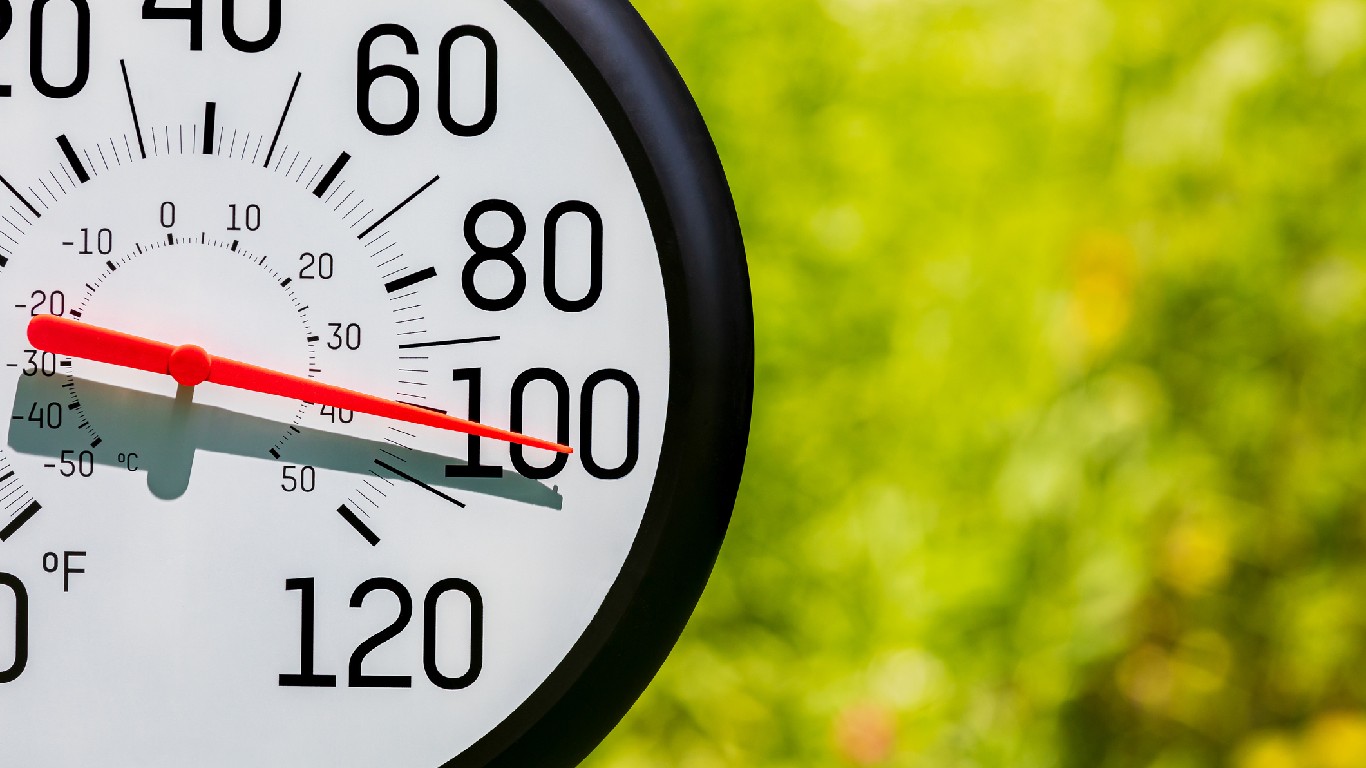
A major heat wave will hit two-thirds of the United States this weekend. Temperatures will exceed upper 90 degrees Fahrenheit, but it will feel like over 100. Cities on the East Coast are already taking precautions by setting up cooling stations to prevent potentially very serious consequences, including heat stroke and heat exhaustion.
“Heatstroke” is a colloquial term used to describe two distinct entities: (1) severe nonexertional hyperthermia (overheating of the body), which generally affects the very young, the disabled, the poor, those who are isolated because of mental illness or the elderly; and (2) exertional heat illness, which mostly affects otherwise healthy adults and adolescents, according to doctors at WVFC. These two groups are linked due to underlying causes and effects (too much heat or sun exposure and a lack of hydration) and the eventual health impact (extreme elevations of body temperature leading to bodily dysfunction).
Heat exhaustion sometimes occurs when a person exercises and works in a hot environment and the body cannot cool itself adequately. Dehydration occurs with water loss from excessive sweating, which causes muscle cramps and weakness, along with nausea and vomiting. This makes it difficult to drink enough fluid to replenish the body’s water supply, and the lack of body water impairs further sweating, evaporation and cooling. If the humidity is too high, sweat on the skin cannot evaporate into the surrounding air and body temperature cooling fails. This is why you should never do these 11 things when it’s hot outside.
Heat exhaustion and heatstroke are caused by environmental conditions. As outside temperatures rise, the body reacts by sweating. This evaporation of water from the skin and respiratory tract is the most effective way of ridding the body of excess heat. Less effective reduction in heat occurs from the direct radiation of heat into the environment, the transfer of heat to air or liquids moving over the body. These normal cooling mechanisms become ineffective when humidity rises above 75% and air temperature rises above normal body temperature.
Prevention begins with awareness of one’s environment and altering behaviors that increase the risk of heatstroke when at all possible.
Avoid strenuous activities in excessively hot or humid environments.
If work must be done in the heat outdoors, or indoors in hot situations, take frequent breaks in cooler areas, spray the skin with water, drink water and sports drinks to replace lost electrolytes from sweating, monitor urine output, and slow the pace of work to decrease the heat generated by the body in order to avoid heat exhaustion or heatstroke. Avoid the sun from 11 a.m. to 3 p.m. when at all possible.
Monitoring urine output is an effective way to monitor hydration. The kidneys hold onto water if the body is dehydrated, then urine output drops and urine becomes darker with a strong odor. When hydration is adequate, the urine is clear and normal in amount.
Avoid caffeine and alcohol since these promote dehydration. Alcohol lowers the body’s tolerance for heat as well as acting as a diuretic.
Do not move from a cool to a very hot environment quickly since this prevents the body from adjusting to allow it to cool more efficiently.
Pay attention to those at risk during heat waves: the elderly, the obese, the socially isolated, the very young and those who have no air conditioning to cool their homes. Make certain that they are well hydrated and not alone. Move people to cooling centers if there is one in your area or bring them to a public place that has air conditioning.
Summer health hazards can lead to serious consequences if people don’t take the proper measures to avoid them. Some consequences, such as heat exhaustion, are very common, and doctors see them repeat year after year. While some heat-related health issues can cause injuries that are quickly recoverable, others can cause long-term health damage. So it’s important to avoid these biggest health mistakes most people make in the summer.










 Top Gaining Stocks
 Top Losing Stocks