



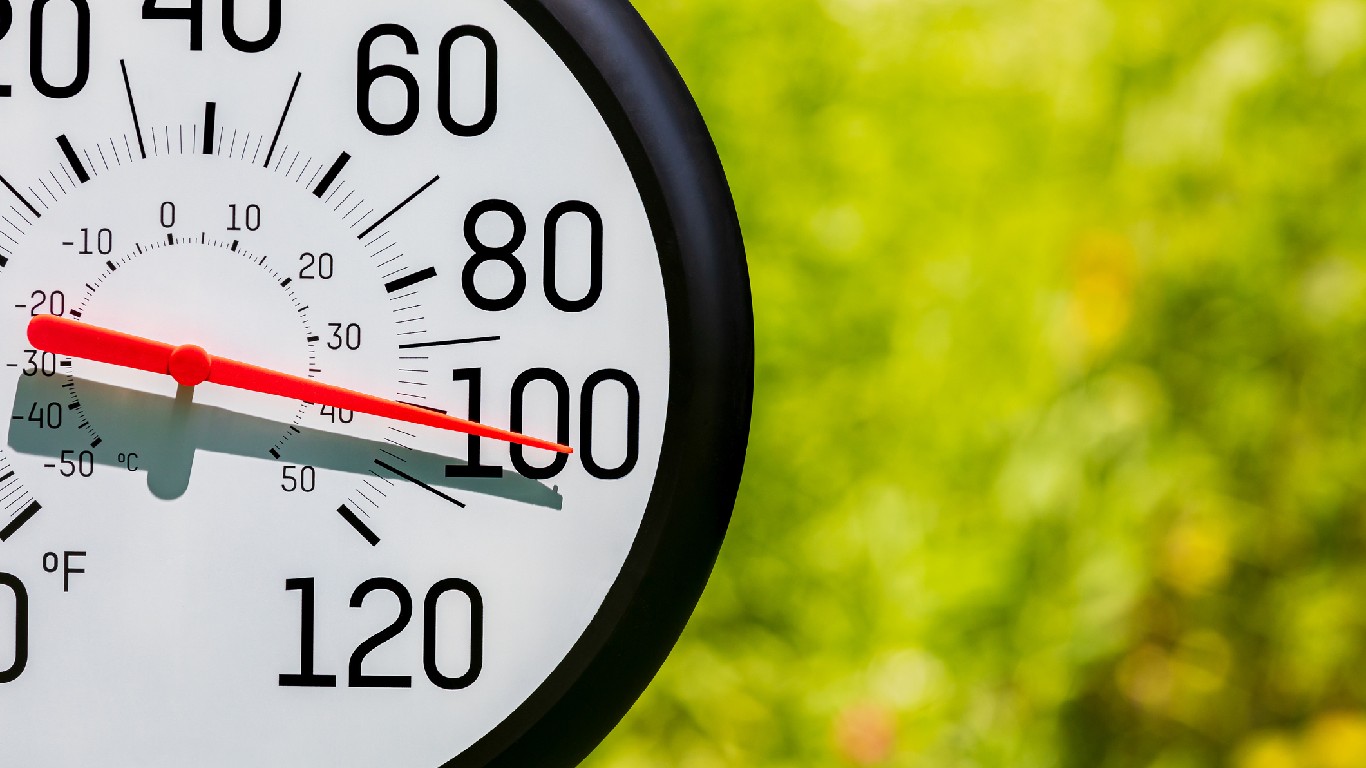
This weekend will be a real scorcher in two-thirds of the United States. Temperatures will exceed upper 90 degrees Fahrenheit, but it will feel like over 100. Some cities on the East Coast have already set up cooling stations to prevent serious consequences, including heat stroke and heat exhaustion.
Exertional heatstroke (EHS) is much more common in adolescents and young adults and is one of the leading causes of death in young athletes each year, according to doctors at WVFC. From 2005 to 2009, there were more than 9,000 events of exertional heat illness per year among high school athletes, reported by the Centers for Disease Control and Prevention. The highest incidence was in American football, with EHS occurring at a rate of 4.5 cases per 100,000 athlete exposures (i.e., total practices), and mostly occurring in summer.
Policies adopted nationally in 2003 reduced the burden from this problem: from 1995 to 2008, 31 deaths occurred, with only one reported between 2003 and 2011. EHS is also a risk for athletes who train or compete in hot, humid conditions, especially when the heat and humidity are unexpectedly high. The weekend warrior who is determined to go the distance in endurance activities in high heat and humidity is also at risk for EHS.
Heat exhaustion sometimes occurs when a person exercises and works in a hot environment and the body cannot cool itself adequately. Dehydration occurs with water loss from excessive sweating, which causes muscle cramps and weakness, along with nausea and vomiting. This makes it difficult to drink enough fluid to replenish the body’s water supply, and the lack of body water impairs further sweating, evaporation and cooling. If the humidity is too high, sweat on the skin cannot evaporate into the surrounding air and body temperature cooling fails. This is why you should never do these 11 things when it’s hot outside.
Treatment for heat exhaustion includes:
Recognize the symptoms — dizziness, fainting, fatigue, headache, cramps, rapid heartbeat, profuse sweating, pale skin, feeling weak.
Stop the activity if the person is exercising or working.
Move the person from the hot environment to a cooler environment: into the shade or into an air-conditioned environment.
Remove clothing to help with air circulation across the body.Cool the body with water, which helps by stimulating evaporation, which begins to lower the body temperature. If available, use a cool (not cold) shower to cool down, otherwise apply cool, wet towels to the skin.
Rehydrate with small sips in case nausea and vomiting are present preventing oral rehydration. Cold water or drinks with electrolyte replacements are both good options. If unable to hydrate the person with oral solutions or if the person continues to have symptoms, IV hydration will be necessary until the person begins to produce urine, a signal that the kidneys recognize that there is enough fluid in the body.
Take people at increased risk of developing heatstroke or complications from dehydration to a hospital. This includes children under age 2, elderly people, people with kidney disease, heart failure or diabetes.
In addition to the treatment measures suggested above, ALWAYS call 911 or an ambulance if the person stops sweating or becomes confused since heatstroke, a life-threatening condition, may be developing.
Heat exhaustion can progress to heatstroke when the body’s temperature regulation fails. The person may develop a change in mental status, become confused, lethargic and may have a seizure, the skin stops sweating, and the body temperature may spiral out of control and exceed 106 degrees F (41 degrees Celsius). This is a life-threatening condition and emergency medical attention is needed immediately. Cells inside the body may stop working and begin to break down, which may lead to organ failure, brain damage and death.
Scientists have high confidence that global temperatures will continue to rise for decades to come, largely due to greenhouse gases produced by human activities. The Intergovernmental Panel on Climate Change, which includes more than 1,300 scientists from the United States and other countries, forecasts a temperature rise of 2.5 to 10 degrees Fahrenheit over the next century, according to this NASA report. The health problem of heatstroke is likely to become more prevalent. Some places already are experiencing temperatures that reach at least 90 degrees Fahrenheit for much of the year. These are the 50 hottest cities in America.













 Top Gaining Stocks
 Top Losing Stocks