



The State of New Jersey recently warned people not to swim in Lake Hopatcong, the state’s largest. In fact, people have been told not to touch it. Large parts of Lake Erie, one of the biggest freshwater lakes in the world, are unsafe for dogs to swim in. Similar warnings have gone up in lakes across the United States over the course of the summer.
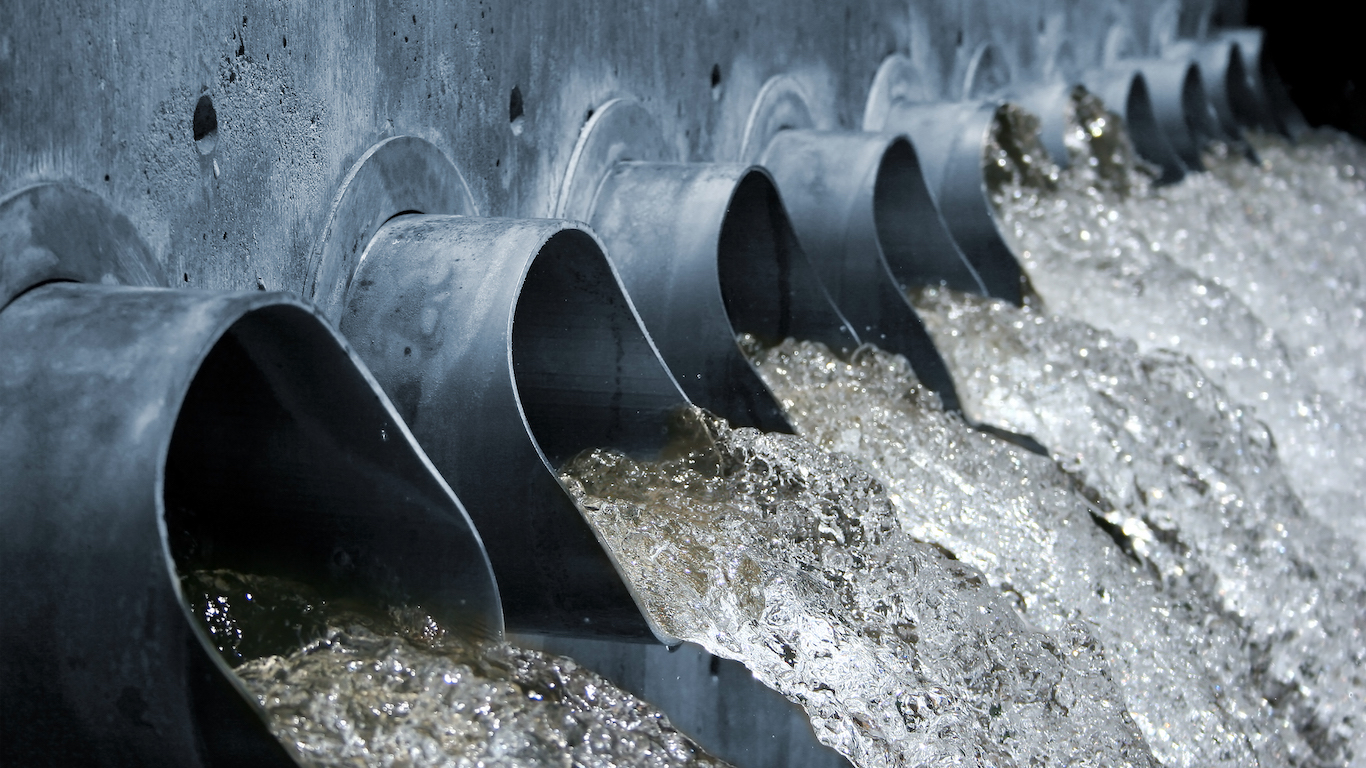
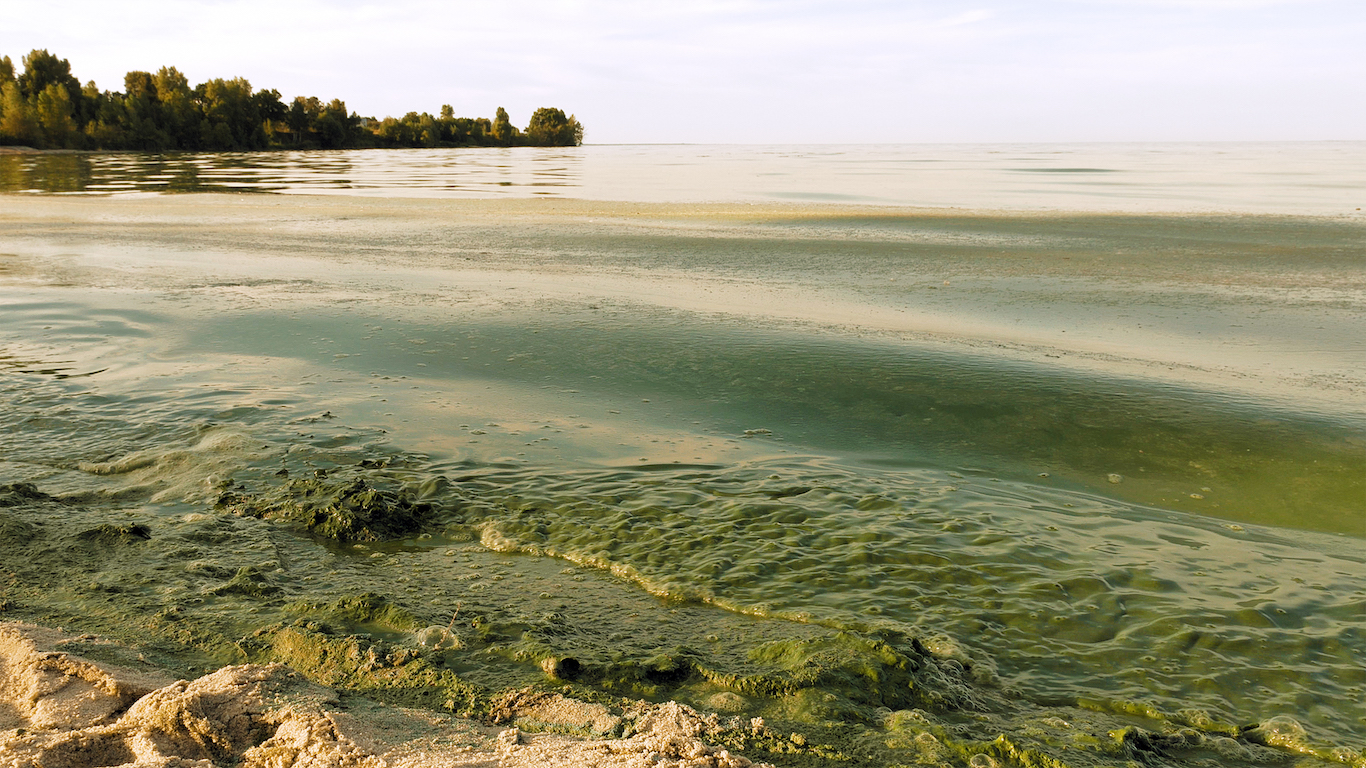
Water in the lakes has become dangerous for several reasons. The primary one is chemical runoff. For example, much of Lake Erie has been polluted by industrial fertilizer and animal manure, which cause rapid growth of blue-green algae that in turn robs the water of oxygen. Wide areas that are affected are called harmful algal blooms, or HABs. The National Oceanic and Atmospheric Administration (NOAA) reports that HABs exist in every coastal state. Many of the factory farms, the number of which is increasing rapidly, are not regulated.
An area as large as 10,000 square miles of Lake Erie’s surface is called “the dead zone.” It’s filled with oxygen absorbing algae, fed by fertilizer used mostly for farming. The water the lake supplies may not be potable, as some fish die adding to the toxic stew. These are some major cities where the drinking water may soon become toxic.
People who come into contact with toxic lake water, either by accident or poor judgment, can face extremely severe health consequences. Among these are flu-like symptoms, gastroenteritis, respiratory irritation, skin rashes and eye irritation. Some of the reactions can be much worse and cause hospitalization. The Centers for Disease Control and Prevention (CDC) indicates that these recreational water illnesses are caused by germs spread by swallowing or coming in contact with contaminated water, which can even spread to the sand on beaches. The most common symptom from these is diarrhea.
A year ago, 15 people went to emergency rooms because they came in contact with blue-green algae in the St. Lucie River. In extremely severe cases, people suffer liver damage or can be hospitalized for extended periods. Some infections are more worrisome than others because they are caused by bacteria that have become resistant due to overuse of antibiotics — these are infections even doctors are afraid of.
[nativounit]
The CDC has several rules about how people can prevent toxic lake and river water illnesses.
- Look for algae blooms in the water. They usually appear as large masses that look like foam or scum. They can be blue, green, brown, yellow, orange or red. They often smell like rotting plants.
- Don’t eat fish from lake water that has algae blooms.
- Check for information about lake water quality posted at by local or state governments.
- If you enter a lake with algae blooms, wash yourself off immediately with tap water.
- Stay out of sand or dirt around infected lakes.
- Help others by reporting toxic water to the Phytoplankton Monitoring Network.
[recirclink id=566769]
[wallst_email_signup]









 Top Gaining Stocks
 Top Losing Stocks