


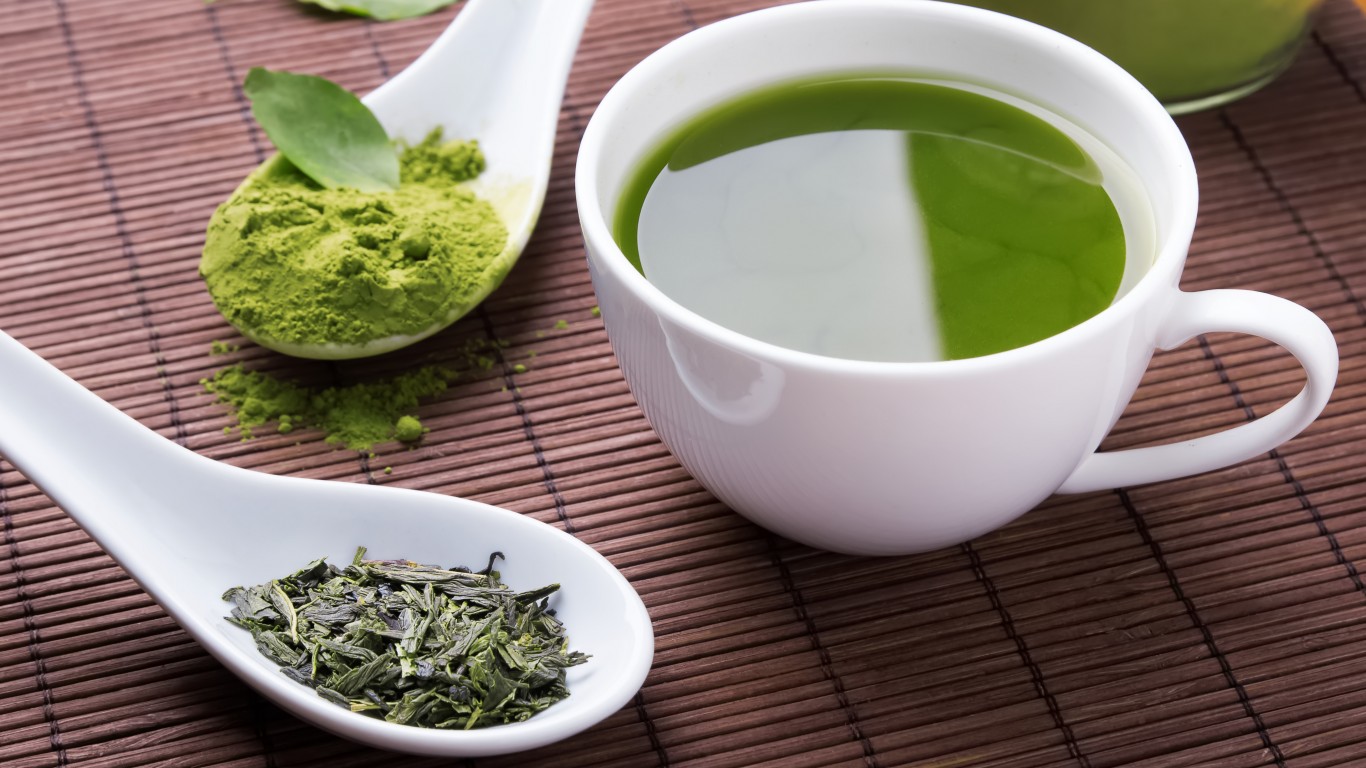
Green tea has long been hailed for a variety of health benefits. Among other things, it is said to improve brain function and physical performance and possibly lower the risk of contracting Alzheimer’s disease, Parkinson’s disease, and certain types of cancer. Now, researchers at the University of Surrey in England have found evidence that a compound green tea contains can help fight antibiotic-resistant bacteria.
The increasing resistance of dangerous bacteria to antibiotics is developing into a major global health problem. It is among the biggest challenges Americans will face in the next decade.
One of the most dangerous bugs is Pseudomonas aeruginosa, which can cause pneumonia and various bloodstream infections. It is considered an opportunistic bacterium because it mostly affects people who are already critically ill with other ailments. P. aeruginosa has the ability to mutate quickly to fight off antibiotics used to counter it, and in recent years has become resistant to a number of major antibiotic groups.
According to the University of Surrey study, published in the Journal of Medical Microbiology, an antioxidant found in green tea, epigallocatechin gallate (EGCG), can restore the potency of the antibiotic aztreonam, commonly used to treat infections caused by P. aeruginosa. EGCG is considered to be a powerful compound, and may be one of the main reasons green tea appears to have so many medicinal uses.
[nativounit]
The University of Surrey team has demonstrated that the combination of EGCG and aztreonam is significantly more effective in combating P. aeruginosa than either compound alone. This may be because EGCG increases the permeability of the bacteria, allowing the antibiotic to penetrate it.
Just drinking green tea won’t necessarily help antibiotics fight bacteria, but scientists are increasingly looking to so-called natural products that contain substances capable of improving the functions of drugs. Some of these may be what non-scientists call “superfoods.” These are the best superfoods to help you live a healthy lifestyle.
[wallst_email_signup]
[recirclink id=520001]













 Top Gaining Stocks
 Top Losing Stocks