


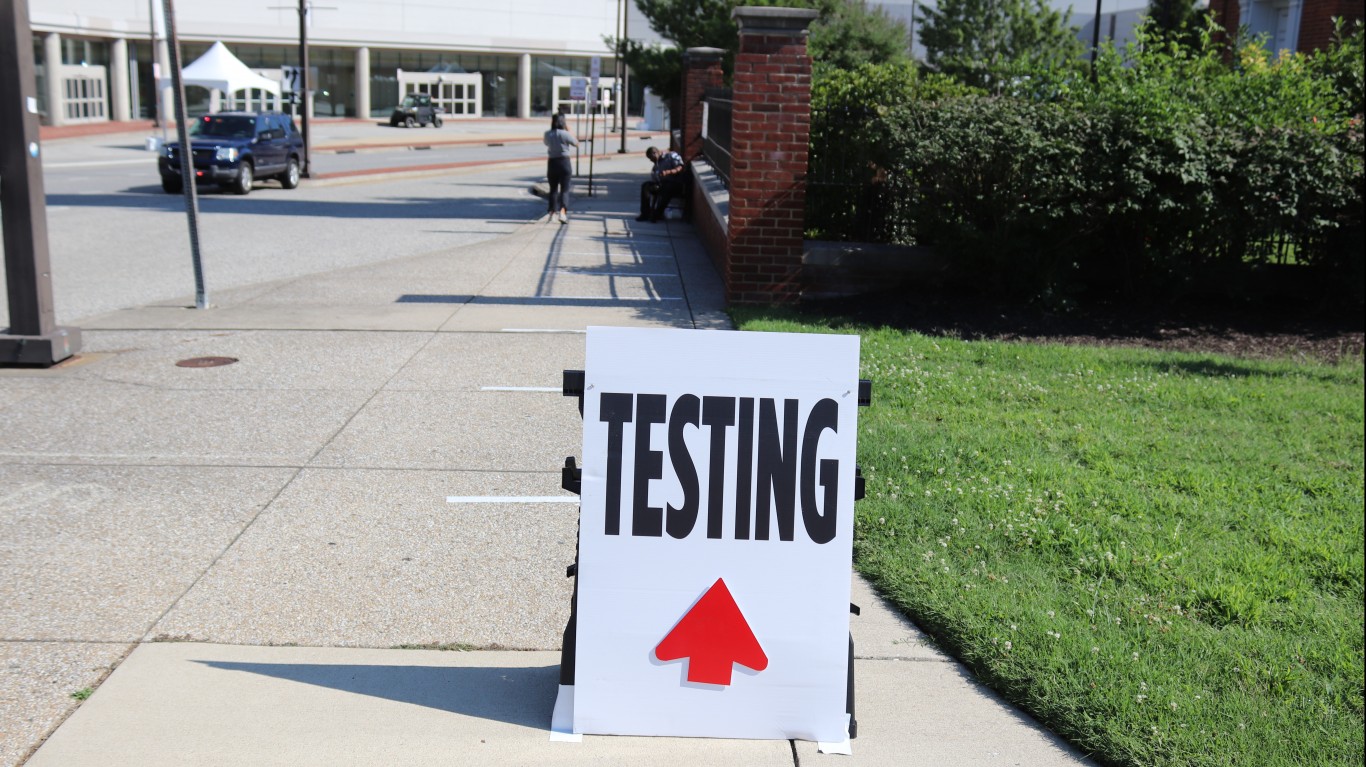
The Centers for Disease Control (CDC) has changed its rule about who should get COVID-19 testing. Most recently, it backtracked on a rule. For a period, the rules said people who came in contact with people without symptoms “don’t necessarily need a test”, even if they have been in close contact with someone who is infected. That changed. Now, under certain circumstances, people who have been close, physically, to someone who has been infected should get a test. However, that is not the most complicated part of the CDC rules. The most difficult question is whether these tests work well enough for people to avoid quarantine.
The new test rules state, “If you have been in close contact, such as within 6 feet of a person with documented SARS-CoV-2 infection for at least 15 minutes and don’t have symptoms you need a test.”. Simple enough. A negative test means everything is OK. Wrong.
The CDC test rules run over 1,300 words. Some of the rules are straightforward. If a person tests positive, they do not need to be retested for at least three months. People who have a positive test result do not need to follow up with another test–if it has been 10 days since the onset of symptoms, and have been without a fever for over 24 hours, and if the drop in fever has not been because of medication, and other symptoms have improved.
But, what if someone tests negative? Negative does not mean negative, maybe. That is the case for some people who have been within 16 feet of someone who has documented SARS-CoV-2, for at least 15 minutes and do not have symptoms. “A single negative test does not mean you will remain negative at any time point after that test.” So, people with a negative test under these circumstances should self-quarantine for 14 days.
Why do people with a negative test need to go into quarantine? In large part, it is because the test results are often wrong.
What is known as “rapid antigen tests” can show if someone is currently infected. And, test results can come back as quickly as in 15 minutes. However, the test is wrong often enough that a person who takes positive may not have the disease. A Department of Health screen showed that of 65 people who tested positive with a test from biotech company Quidel, only 4 actually were infected. Test after test of rapid antigen screens found they are notoriously inaccurate.
Another type of test is much more accurate but can take longer to get results. The polymerase chain reaction (PCR) test is considered “the gold standard”. This test shows whether people have “the presence of an antigen” in their systems and not simply the presence of antibodies–which is the body’s immune response.
The updated CDC rules set boundaries when people who come in contact with others with COVID-19 should be tested. However, the test may not work. So, positive or negative, people need to quarantine for 14 days, under these circumstances.










 Top Gaining Stocks
 Top Losing Stocks