People Return to Austin Offices as Pandemic Ends

Photo of Douglas A. McIntyre
By Douglas A. McIntyre Published
This post may contain links from our sponsors and affiliates, and Flywheel Publishing may receive compensation for actions taken through them.
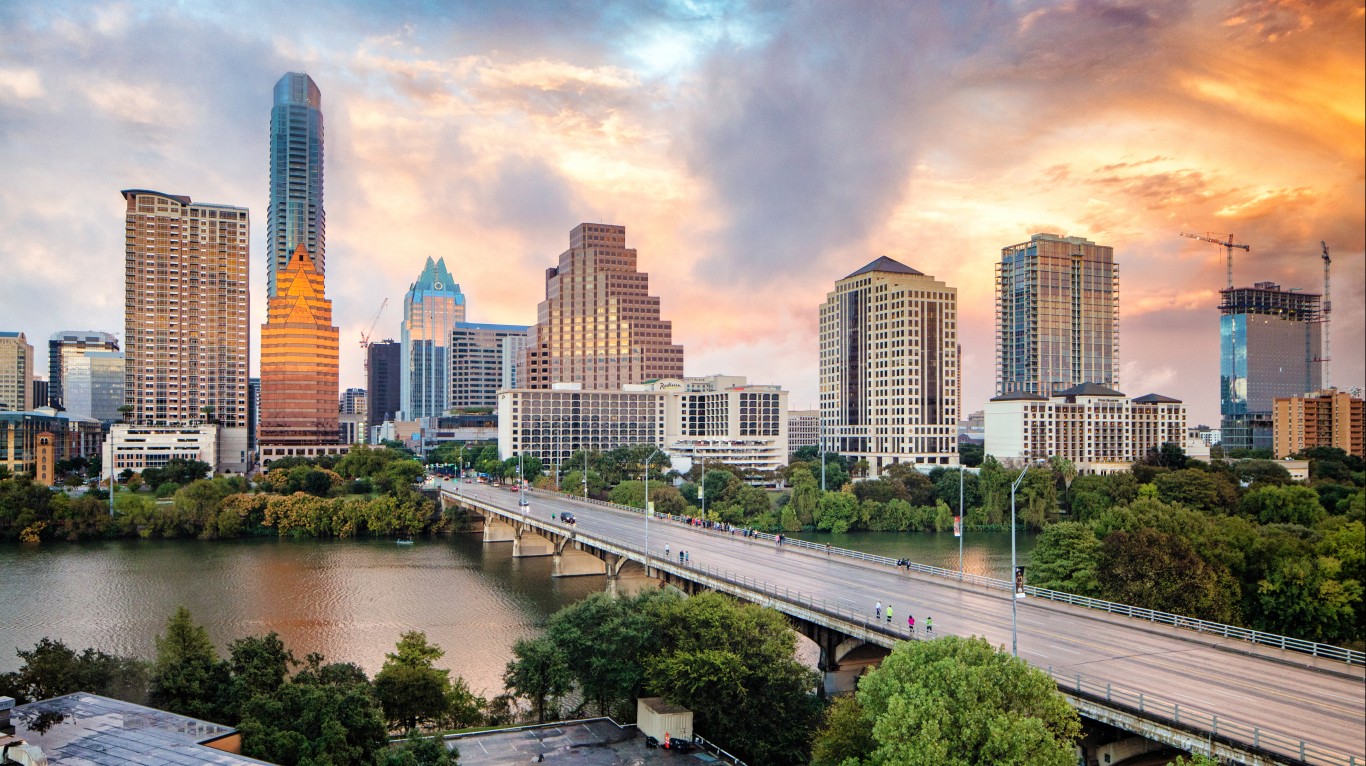
People Return to Austin Offices as Pandemic Ends

© NicolasMcComber / Getty Images

On May 11, the Biden administration will lift the national health emergency that has been in place for nearly three years. While COVID-19 still plagues the American population, it no longer causes the thousands of daily deaths it used to and many fewer people are hospitalized. Vaccines and a level of immunity across the populations have cut down the most dangerous infections.
[in-text-ad]
The government’s actions are why many American businesses have told their workers to return to their offices. The plan has met resistance at many companies, and they have had to negotiate the number of days employees travel to an office compared to the days they can work from home. Working from home became wildly popular during the pandemic. It cut commute times, and people ended hours of commuting. It also left many employees with more leisure time. (Click here for the 10 jobs that make parenting manageable.)
[nativounit]
Companies worried they lost at least two things when people worked remotely. One, in theory, is the people who work together face to face can more easily share ideas and tasks. The other was the suspicion that those who work from home do not work hard.

The return to the office is uneven across major metro areas. A new research study by Kastle shows that office occupancy was 50.4% among the largest 10 metropolitan areas by population during the last week in January.
[wallst_email_signup]
The metro with the highest occupancy rate was Austin, at 67.7%. For some reason, nearby Houston was second with a rate of 60.3%. The research began as the pandemic hit the country in early 2020, when occupancy rates dropped to about 5%. Spikes in the national rate pushed it downward periodically.
[recirclink id=1195449]
The San Jose metro had the lowest occupancy rate at 41.1% in January. There was no apparent reason why this was true.

Kastle’s Back to Work Barometer is based on key card and fob data, which covers 2,600 buildings in 47 states.


Photo of Douglas A. McIntyre
About the Author Douglas A. McIntyre →

Douglas A. McIntyre is the co-founder, chief executive officer and editor in chief of 24/7 Wall St. and 24/7 Tempo. He has held these jobs since 2006.

McIntyre has written thousands of articles for 24/7 Wall St. He is an expert on corporate finance, the automotive industry, media companies and international finance. He has edited articles on national demographics, sports, personal income and travel.

His work has been quoted or mentioned in The New York Times, The Wall Street Journal, Los Angeles Times, The Washington Post, NBC News, Time, The New Yorker, HuffPost USA Today, Business Insider, Yahoo, AOL, MarketWatch, The Atlantic, Bloomberg, New York Post, Chicago Tribune, Forbes, The Guardian and many other major publications. McIntyre has been a guest on CNBC, the BBC and television and radio stations across the country.

A magna cum laude graduate of Harvard College, McIntyre also was president of The Harvard Advocate. Founded in 1866, the Advocate is the oldest college publication in the United States.

TheStreet.com, Comps.com and Edgar Online are some of the public companies for which McIntyre served on the board of directors. He was a Vicinity Corporation board member when the company was sold to Microsoft in 2002. He served on the audit committees of some of these companies.

McIntyre has been the CEO of FutureSource, a provider of trading terminals and news to commodities and futures traders. He was president of Switchboard, the online phone directory company. He served as chairman and CEO of On2 Technologies, the video compression company that provided video compression software for Adobe’s Flash. Google bought On2 in 2009.

Featured Reads

Our top personal finance-related articles today. Your wallet will thank you later.

Continue Reading

Top Gaining Stocks

CBOE Vol: 1,568,143
PSKY Vol: 12,285,993
STX Vol: 7,378,346
ORCL Vol: 26,317,675
DDOG Vol: 6,247,779

Top Losing Stocks

LKQ
LKQ Vol: 4,367,433
CLX Vol: 13,260,523
SYK Vol: 4,519,455
MHK Vol: 1,859,865
AMGN Vol: 3,818,618