


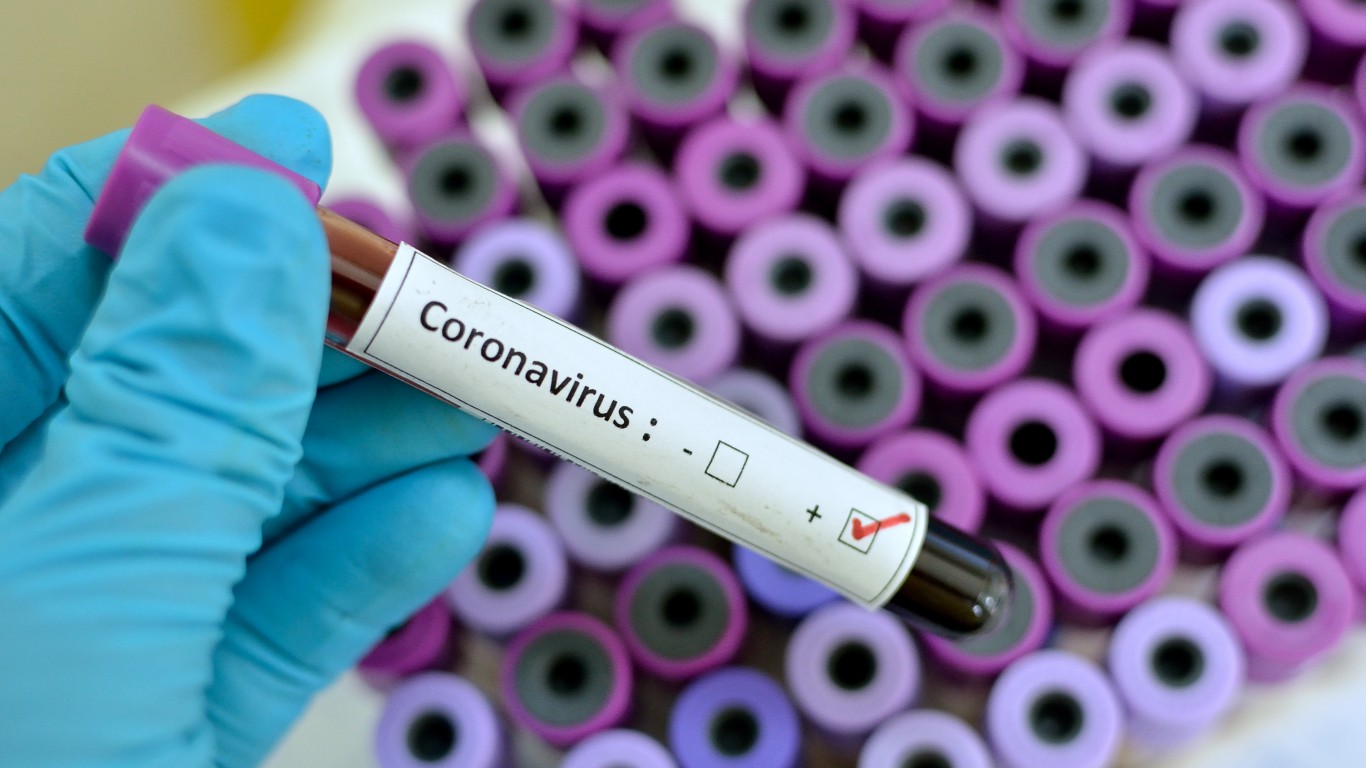
Cases Top 25,000 in 10 States. South American Count Extremely Low.
According to the Bing COVID-19 Tracker, global COVID-19 cases have reached 2,973,264. Active cases totaled 1,897,889, which is up by 27,304 from the day before. Recovered cases rose to 868,806, a 46,130 case increase. Fatal cases reached 206,569, higher by 3,525.
Of those new fatal cases, 1,256 were in the United States, where the death toll hit 55,417. Confirmed cases in American stand at 985,975. Active cases are 821,247, up by 25,884. Recovered cases are 109,212, or 1,228 higher.
States With 25,000 or More Cases
While New York State continues to suffer the largest number of cases by far, 10 states have crossed the 25,000 confirmed case level. New York’s figure remains a staggering 288,045 cases. Its active cases number 270,374, while fatalities have reached 17,671.
Among the other states with over 25,000 cases are New Jersey at 109,038, Massachusetts at 53,348, Illinois at 43,903, California’s 41,333, Pennsylvania with 41,165, Michigan at 37,778, Florida at 31,528, Louisiana at 26,773 and Connecticut with 25,269.
The confirmed cases by state do not correlate to total state population. Texas, the second-largest state in America, with a population of 28,995,881, is not among the states with over 25,000 cases. Louisiana is eighth on the list of states based on confirmed cases. It ranks 25th among states in terms of population, at 4,648,794. Connecticut ranks 28th among states, with a population of 3,565,287.
Several factors may account for the uneven distribution of cases compared to population. Among them are population density, the date when the first cases of COVID-19 appeared in each state, and the extent of differences in how cases are reported or identified from state to state. None of these, by itself, is sufficient reason.
South America Cases Low
South America’s population is 422,535,000, compared to North America’s 579,024,000
The number of cases in South America’s largest nations by population are extremely low compared to the United States and Europe.
Brazil, the sixth-largest nation in the world by population, at 211,438,212, has 62,859 confirmed cases. By contrast, Spain, with a population of 47,100,396, has 219,764 cases. Argentina has a population of 44,938,712 and only 3,879 confirmed cases. Colombia’s population is 49,395,678 and it has just 5,379 cases. Venezuela has a population of 32,219,521, and it has reported a total of 325 COVID-19 cases.
The reasons for COVID-19 counts being extremely low in South America fall into several categories. One is uneven data collection by country. The United States and Europe likely use more exacting and accurate standards when they post case and death statistics.
Another potential reason is that the theory COVID-19 spreads less quickly in the summer may have some validity. January is the hottest month in Brazil, with an average high temperature of 86 degrees Fahrenheit. July is the coldest at 77. The average high temperature in Argentina is 83 in January and 58 in July. If this theory is true, cases across the continent will begin to surge within two or three months, following the pattern in the northern hemisphere.
Better News, but Perhaps Temporary
Confirmed cases worldwide are no longer surging at the rate they did from late March through mid-April. As total confirmed cases worldwide climb to 3 million, it seems nearly certain that the number of days to reach 4 million will be much greater than the time between 2 million and 3 million cases.
The data from South America does offer one warning. Factors such as climate and poverty, and perhaps slow case information collection, could throw the rise in confirmed cases into high gear again.














 Top Gaining Stocks
 Top Losing Stocks