


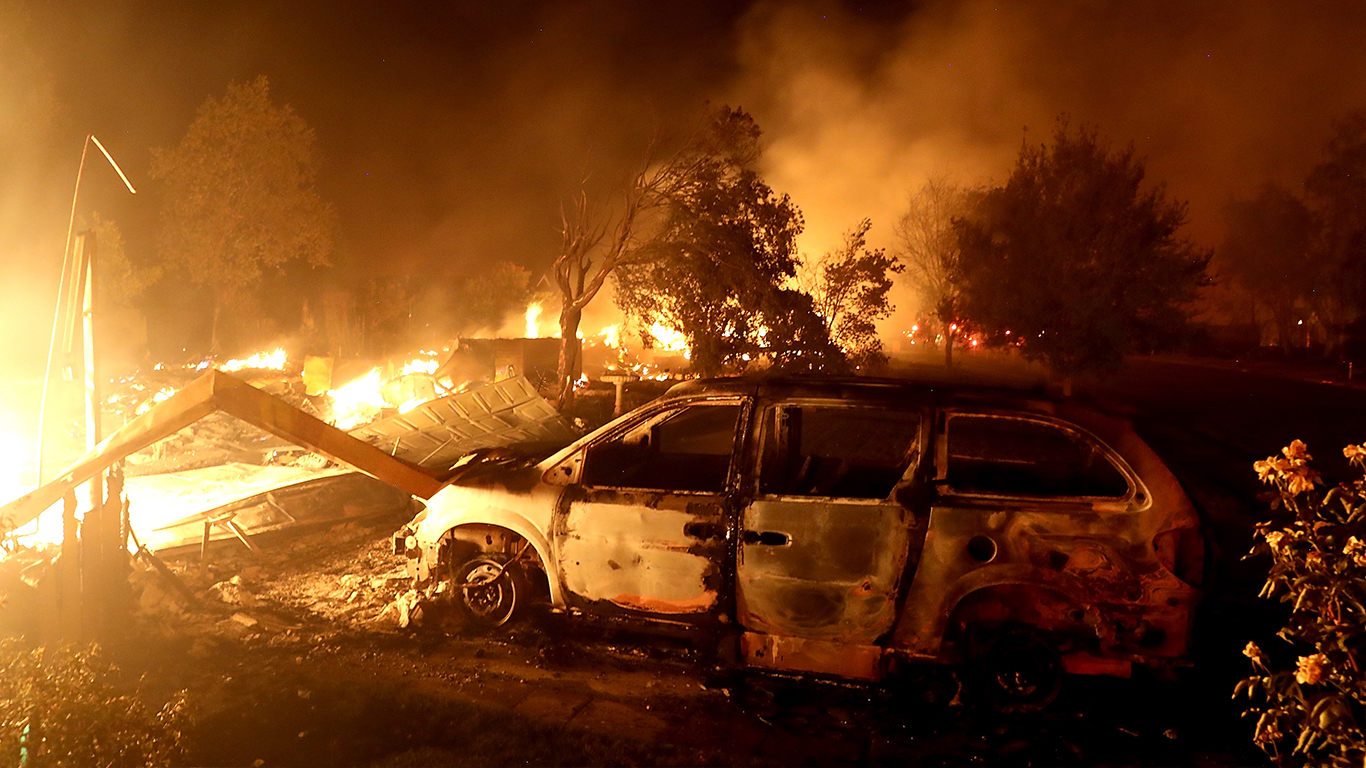
CoreLogic issued its monthly Loan Performance Insights report on Tuesday morning, evaluating the foreclosure and delinquency activity through this past May. The report found that while a strong economy has led to the lowest serious delinquency rates in 12 years, wildfires are threatening existing mortgages in certain regions.
Looking at the numbers, the report shows that, nationally, 4.2% of mortgages were in some stage of delinquency (30 days or more past due, including those in foreclosure) in May 2018, representing a 0.3 percentage point decline in the overall delinquency rate compared with May 2017.
The May 2018 foreclosure inventory rate was the lowest for any month since September 2006, when it was also 0.5%, and it was the lowest for May since 2006. Note that the foreclosure inventory rate measures the share of mortgages in some stage of the foreclosure process.
The rate for early-stage delinquencies (defined as 30 to 59 days past due) was 1.8% in May 2018, down from 1.9% in May 2017. The share of mortgages that were 60 to 89 days past due in May 2018 was 0.6%, unchanged from May 2017. The serious delinquency rate (defined as 90 days or more past due, including loans in foreclosure) was 1.8% in May 2018, down from 2% in May 2017. The May 2018 serious delinquency rate was the lowest for that month since 2007 when it was 1.6%.
[nativounit]
In California, where current delinquency rates are well below the national level, the regions affected by recent wildfires are becoming more susceptible to mortgages entering some stage of delinquency as the fires continue to burn. According to a recent Carr Fire analysis by CoreLogic, the 2018 season is outpacing 2017 with more than 292,000 acres burned this year thus far. The Carr Fire outside the city of Redding and the French Gulch community presented the greatest risk to homeowners, with CoreLogic estimating a total of $3.5 billion potential reconstruction costs in that area.
[recirclink id=485605]
Dr. Frank Nothaft, chief economist for CoreLogic, commented:
While the strong economy has nudged serious delinquency rates to their lowest level in 12 years, areas hit by natural disasters have had increases. The tragic wildfires in the West will likely lead to a spike in delinquencies in hard-hit neighborhoods. As an example, the wildfire in Santa Rosa last year destroyed or severely damaged more than 5,000 homes. Delinquency rates rose in the aftermath, and in the ensuing months we observed home-price growth accelerate and sales decline. We will likely see the same scenario unfold in fire-ravaged communities this year.
[wallst_email_signup]






 Top Gaining Stocks
 Top Losing Stocks