


The American housing market is in the midst of a period of extraordinary price increases, driven by historically high demand. The carefully followed S&P Corelogic Case-Shiller Index shows that in August home prices rose 19.8% nationwide compared to the same month a year ago. Among the 20 cities the report tracks, the city with the largest jump was Phoenix at 33.3%.
Some of the increases in both prices and demand have been caused by a migration of hundreds of thousands of Americans from the large coastal cities like New York and San Franciso to inland cities with lower home prices and better “quality of life”. This, in turn, has been made possible by the fact that large numbers of the working population can now work from home due to the COVID-19 pandemic. Ironically, demand in these inland cities has pushed prices among them much higher, making housing less affordable.
Not everyone has been fortunate to buy a home with money made from appreciated real estate values or the stock market. In some places, Americans struggle to keep the homes they already have in some places.
Struggling homeowners have received some temporary relief. The federal Coronavirus Aid, Relief and Economic Security Act, signed into law in March 2020, included provisions for mortgage forbearance — meaning that homeowners with federally backed mortgages could suspend their monthly payments. The forbearance relief was extended for as long as 12 months in September of 2021.
When forbearance ends, however, homeowners need to contact their lenders or loan servicers to arrange a plan for catching up with the payments that were deferred. As of February 2021, according to the Government Accountability Office, homeowners in forbearance had accumulated an average of eight mortgage payments that will have to be repaid. This will leave some homeowners in debt for tens of thousands of dollars.
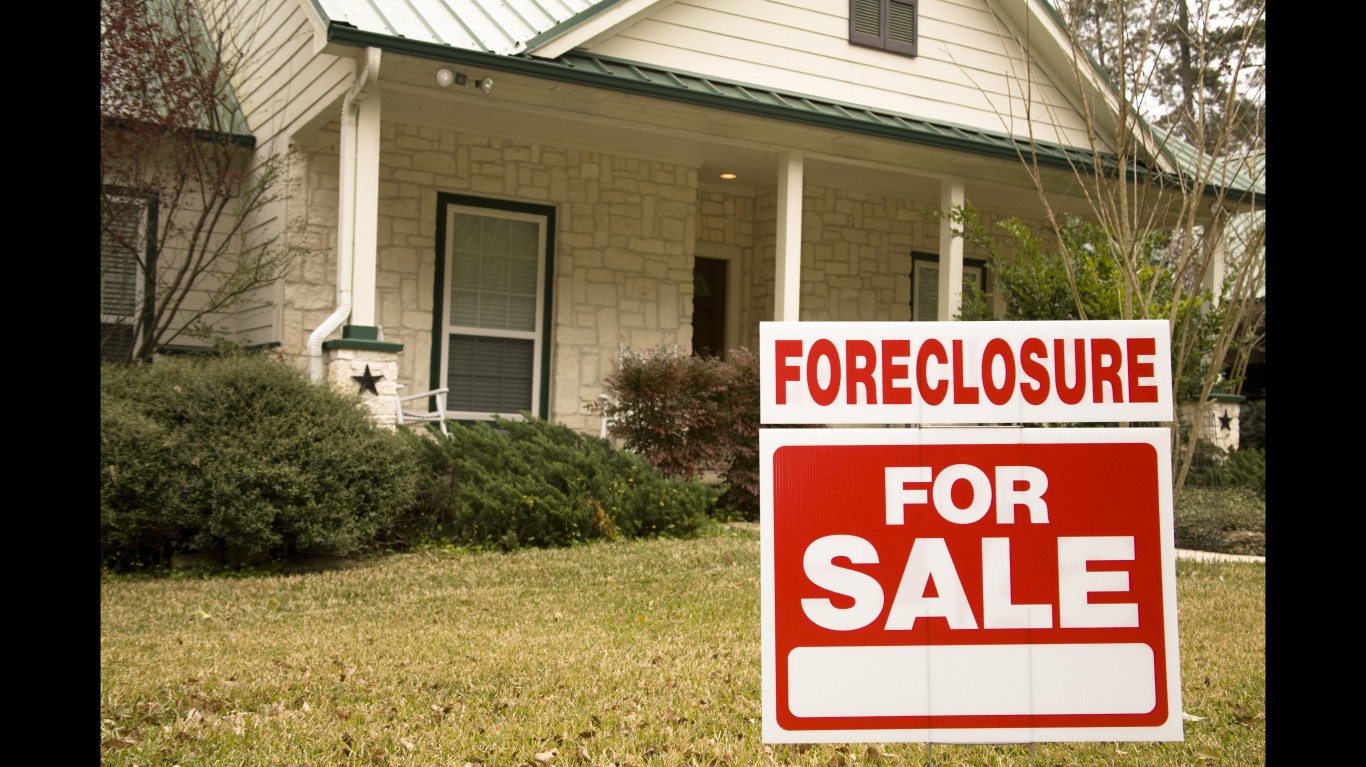
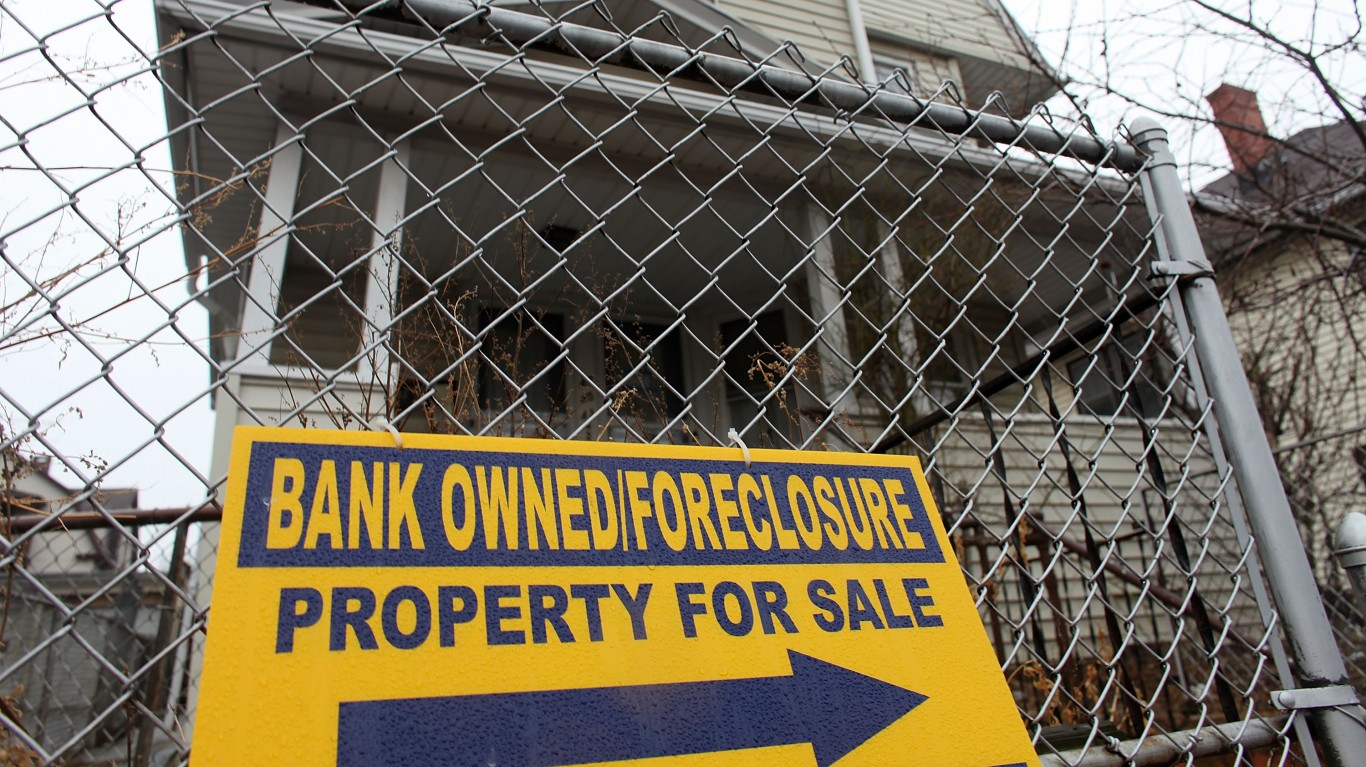
Although some borrowers are back on their feet and out of forbearance and currently working to get up to date on their payments, many are still behind and could face foreclosure. Others didn’t qualify for relief in the first place and are currently in default.
[nativounit]
The state where the most people are behind on their mortgages is Mississippi. Here are the details:
> Mortgage delinquency rate (30+ days): 3.54%
> Share with a subprime credit score: 32.57% — the highest
> Homeownership rate 2019: 67.3% — 19th highest
> Median home value 2019: $128,200 — 2nd lowest
> Median household income 2019: $45,792– the lowest
Methodology: To identify how many people in each state are behind on mortgage payments, 24/7 Wall St. reviewed data from the nonprofit Urban Institute’s Credit Health During the COVID-19 Pandemic report. We ranked states by their mortgage delinquency rate — the share of mortgage holders who are behind on their mortgage payments by 30 days or more — as of October 2020, the latest available data.
Additional data from the Urban Institute, also from October 2020, includes the share of people with a credit bureau record of a subprime credit score (equal to or less than 600). The Urban Institute dataset contains information derived from de-identified, consumer-level records from a major nationwide credit bureau.
24/7 Wall St. added annual estimates of median household income, Homeownership rate, and median home value from the Census Bureau’s 2019 American Community Survey.
Click here to read States Where The Most People Are Behind On Their Mortgage Payments
[wallst_email_signup]












 Top Gaining Stocks
 Top Losing Stocks