The Least Affordable Housing Market in America

Photo of Douglas A. McIntyre
By Douglas A. McIntyre Published
This post may contain links from our sponsors and affiliates, and Flywheel Publishing may receive compensation for actions taken through them.
The Least Affordable Housing Market in America

© bluejayphoto / iStock via Getty Images

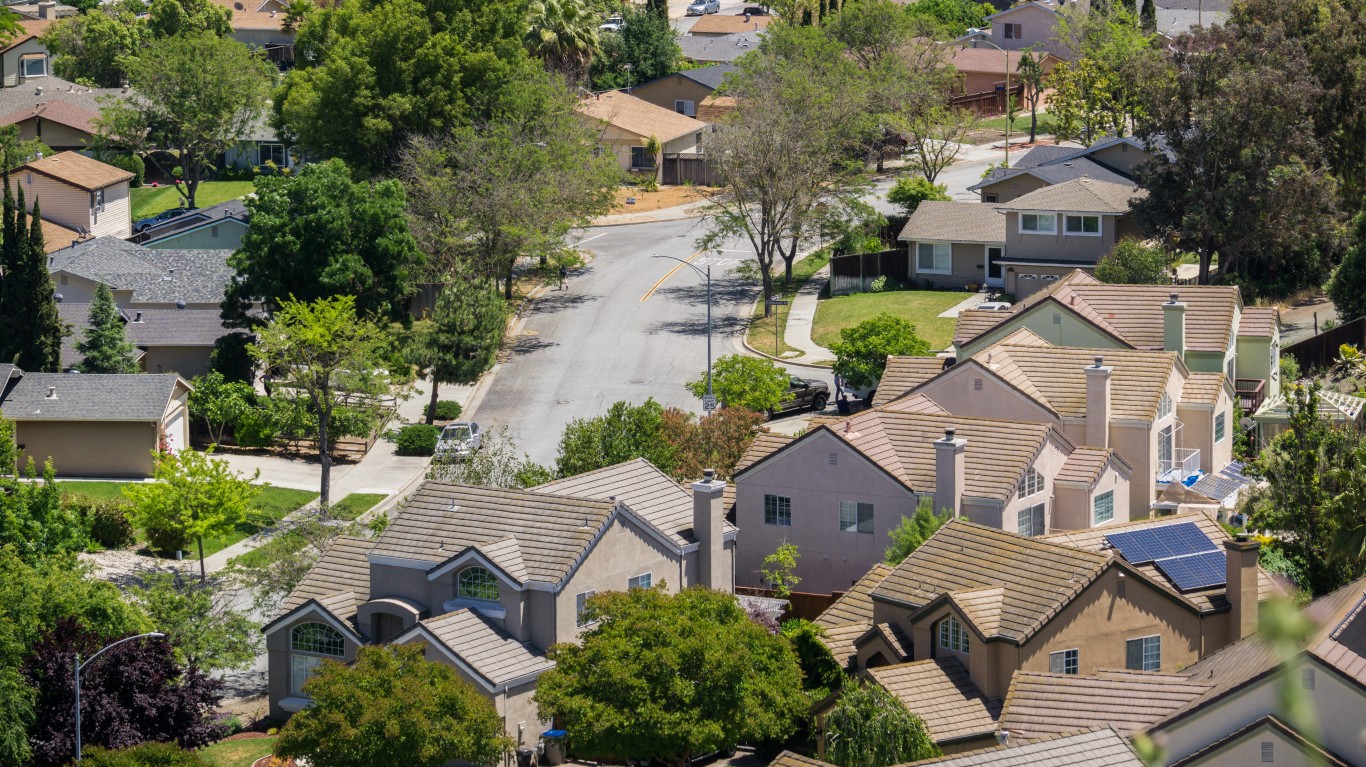
Even as home prices have risen over the past two years, Americans have been able to be homebuyers because of historically low mortgage rates. That ended recently, as mortgage interest rates doubled from last year to over 6%. Some markets have become unaffordable because of the relationship between income and home prices. For current homeowners, the least affordable metropolitan area is San Francisco.
[in-text-ad]
The Federal Reserve of Atlanta maintains a Metro Area Home Ownership Affordability Monitor that analyzes the ratio of median income to median home prices.
[nativounit]
Americans have migrated from expensive coastal cities, such as New York and San Francisco, to less expensive ones inland, but the prices in those coastal cities oddly have stayed high. These inland metros had much lower median home prices, but the rapid influx of new people has lifted the price of a house at a brisk pace. As mentioned, the ability to buy homes was offset by low interest rates.
[wallst_email_signup]
People could leave large cities because of the work-from-home option brought on by office closures due to the COVID-19 pandemic. Many of these offices have not opened, which has allowed workers to relocate.
[recirclink id=1169549]
The Metro Area Home Ownership Affordability Monitor analysis shows that the least affordable markets continue to be on the coasts. On a scale in which the lowest number means the least affordable market, San Francisco posts the worst score at 36. Of the nine least affordable, eight are in California (San Francisco, Los Angeles, San Diego, San Jose, Oxnard, Riverside, Sacramento and Stockton) and the ninth is New York City.

The cities at the far end of the list are older industrial cities. The most affordable is Toledo, with a score of 111.3.


Photo of Douglas A. McIntyre
About the Author Douglas A. McIntyre →

Douglas A. McIntyre is the co-founder, chief executive officer and editor in chief of 24/7 Wall St. and 24/7 Tempo. He has held these jobs since 2006.

McIntyre has written thousands of articles for 24/7 Wall St. He is an expert on corporate finance, the automotive industry, media companies and international finance. He has edited articles on national demographics, sports, personal income and travel.

His work has been quoted or mentioned in The New York Times, The Wall Street Journal, Los Angeles Times, The Washington Post, NBC News, Time, The New Yorker, HuffPost USA Today, Business Insider, Yahoo, AOL, MarketWatch, The Atlantic, Bloomberg, New York Post, Chicago Tribune, Forbes, The Guardian and many other major publications. McIntyre has been a guest on CNBC, the BBC and television and radio stations across the country.

A magna cum laude graduate of Harvard College, McIntyre also was president of The Harvard Advocate. Founded in 1866, the Advocate is the oldest college publication in the United States.

TheStreet.com, Comps.com and Edgar Online are some of the public companies for which McIntyre served on the board of directors. He was a Vicinity Corporation board member when the company was sold to Microsoft in 2002. He served on the audit committees of some of these companies.

McIntyre has been the CEO of FutureSource, a provider of trading terminals and news to commodities and futures traders. He was president of Switchboard, the online phone directory company. He served as chairman and CEO of On2 Technologies, the video compression company that provided video compression software for Adobe’s Flash. Google bought On2 in 2009.

Featured Reads

Our top personal finance-related articles today. Your wallet will thank you later.

Continue Reading

Top Gaining Stocks

CBOE Vol: 1,568,143
PSKY Vol: 12,285,993
STX Vol: 7,378,346
ORCL Vol: 26,317,675
DDOG Vol: 6,247,779

Top Losing Stocks

LKQ
LKQ Vol: 4,367,433
CLX Vol: 13,260,523
SYK Vol: 4,519,455
MHK Vol: 1,859,865
AMGN Vol: 3,818,618