


Home prices have stopped falling after several months of a downturn. According to S&P Case Shiller, the prices bumped up slightly in February. It is nothing like the run of increases that ran for almost two years, until late in 2022 when mortgage rates began to rise. However, it is at least a sign of hope. Across the 20 metros Case-Shiller measures with a base price from 2000, many markets have had extremely sharp increases in price. In a much smaller number, they have barely risen at all. (People are leaving these 11 states in droves.)
[in-text-ad]
U.S. home prices increased 0.2% month over month in February. Craig J. Lazzara, managing director at S&P DJI, commented “The National Composite, which had declined for seven consecutive months, rose a modest 0.2% in February, and now stands 4.9% below its June 2022 peak.”
[nativounit]
In January 2000, when Case-Shiller started to measure its 20 metros, it gave each city a value of 100. This allowed its researchers to show price increases in each city over time. Some cities have values that have risen over threefold since then. Metros on the West Coast dominate this category. The index for San Diego is 384.83, and for San Francisco it is 329.79.
[wallst_email_signup]
The metro with the smallest increase in value is Detroit at 165.08. Detroit was once the greatest industrial city in America, with a population and economy dominated by the car industry. Since 1950, its population has declined by half to about 700,000. The poverty rate is over 30%, which is among the highest in the country. There is no prospect for recovery. Cities adding people have populations with skills to draw companies and industries.
[recirclink id=1187567]
Home prices in Detroit are low by historical standards, and they are unlikely to grow in relation to America’s other large metros.
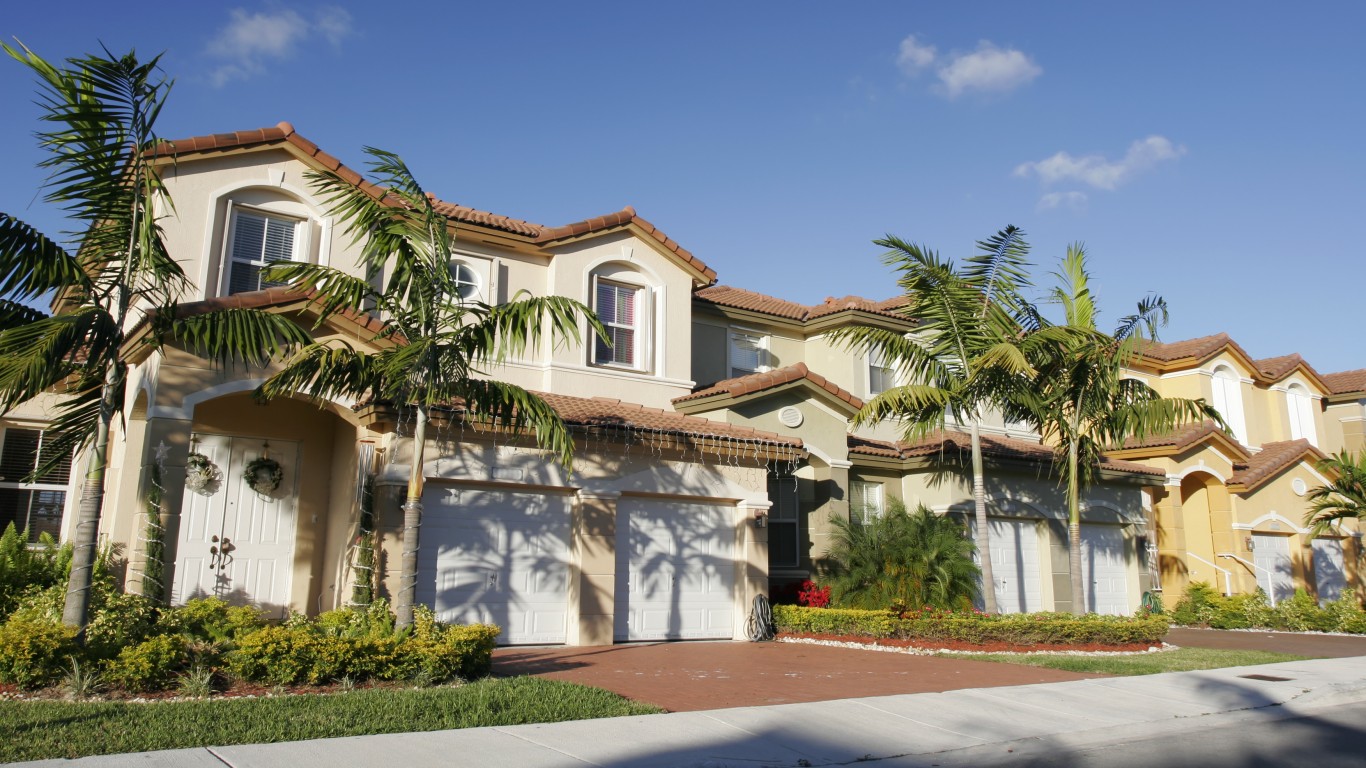
America’s Cheapest Housing Market


© peeterv / iStock via Getty Images

Douglas A. McIntyre is the co-founder, chief executive officer and editor in chief of 24/7 Wall St. and 24/7 Tempo. He has held these jobs since 2006.
McIntyre has written thousands of articles for 24/7 Wall St. He is an expert on corporate finance, the automotive industry, media companies and international finance. He has edited articles on national demographics, sports, personal income and travel.
His work has been quoted or mentioned in The New York Times, The Wall Street Journal, Los Angeles Times, The Washington Post, NBC News, Time, The New Yorker, HuffPost USA Today, Business Insider, Yahoo, AOL, MarketWatch, The Atlantic, Bloomberg, New York Post, Chicago Tribune, Forbes, The Guardian and many other major publications. McIntyre has been a guest on CNBC, the BBC and television and radio stations across the country.
A magna cum laude graduate of Harvard College, McIntyre also was president of The Harvard Advocate. Founded in 1866, the Advocate is the oldest college publication in the United States.
TheStreet.com, Comps.com and Edgar Online are some of the public companies for which McIntyre served on the board of directors. He was a Vicinity Corporation board member when the company was sold to Microsoft in 2002. He served on the audit committees of some of these companies.
McIntyre has been the CEO of FutureSource, a provider of trading terminals and news to commodities and futures traders. He was president of Switchboard, the online phone directory company. He served as chairman and CEO of On2 Technologies, the video compression company that provided video compression software for Adobe’s Flash. Google bought On2 in 2009.












 Top Gaining Stocks
 Top Losing Stocks