


Many analysts have pointed out that the political instability in the Middle East is the result of the lack of jobs and affordable food. Choosing democracy as a form of government may be equally important. The stress between religious groups is also a powerful factor, but poverty is a visible cause of unrest. Each religious sect certainly has an additional reason to push its cause for a new government if its members are constantly hungry.
The support for the “poverty causes unrest” theory is rooted in the demographics of the nations in which people are in the midst of attempts to overthrow or have overthrown their governments. That unrest is likely to remain outside Saudi Arabia.
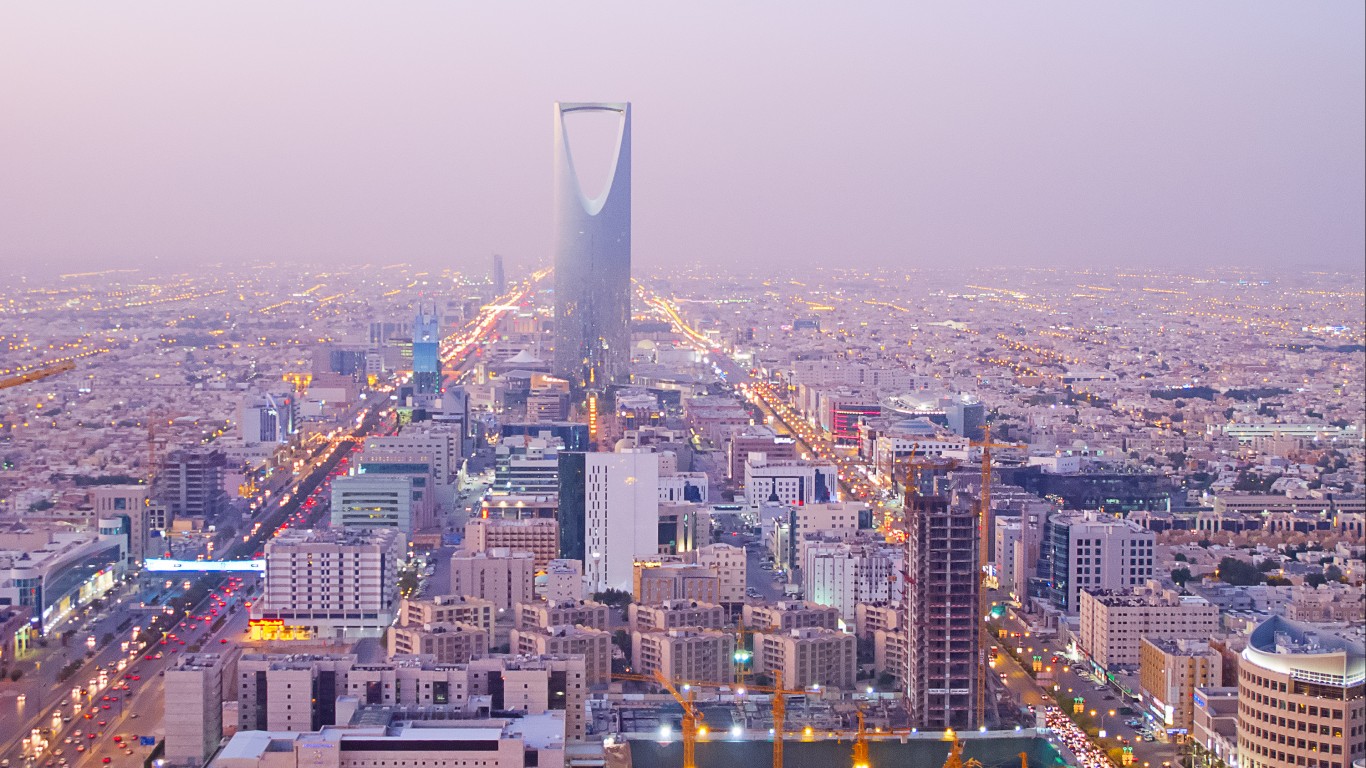
The monarchy may be the equivalent of a dictatorship, but the people of Saudi Arabia live in prosperity by the standards of the neighboring countries. The King has also chosen to spend billions of dollars on the welfare of his subjects in the last few weeks. If that were not enough, the Saudi National Guard, an agent of the royal family, is one of the most well-armed in the world.
The figures with regard to demographics are old and not always reliable when reported from the under-developed world. GDP per capital in Yemen is $2,600, an estimate from 2010, which puts the country 173rd among nations. Unemployment is 35% and the number of people who live below the poverty line is 45%. Those figures are seven years old. The GDP per capital number for Yemen is low enough today so it is unlikely that the unemployment and poverty figures have improved in the years that fall between now and when the two sets of older estimates were made. Yemeni president, Ali Abdullah Saleh, has been in power 32 years. Yemen’s citizens have lived in horrible conditions for most of that time. The current turmoil in the region has given the impoverished people of Yemen the determination to fight for a way out of poverty. They have feared government retaliation for any attempt to improve their circumstances for decades. The ouster of Hosni Mubarak showed them that repression can be overcome quickly and with little loss of life. The regimes that have presided over poverty do not have to be the nearly universal way of governing in most of the region.
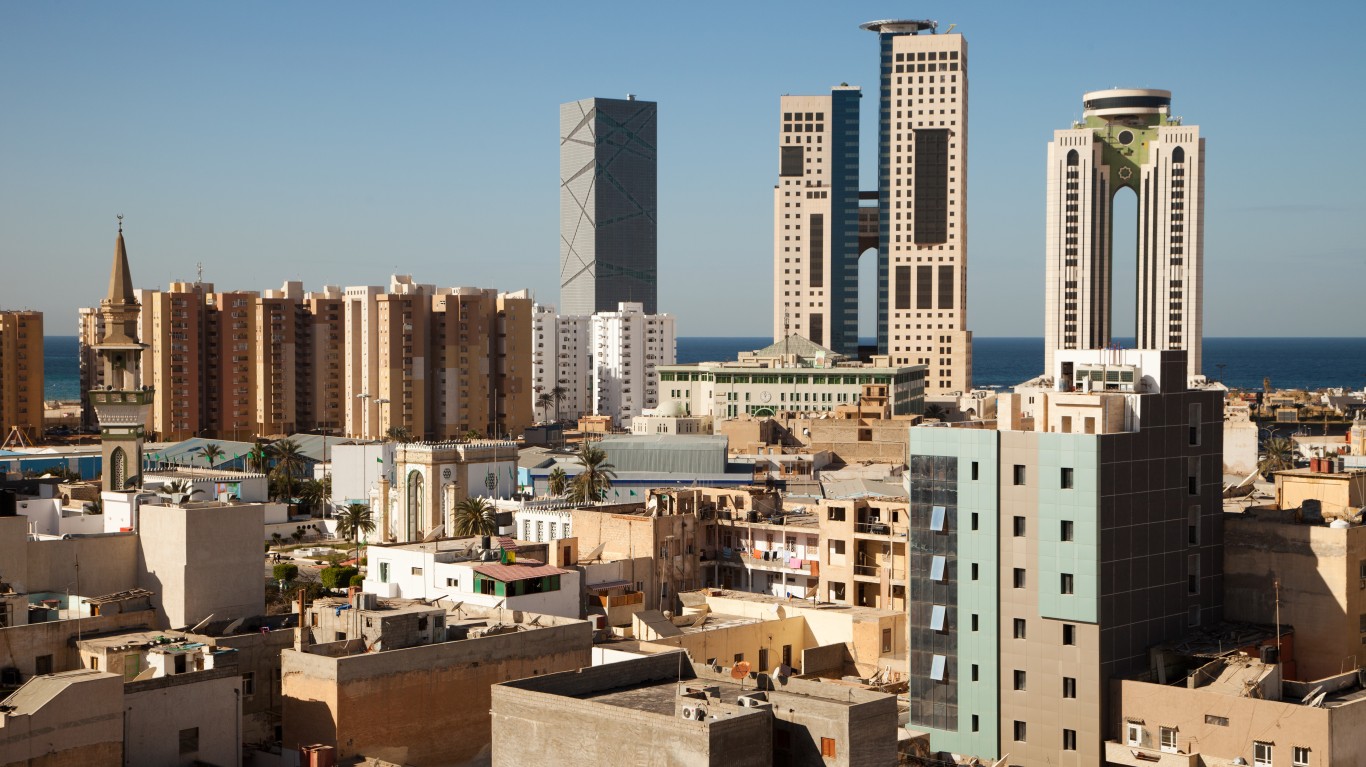
The demographics that are the foundation for the region’s instability are particularly evident in the nations in which revolution is the most active. In Egypt, 20% of people live below the poverty line. Libya’s unemployment rate is 30%. Twenty-five percent of the population in Iraq is below the poverty threshold, which does not bode well for the country’s future stability. The unrest that has spread from country to country has deep poverty as a common element which is occasionally matched by religious grievances. That makes it all the more likely that the trouble will grow until uprisings are either crushed or succeed. The sad part of these movements is that there will no organized governments to replace those which have existed for many years. Revolution may bring change, but it will not feed a single person. In the chaos, the number of hungry people may actually rise.
Circumstances in Saudi Arabia, promoted by the monarch and his family, are likely to ensure the continuation of their regime. GDP per capita is $24,200 in Saudi Arabia. That is higher than either Mexico or Poland. Economic analysts have been persuasive in statements that say Saudi Arabia’s wealth is concentrated among the rich princes so that per capital data is misleading. That is true, but only to an extent. Some of the most important aspects of modern affluence are found throughout the kingdom. Saudi Arabia ranks 27th among nations of the world in cellular phone use and 30th in broadband use. These are not communication tools which are likely to be used by the extremely poor
Saudi Arabia has an economic advantage over many of its neighbors who have substantial portions of their populations in poverty, but the government has another advantage which is just as powerful. The country spends 10% of its GDP on its military. This figure is over twice that of the US and nearly 10 times what it is in China. This money is not merely spent to protect Saudi Arabia from its neighbors. The Saudi monarchy controls The Saudi Arabian National Guard, which is nearly as large as the country’s normal military force. Also known as The White Army, it has 125,000 soldiers.
The arrest of a Shi’ite cleric in the Saudi Arabia’s Eastern Province last week should have touched off unrest if unrest was likely. There have been no street protests or attacks on the government since then. The lack of anti-government political activity may be due to the recent decision by King Abdullah to spend $36 billion around the country to increase the number of jobs in the kingdom, offer the currently employed raises, forgive debts, and help expand the construction of modern homes.
The monarchy understands and has understood for years what the regime leaders in countries with extreme disparity between the rich and powerful few and the rest who are poor do not. Power can be maintained with demonstrations of strength, both militarily and an improvement of the distribution of wealth.
Douglas A. McIntyre







 Top Gaining Stocks
 Top Losing Stocks