


 Non-profits are being squeezed like they have never been squeezed before by state and local governments, and the situation is only going to get worse.
Providence Mayor Angel Tavares, whose city faces a $110 million deficit, on Monday unveiled a plan to tax nine non nine major non profits in his city including Brown University. Boston Mayor Thomas Menino recently asked 40 non-profits to make partial payments on property worth $13.6 billion. Mayor-elect Rahm Emanuel recently warned his city’s nonprofits that they were not going to be immune to financial sacrifice.
The non-profit community is standing firm, arguing — rightly — that local officials do not have the right to change their tax-exempt status. Only, the IRS has the right to make that call. A Brown University spokesperson was quoted in the local press saying that the university would talk to Tavares but balked at writing the city a “blank check.” Besides, many non-profits have paid payments in lieu of taxes to their cities to reimburse them for the cost of their services for years. The exemptions, though, are not automatic for state and local taxes though governments have been “somewhat generous” in handing them out, as Kelly Phillips Erb argued in Forbes.
“Those taxes, which include sales and use tax and real estate tax, are generally payable by the organization unless exempt either by application or by agreement,” she writes. “After all, many tax-exempt organizations are small and face real budgetary challenges and more importantly, at the heart of their organization, they’re performing good and charitable works.”
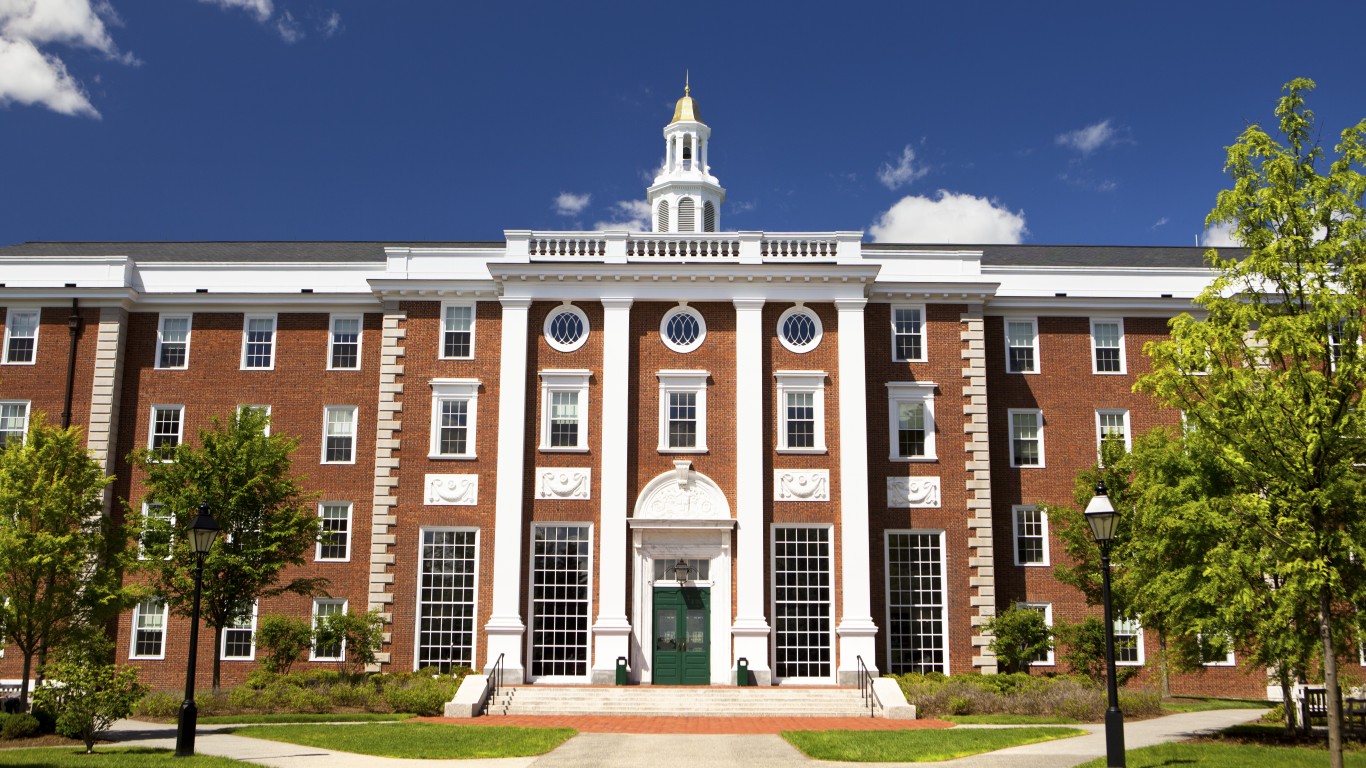
That argument is becoming increasingly more difficult for taxpayers and local officials to swallow. Take Cambrdge, Mass., home to Harvard University. The town’s proposed Fiscal Year 2012 budget calls for the total to increase by 6.47%. The actual levy, however, be lower depending among other things on the level of state aid it receives, the city says, adding that is expected to decline. Cambrige is dependent on property taxes for more than 65% of its revenue, which is typical.
“Despite our ability to manage our resources to provide services and infrastructure improvements, Cambridge faces the same challenges as other cities and towns with regard to municipal financing and reliance on the property tax,” the city says in its budget.
Now, contrast that with Harvard, arguably one of the richest and most prestigious institutions of higher learning in the world. The size of its endowment was reported last year at $27.6 billion, when it earned an 11% return. Harvard, by the way, has made a payment in lieu of taxes to Cambridge for years.
The problem with non-profits is that many of the large ones — such as universities — are far from poor. They have rich endowments, and in some cases pay their leaders seven figure salaries. It is only natural for politicians to view them as untapped sources of cash.
“There is no question that nonprofit universities and hospitals — eds and meds, as they are known to planners — have played a central role in helping cities weather the Great Recession and its aftermath: the New York Times says. “They provide high-paying jobs, draw visitors and keep downtowns vibrant. But for cities that rely heavily on property taxes, those benefits have a cost. As nonprofits grow in size and importance in many cities, manufacturing has disappeared and development has moved to the suburbs, leaving much of the best land in some cities off the tax rolls. ”
This situation is untenable.
–Jonathan Berr











 Top Gaining Stocks
 Top Losing Stocks