


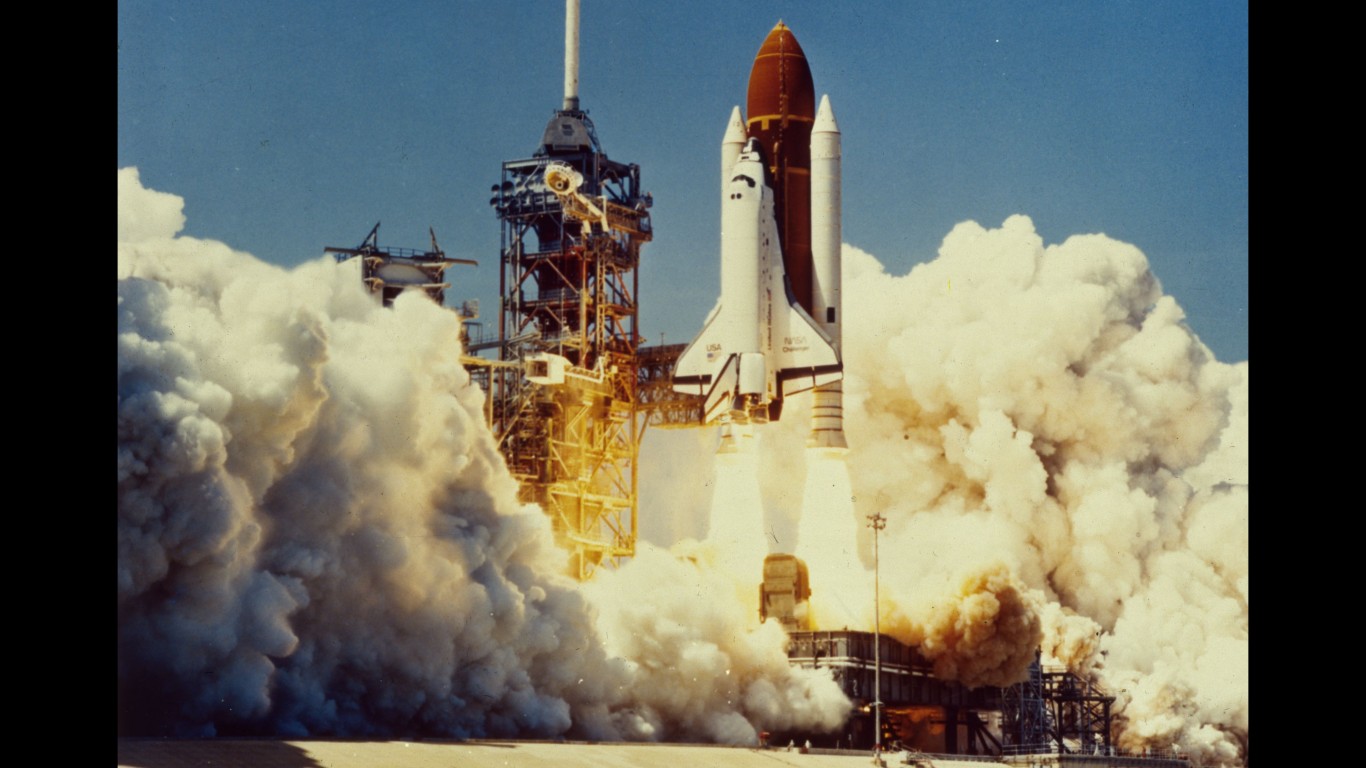
 Three hours after a dismal jobs report the shuttle Atlantis made the last of 135 flights by the American fleet of orbiters, which extends back to 1981. Atlantis took with it 23,000 lost jobs in the communities around Cape Canaveral, FL — Palm Bay and Titusville — near the Kennedy Space Center. “That sum includes 9,000 ‘direct’ space jobs and — conservatively speaking — 14,000 ‘indirect’ jobs at hotels, restaurants, retail stores and others that depend on activity at the space center,” Lisa Rice, Brevard Workforce president told Florida Today. That figure stands in contrast to the paltry 18,000 non-farm payroll jobs the Labor Department said were added nationwide by the economy in June
Many of the jobs lost at NASA and the towns that count on its presence will further the trend of ongoing federal, state and local government layoffs, which reached 39,000 in June.
The emasculation of the space program points to yet another part of the government that’s been crippled by austerity measures. Its downsizing was not part of the current debate over ways to cut federal costs, but it might as well be. The Administration and Congress have eliminated many discretionary programs since it was clear three years ago that deficits had begun to balloon to levels never seen before. NASA’s flights, going all the way back to John Glenn’s in 1962, had not brought back any any valuable assets from the moon, or discovered ways to make money in space. The research done by NASA and used in the broader scientific world was also not enough to spare the agency from the axe. Many in Congress viewed the program as just an expensive set of toys for pilots and Ph.Ds who could not find other jobs.
Many opponents to additional manned space flights say that money for NASA should be spent for Americans on the ground and on the wars in Iraq and Afghanistan. The first may help U.S. businesses to add jobs. The other will keep the U.S. safe from the threats of foreign terrorists. It is difficult to advocate that space exploration should come before those.
But the cutbacks at NASA are part of a tidal wave of federal, state and municipal layoffs caused by low tax revenue and expense levels set five years ago when property values were at record highs and governments could afford to supply citizens with an unprecedented array of services. Now, many cities are near insolvency, the state of Minnesota is shut down over a budget battle, and the debate over the federal budget cap will certainly end with the elimination of some amount of jobs at U.S. agencies and departments. The need to cut the number of policemen in Pontiac, MI may not seem related to layoffs at NASA, but each is part of a broad change in the reality that governments at all levels have run out of money.
Space travel by Americans will only be available in the future on ships made by entrepreneurs like Richard Branson who has started Virgin Galactic. The cost of a ticket is only $200,000. It cost NASA tens of millions of dollars to put each astronaut into space.
The shuttle was once a pride of America, but not one that America can afford in a period of austerity that could last for years and cause hundreds of thousand of government jobs losses, of which NASA is only a tiny part.
Douglas A. McIntyre









 Top Gaining Stocks
 Top Losing Stocks