Catastrophe in Europe by End of Year?

Photo of Douglas A. McIntyre
By Douglas A. McIntyre Published
This post may contain links from our sponsors and affiliates, and Flywheel Publishing may receive compensation for actions taken through them.

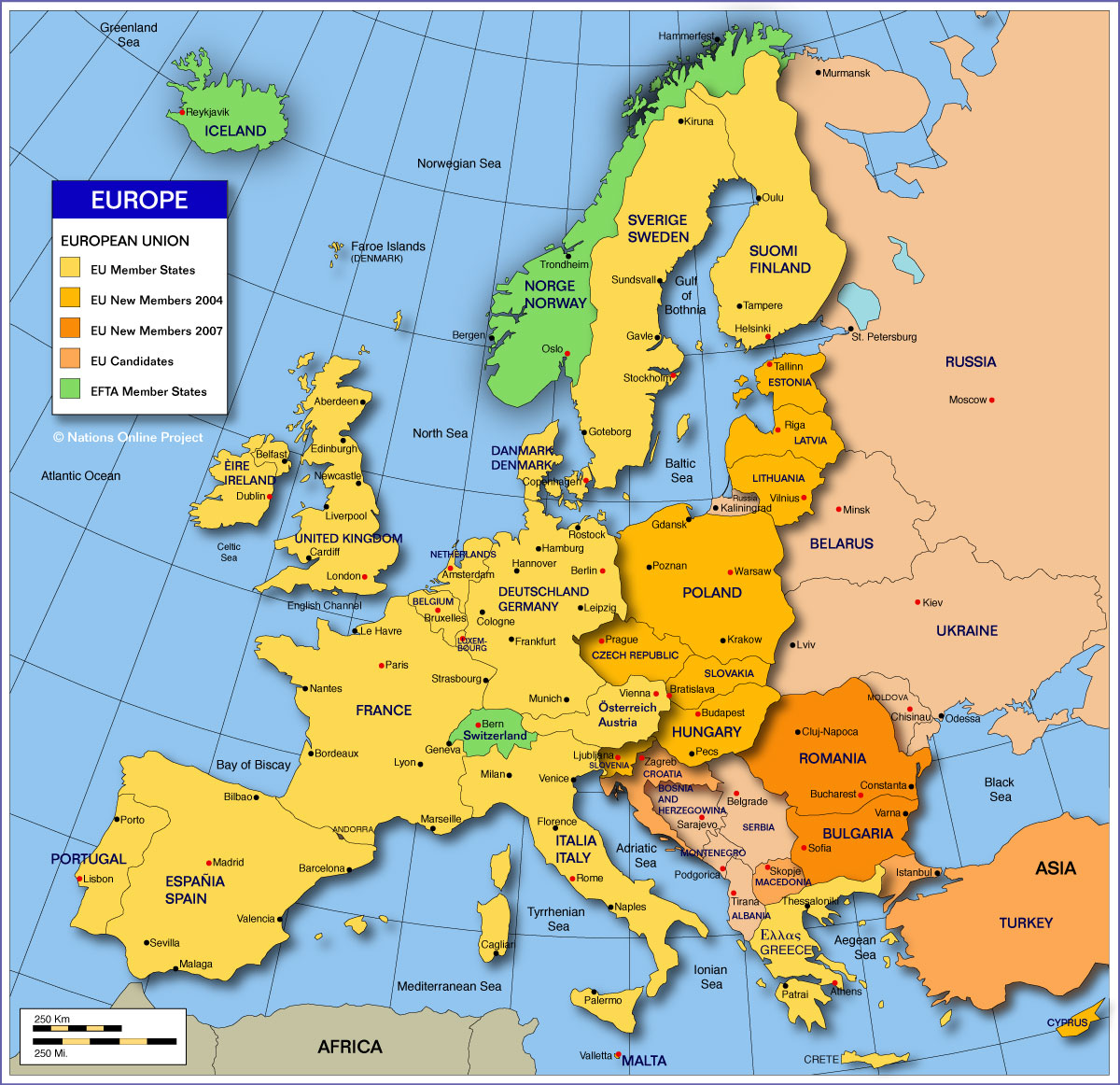
A de facto collapse of the eurozone may occur before the end of 2011. It is unlikely, but it is possible. This possibility is new and relates to the lack of ability of the region’s largest nations, the European Central Bank and International Monetary Fund to set a deal, while capital markets investors continue to flee the sovereign paper of European countries.

A completely unexpected development is that ECB chief Mario Draghi told the Financial Times that the eurozone could break up. Draghi is among the most important players in the region’s future. He must know that his comments will add substantially to concerns about an end to the alliance that bonds many of the region’s nations financially.

In his interview with the paper:

He hinted he opposed the ECB setting target limits for eurozone government bond yields or for the spread between the interest rate on German and other eurozone government debt. “Monetary policy cannot do everything.”

His observation sounds like those of Federal Reserve chief Ben Bernanke when he warned Congress that it was responsible for getting the U.S. deficit under control. The Fed’s hands were tied, he said, because its mandate does not include a full bailout of the U.S. government.

The backdrop to Draghi’s observations is that Moody’s put the AAA rating of France on credit watch and said its forecast was negative. The rating of the European Financial Stability Facility is based on those of the region’s largest nations, which certainly include France and Germany. A downgrade of France could increase the cost of money for the EFSF, which would undermine its power as a rescue mechanism.

Some suggest that the best method to bailout the weak economies in Europe would be through the IMF. Central banks would loan the agency money, which it would in turn use to support regional governments. Several central banks would have to individually decide to support this initiative. That means several financial and political decisions would need to be made. So far, European nations have not shown that kind of unity.

Few believe that so many nations in the region can muster a united approach to the disaster because the politics of how the bailout should be conducted are different in each country. The finance ministers of most of the nations will meet this week to see if they can reach a “final solution” to the crisis. If the meeting goes poorly, confidence in the fate of the eurozone could disappear quickly.

Douglas A. McIntyre

Photo of Douglas A. McIntyre
About the Author Douglas A. McIntyre →

Douglas A. McIntyre is the co-founder, chief executive officer and editor in chief of 24/7 Wall St. and 24/7 Tempo. He has held these jobs since 2006.

McIntyre has written thousands of articles for 24/7 Wall St. He is an expert on corporate finance, the automotive industry, media companies and international finance. He has edited articles on national demographics, sports, personal income and travel.

His work has been quoted or mentioned in The New York Times, The Wall Street Journal, Los Angeles Times, The Washington Post, NBC News, Time, The New Yorker, HuffPost USA Today, Business Insider, Yahoo, AOL, MarketWatch, The Atlantic, Bloomberg, New York Post, Chicago Tribune, Forbes, The Guardian and many other major publications. McIntyre has been a guest on CNBC, the BBC and television and radio stations across the country.

A magna cum laude graduate of Harvard College, McIntyre also was president of The Harvard Advocate. Founded in 1866, the Advocate is the oldest college publication in the United States.

TheStreet.com, Comps.com and Edgar Online are some of the public companies for which McIntyre served on the board of directors. He was a Vicinity Corporation board member when the company was sold to Microsoft in 2002. He served on the audit committees of some of these companies.

McIntyre has been the CEO of FutureSource, a provider of trading terminals and news to commodities and futures traders. He was president of Switchboard, the online phone directory company. He served as chairman and CEO of On2 Technologies, the video compression company that provided video compression software for Adobe’s Flash. Google bought On2 in 2009.

Continue Reading

Top Gaining Stocks

CBOE Vol: 1,568,143
PSKY Vol: 12,285,993
STX Vol: 7,378,346
ORCL Vol: 26,317,675
DDOG Vol: 6,247,779

Top Losing Stocks

LKQ
LKQ Vol: 4,367,433
CLX Vol: 13,260,523
SYK Vol: 4,519,455
MHK Vol: 1,859,865
AMGN Vol: 3,818,618