New European Fund Too Small

Photo of Douglas A. McIntyre
By Douglas A. McIntyre Published
This post may contain links from our sponsors and affiliates, and Flywheel Publishing may receive compensation for actions taken through them.

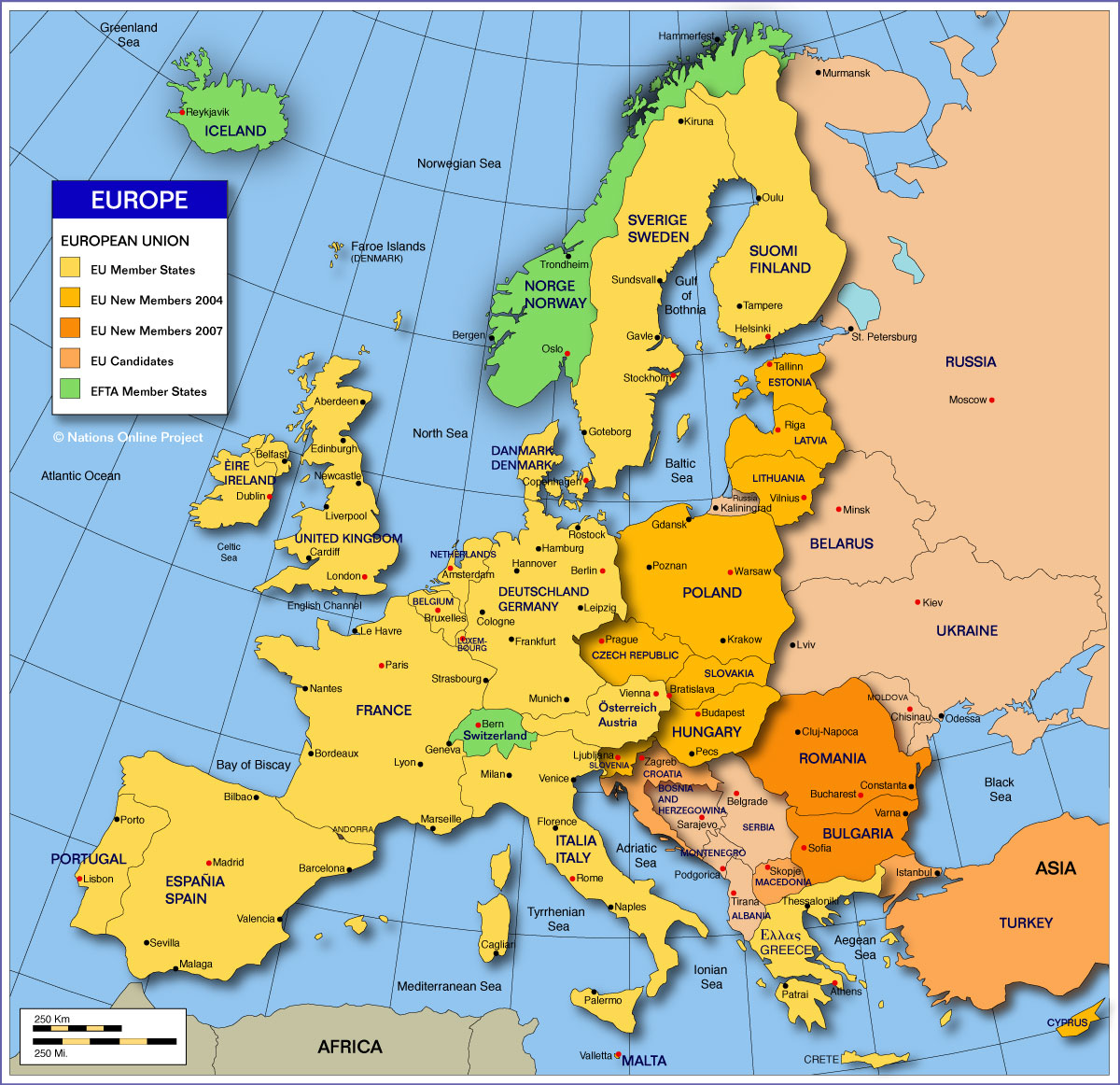
EU nations have approved a plan to provide new financial aid to weak nations, but one that would more carefully regulate the budgets of the weakest nations. Though details were sparse, one thing is clear. The financial facilities created will be too small to bail out Italy and perhaps Spain.

Four nations of 27 refused the new plan — the UK, Hungary, Sweden and the Czech Republic. It is of interest that none of these countries needs new capital to protect its sovereign paper.

The new plan may funnel loans from central banks in the region through the International Monetary Fund. The IMF is considered more strict in the provisions of loans that it gives nations. That would put teeth in the control of countries that have large deficits. The plan also would raise bailout funds controlled by the area’s countries to as high as 700 billion euros. The European Central Bank will make more money available to the region’s banks.

Some of the actions needed to cement a firewall against national defaults are still being negotiated. The Wall Street Journal reports that:

German Chancellor Angela Merkel emphasizing her opposition to a plan that had broad support among other countries — giving a banking license to the European Stability Mechanism, its future bailout fund. That move, which was included in a leaked draft communique of the meeting’s expected conclusions, would allow the bailout fund to borrow from the ECB.

Germany may be only one country, but it has the financial might to drag the balance of the region along with any decisions it makes.

It is not entirely plain how much money Spain will need if capital markets desert it and it cannot fund its deficits. The number could be as high as 500 billion euros. A bailout of Italy could cost twice that. International investors, aware of this math, will not see new loan facilities as adequate to solve the region’s entire problem, which means contagion still may be a serious issue.

The EU needed to show it has the money to solve a regionwide crisis. It did not do so.

Douglas A. McIntyre

Photo of Douglas A. McIntyre
About the Author Douglas A. McIntyre →

Douglas A. McIntyre is the co-founder, chief executive officer and editor in chief of 24/7 Wall St. and 24/7 Tempo. He has held these jobs since 2006.

McIntyre has written thousands of articles for 24/7 Wall St. He is an expert on corporate finance, the automotive industry, media companies and international finance. He has edited articles on national demographics, sports, personal income and travel.

His work has been quoted or mentioned in The New York Times, The Wall Street Journal, Los Angeles Times, The Washington Post, NBC News, Time, The New Yorker, HuffPost USA Today, Business Insider, Yahoo, AOL, MarketWatch, The Atlantic, Bloomberg, New York Post, Chicago Tribune, Forbes, The Guardian and many other major publications. McIntyre has been a guest on CNBC, the BBC and television and radio stations across the country.

A magna cum laude graduate of Harvard College, McIntyre also was president of The Harvard Advocate. Founded in 1866, the Advocate is the oldest college publication in the United States.

TheStreet.com, Comps.com and Edgar Online are some of the public companies for which McIntyre served on the board of directors. He was a Vicinity Corporation board member when the company was sold to Microsoft in 2002. He served on the audit committees of some of these companies.

McIntyre has been the CEO of FutureSource, a provider of trading terminals and news to commodities and futures traders. He was president of Switchboard, the online phone directory company. He served as chairman and CEO of On2 Technologies, the video compression company that provided video compression software for Adobe’s Flash. Google bought On2 in 2009.

Featured Reads

Our top personal finance-related articles today. Your wallet will thank you later.

Continue Reading

Top Gaining Stocks

CBOE Vol: 1,568,143
PSKY Vol: 12,285,993
STX Vol: 7,378,346
ORCL Vol: 26,317,675
DDOG Vol: 6,247,779

Top Losing Stocks

LKQ
LKQ Vol: 4,367,433
CLX Vol: 13,260,523
SYK Vol: 4,519,455
MHK Vol: 1,859,865
AMGN Vol: 3,818,618



