


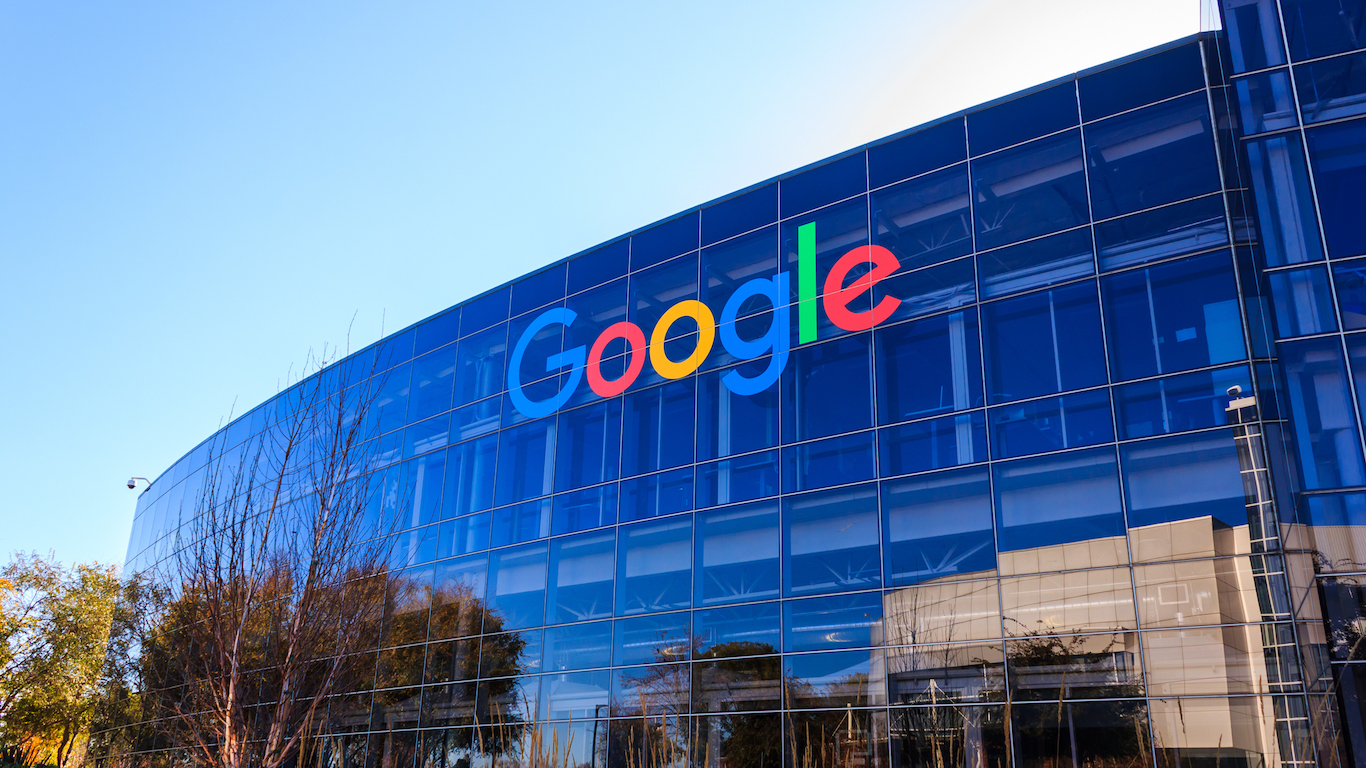
 Google (NASDAQ: GOOG) shares stumbled after it released fourth-quarter earnings. Revenue rose 25%, but net income barely rose to $2.7 billion. The markets were puzzled about why Google now has 32,467 full-time workers, a peak. Its headcount should be down, as it has left a dozen weak businesses. The more troubling thing was that Google’s per-click revenue on text ads dropped by 8%. Some experts think Google’s smartphone-based ads do not fare as well as those shown on PCs. And, Google has raced into the mobile market. The final worry about Google is that its huge success with Android adoption will not made it any money. Android is open source, and therefore free to manufacturers. Cheap has gotten expensive, though. Microsoft (NASDAQ: MSFT) has convinced a number of smartphone companies that Android violates some of its patents. This has allowed Microsoft to collect royalties on Android. So, Redmond makes money on Android licenses, while Google does not.
EU Budget Restrictions
European Union governments will face tougher budget restrictions than most countries in the alliance would like. Bloomberg reports that the European Central Bank has insisted on a “correction mechanism” that would be triggered “automatically” if a nation in the region misses budget targets. A European Commission court could then levy fines on the offending nation. Germany, the eurozone’s de facto bank, would like these rules so it has a means of leverage as it supplies capital. But the plan is counterproductive. Nations with deep deficits that are also in uncontrollable recessions can hardly handle the weight of fines as well.
The EU’s Need for Stimulus
The debate over austerity versus stimulus in Europe has heated up again. International Monetary Fund head Christine Lagarde voiced her opinion that naked austerity without a tether to grow stimulus will only push the weakest nations in the region into awful recessions. Since the region’s stronger nations rely on the others for trade, the trouble will spread. Bloomberg quotes a statement that said, “The world faces significant and urgent challenges that weigh heavily on prospects for future growth.” Lagarde and members of the Global Issues Group of the World Economic Forum added to the statement: “We worry about decelerating global growth and rising uncertainty, high unemployment” and a potential shift to protectionist policies. The comments carry very little weight in an environment in which rich nations and the ECB believe that, without strict austerity measures, deficits cannot be brought down. And austerity, by its nature, largely rules out stimulus packages.
GM Regains Top Spot
General Motors (NYSE: GM) regained its place as the world’s largest car company. It did several things its rivals did not do. It kept its lead in China, the world largest market. Car sales in the People’s Republic have slowed considerably. But no global manufacturer can be entirely successful without a significant presence there. GM also revived its fortunes in the U.S., where it continues to be the top car company by share. Analysts credit GM with a rapid exit from Chapter 11 and the introduction of a large number of new models that have been well-received. Of course, it would be more accurate to say that GM and the U.S. government are the number one car company in the world. The U.S. Treasury still has a large stake in the company based on its rescue package. And without that rescue, GM might not exist at all.
Douglas A. McIntyre






 Top Gaining Stocks
 Top Losing Stocks