


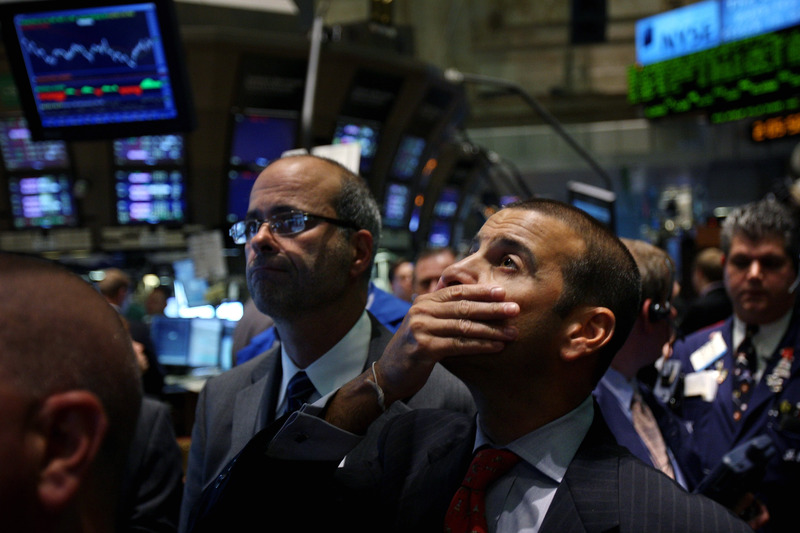
These kinds of moves, where entire indexes move like penny stocks, are indicative of a market that does not know what the price of equities should be. The extent of it can only be the response to unprecedented measures that have never before been in place, and from which the market has never been extricated.
To many, especially to new traders who have only entered equities markets in the past seven years, interest rates set at zero may seem normal, but they are not. Not only in terms of artificial Federal Reserve policy, but in terms of human nature itself. Present consumption is inherently worth more than future consumption. Money now is worth more than money in the future. This is why we get discounts for bulk orders, because sellers of goods want money now rather than money later.
ALSO READ: Where Will Warren Buffett Put Money as Markets Collapse?
In order to compensate for the higher value of present goods over future goods, something more must be offered for delayed gratification. This is the rate of interest. Setting these rates artificially to zero by controlling the money supply forces people to consume now rather than later, because why delay gratification if there is no gain by doing so? This increases the value of present goods even further, equities included. It is why the S&P 500 has gained as much as 220% in six years.
We can look at rising interest rates in one of two ways. From one perspective, the value of future goods rises. But we can equally say that the value of present goods falls. Relatively, both statements are the same. If the Fed does raise interest rates, the value of equities will fall. If they remain at zero, they will rise.
The reason equities are whipsawing like penny stocks right now is that the market does not know what the rate of interest will be in the very near future, because the Fed has not conclusively indicated its intentions. Before the Fed existed, the natural interest rate was calculated by the collective time preferences of every actor on the market. This means that any one person’s preferences for present goods over future goods had a miniscule effect on overall interest rates. In other words, very high liquidity in interest rates, leading to relative stability in market prices. Just look at a graph of stock prices before the Fed was founded in 1913 and compare it to one after.
But now, with interest rates under the thumb of a single institution, interest rate liquidity is almost zero, just like any one single buyer can influence the price of one penny stock dramatically with a single buy order. This means nobody knows what the value of present goods — read equities — really is, hence the unprecedented swings. It is why current illiquidity and extremely volatile stock price movements will continue until we know for certain what the Fed’s intentions are for its next meeting on September 17.
ALSO READ: Oppenheimer’s 7 Bull Market Leaders to Buy After the Sell-Off



 Top Gaining Stocks
 Top Losing Stocks