


NASA wants to build a plane that can travel beyond the speed of sound, which is 761 miles per hour, but without creating the huge sonic booms that shake the ground below the planes for miles. A new aircraft, which could solve the problem, will go into test service in 2021.
The new X-59 Quiet Supersonic Technology airplane will be built by aerospace and security company Lockheed Martin Corp. (NYSE: LMT), which is currently America’s largest defense contractor. It also sells billions of dollars of defense systems overseas. Lockheed Martin builds the F-35 fighter jet, satellites, spacecraft and radar systems. Its revenue in the most recent quarter was $14.3 billion, on which it made $1.6 billion. Lockheed Martin employs about 100,000 people.
NASA’s goal with the X-59 is to create a test aircraft with technology that eventually will be used in commercial aviation. The plane will travel 940 mph and cruise at 55,000 feet. The most notable feature of the aircraft is the “boom” it will create on the ground below will be, according to Lockheed Martin “about as loud as a car door closing.” NASA calls the X-59 a “Low Boom Flight Demonstrator.”
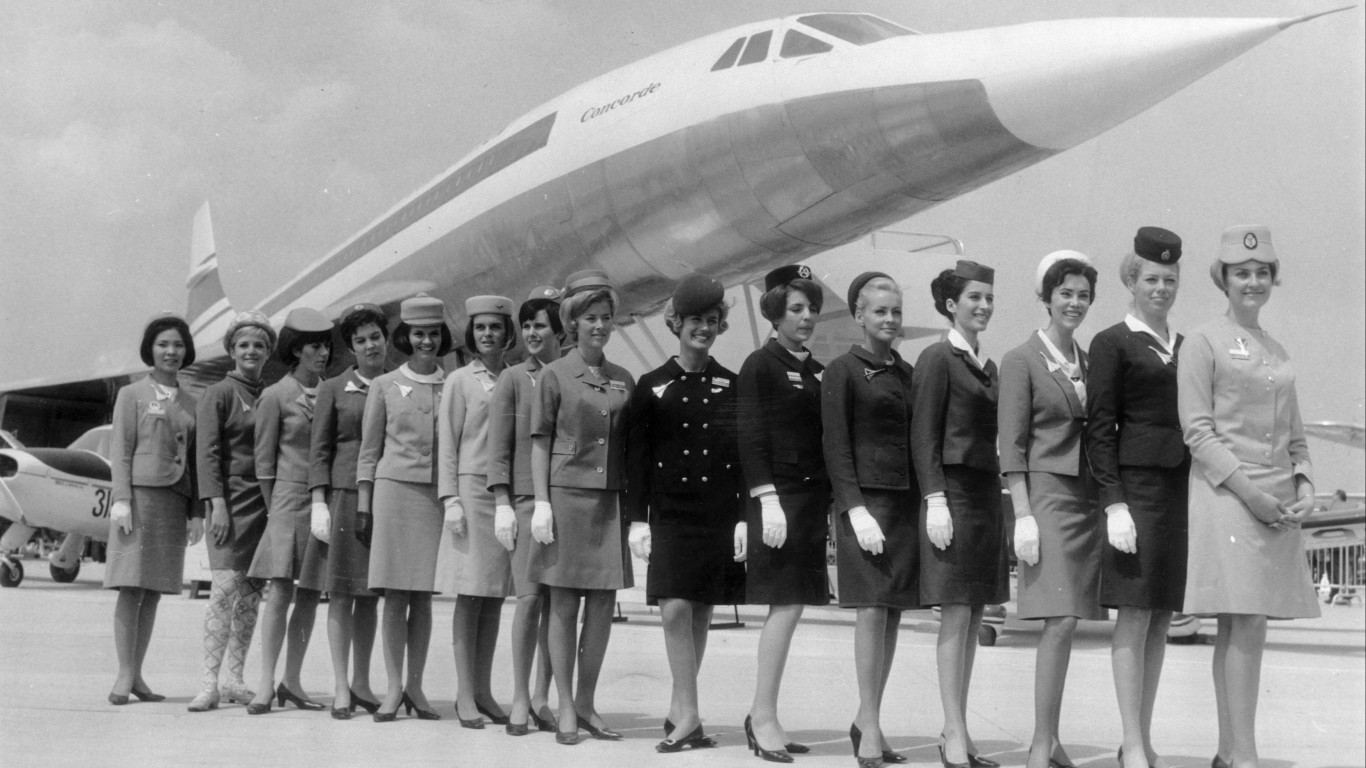
Sonic booms are so loud that commercial aircraft have prevented from traveling over land. The only two supersonic aircraft ever put into commercial service were the Concorde and the Soviet-built Tupolev Tu-144. The Concorde, which traveled at about twice the speed of sound, was operated by British Airlines and Air France. It went into commercial service in 1976 and stopped flying in 2003. Sixteen of the planes were used by the two airlines. The planes operated primarily between Paris and London on one side of the Atlantic to Washington and New York City on the other. One of the drawbacks of the planes is that they could not be configured to carry more than 130 passengers. With round-trip ticket prices that could be as high as $7,500, the plane probably was profitable for the carriers, but development costs for future versions were prohibitively high.
[nativounit]
The other challenge the Concord faced is that because it could only be flown above the ocean because of the sonic boom problem, it could not operate on well-traveled long routes like those from the east coast to west coast of the United States.
Sonic booms are created by pressure waves from planes as they fly overhead. The sound has often been described as similar to a bullwhip.
If the X-59 is a success, it could lead to the manufacture of airplanes that can fly coast to coast in the United States in about two hours instead of the approximately five hours it takes today. The open question will be whether people will pay ticket prices that likely will be many times what it costs to fly the routes now.
[wallst_email_signup]











 Top Gaining Stocks
 Top Losing Stocks