


After the huge melt-up rally off the March lows, the S&P 500 closed Wednesday at 3,115. That is almost 900 points higher than the 2,237 sell-off low on March 23. While the stock market is a forward-looking instrument, traders and strategists know that the coming earnings data will be horrific, the domestic and geopolitical scene is messy and every additional wild card that is out there could be played for all we know. So investors may want to brace themselves for a third-quarter that grinds lower.
[in-text-ad]
While going to cash is almost never an option for investors, rotating to dividend-paying stocks that offer better upside and total return potential might be a very good idea now. We screened the BofA Securities US 1 list, which made some huge whole-scale changes this week, looking for the firm’s top picks that also pay reliable dividends.
We found five companies that are rated Buy that are the highest yielding stocks on the list. It’s important to remember that no single analyst report should be used as a sole basis for any buying or selling decision.
[nativounit]
BlackRock
Many on Wall Street love this firm’s growth potential near term and especially long term. BlackRock Inc. (NYSE: BLK | BLK Price Prediction) is the largest asset manager in the world, with more than $5 trillion in assets under management. Its acquisitions of Merrill Lynch Investment Management and iShares transformed it from a fixed income manager into a multiproduct and multichannel giant, with roughly 40% of its assets under management overseas. It has leading franchises in exchange-traded funds (ETFs), institutional fixed income, alternatives and cash. It also operates Solutions, a leader in risk analytics.
The company’s strong historical and prospective dividend growth is underpinned by the high-quality and diversified business model. Dividends have increased 18% annually over the past 10 years. Dividend growth likely will moderate but remains solid in the low teens, consistent with expectations for earnings growth in the years ahead.
Shareholders receive a 2.67% dividend. The BofA Securities price objective is a stunning $600, while the Wall Street consensus price target is $570.50. BlackRock stock closed Wednesday at $544.32 a share.
Bristol-Myers Squibb
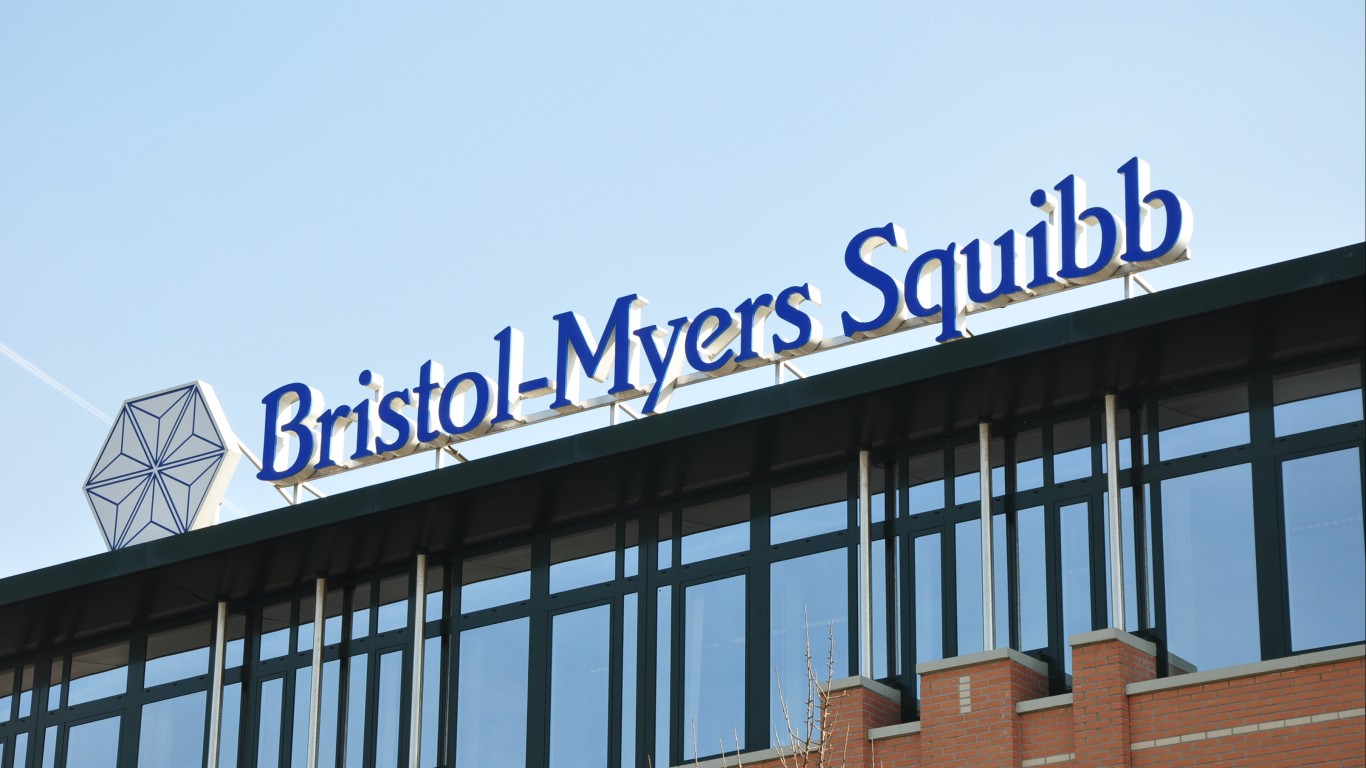
This remains a solid pharmaceutical stock to own and is on the Merrill Lynch US 1 list. Bristol-Myers Squibb Co. (NYSE: BMY) is a global pharmaceutical company focused on discovering, developing, licensing and marketing chemically synthesized drugs or small molecules and biologics in various therapeutic areas, including virology comprising human immunodeficiency virus infection (HIV), oncology, neuroscience, immunoscience and cardiovascular.
Bristol-Myers reported strong first-quarter results that were largely ahead of Wall Street consensus, given the recognition of revenue from Celgene, which the company acquired last year for a massive $74 billion. The company is expected to report second-quarter results on August 6.
Bristol-Myers Squibb stockholders receive 3.03% dividend. BofA Securities has an $80 price target on the shares, while the consensus target is $71.36. Wednesday’s closing share price was $59.43.
Procter & Gamble
The company offers a very dependable dividend, which was raised to $0.79 from $0.75 this spring. Procter & Gamble Co. (NYSE: PG) is one of the world’s largest consumer products companies, and it operates in five segments: Beauty, Grooming, Health Care, Fabric & Home Care, and Baby & Family Care. Its many brands include Pampers, Tide, Bounty, Charmin, Gillette, Oral B, Crest, Olay, Pantene, Head & Shoulders, Ariel, Gain, Always, Tampax, Downy and Dawn. Some of these are among the most valuable brands in the world.
[recirclink id=716417]
Procter & Gamble sells its products through mass merchandisers, e-commerce, grocery stores, membership club stores, drug stores, department stores, distributors, wholesalers, baby stores, specialty beauty stores, high-frequency stores and pharmacies. The company has been very innovative in its product development process and uses that to help ensure future growth and cash flow. This should provide investors years of steady growth and dividends.
The dividend hike translates to a 2.65% yield. The $135 BofA Securities price objective compares with the $129.64 consensus figure. Procter & Gamble stock closed Wednesday at $119.98.
[in-text-ad]
Raytheon Technologies
This company has a diversified mix of business and may be the ultimate value call in defense and aerospace. Raytheon Technologies Corp. (NYSE: RTX) is an industry leader in defense, government electronics, space, information technology and technical services. The company operates in four principal business segments: Integrated Defense Systems, Intelligence, Information and Services, Missile Systems, and Space and Airborne Systems. It is among the companies that make the most from the U.S. government.
With a history of innovation spanning 97 years, Raytheon provides state-of-the-art electronics, mission systems integration, C5I products and services, sensing, effects and mission support for customers in more than 80 countries.
Last year, Raytheon and United Technologies agreed to merge their businesses to create a new aerospace and defense powerhouse. The two companies received unanimous approval from their respective boards and the merger is finally complete, with the new company now called Raytheon Technologies. The merger, combined with the spin-off of Carrier and Otis, has analysts feeling that the market is overlooking the path for free cash flow to step up to $6.2 billion by 2022. Any recovery in air travel or improvement in sentiment would help drive the commercial aerospace business.
Shareholders receive a 3.08% dividend. BofA Securities has set an $85 price objective. The consensus target is $74.69, and Raytheon Technologies stock closed at $61.61.
[recirclink id=716606]
UPS
With many Americans at home due to lockdown rules, the delivery business has been red hot. United Parcel Service Inc. (NYSE: UPS) provides logistics, freight (air, sea, ground, rail) forwarding, international trade management and customs brokerage.
The company has roughly 481,000 employees (390,000 in the United States) and serves more than 220 countries and territories. It operates a fleet of 237 UPS aircraft, as well as a ground fleet of more than 110,000 delivery vehicles. More than 46% of its volume is business-to-consumer, and it delivers more than 18 million packages per day globally.
UPS said earlier this year that it aims to more than double weekend deliveries in 2020 as package carriers look for ways to satisfy the always-on demands of e-commerce customers, including rising rival Amazon.com. UPS is vying also to attract more retailers that want to keep pace with Amazon shipping speeds, while holding on to its Amazon business, which accounts for almost 20% of company volume.
Shareholders receive a 3.53% dividend. The BofA Securities price target is $119. The consensus target is $104.52, and United Parcel Services stock closed most recently at $114.42.
[wallst_email_signup]
Given the huge market moves this year, it may be wise to buy partial positions and see if we don’t indeed test the lows in March, or at least have a sizable pullback. Still, these top stock are solid buys for grown and income investors with a longer investment time horizon.












 Top Gaining Stocks
 Top Losing Stocks