


By Jesse Lawrence, TicketIQ
In a country more divided than ever, a love for live events is one of the few things that can bring people together. Live events bind us to culture and tribe, and provide the kind of shared identity that America has struggled to achieve in 2020. The return of fan-filled arenas, stadiums and festivals will be a catalyst not just for communal cheer, but also for the return of 12 million Americans jobs that support our industry. It could also be the most efficient way to carry out the largest vaccination effort in our country’s history.
As live event professionals, we have unique insight into how Americans come together. And we have a huge audience to bring together. Last year, 62 million U.S. fans attended concerts promoted by Live Nation, while millions more attended concerts promoted by AEG and indie promoters. Over that same period, Major League Baseball attendance was 68 million, while Minor League Baseball hosted 36 million fans. Combined with hockey and basketball, American pro sports represent another 150 million vaccination appointments.
As the owner of a business that works closely with teams and promoters, I have seen live event professionals work in unison and with purpose to execute some of the world’s largest events. Coordinating human movement at scale is the DNA of the events business, and it’s exactly what the vaccination effort calls for.
On the business side, the incentives between live event promoters and the public good couldn’t be more aligned. A COVID-free public is the only path to sustained recovery for the $40 billion live-event ticket industry which has been in deep freeze since march. In 2020, the four major leagues listed above lost a total of $13 billion in ticket market value. While that’s a staggering loss, the bigger societal impact is measured by the number of jobs lost. According to We Make Events, a live events industry coalition, the live event industry employs more than 12 million Americans, generating over $1 trillion in GDP each year.
Since March, large teams and promoters have furloughed or laid off 25-50% of their staff, while smaller operations have cut deeper than that. In August, National Independent Association (NIVA) member Audrey Fix Schaefer, was quoted as saying that “more than 90 percent of the 2,400 clubs, theaters and venues represented by NIVA will have to close if the government doesn’t help soon.” Despite some recent progress, no such help has come.
Just as the WWII-inspired Defense Production Act marshaled public and private production resources during the Korean War, live event production resources can play a critical role in defeating the Coronavirus in 2021. In addition to the economic incentives, logistically and administratively, it’s set up for success for several reasons– listed below.
Larger venues are often public-private collaborations, which means that local government has a critical seat at the table, and can facilitate the kind of authorization and resources needed in times of crisis.
Most venues have ample room to store the type of deep-freeze equipment needed to maintain at least two of the most promising vaccine candidates.
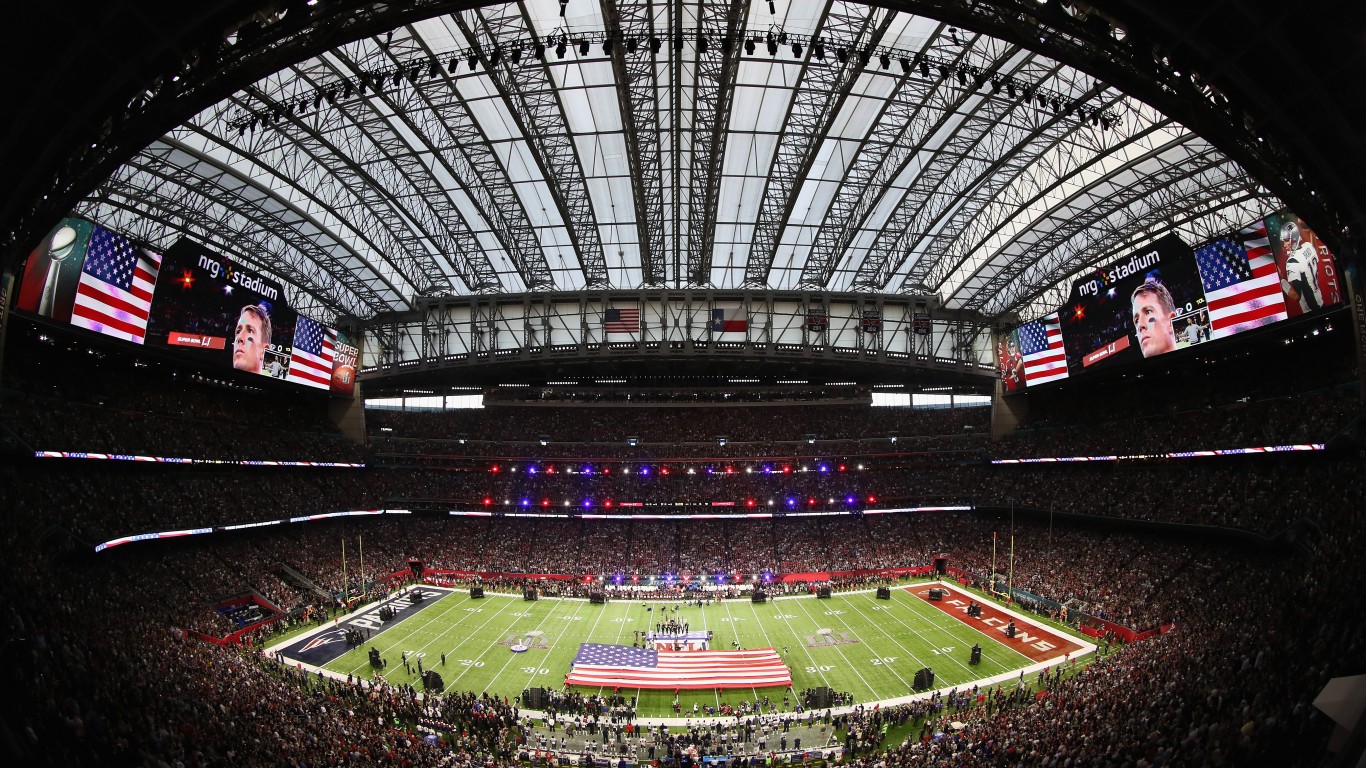
Venues have multiple entry and exit points, which would help cargo and equipment delivery and also serve to keep vaccinated and unvaccinated fans separated before, during and after the event. A vaccination effort of this magnitude will also extend beyond the venue’s walls, to parking lots, which can be assigned based on health status. Many venue parking lots have already played a role in testing for COVID, which means this is just the next phase — with the added incentive to see a show or a game.
In a May 2020 op-ed in the Washington Post, Scott Galloway proposed the idea of a Corona Corps, which would be composed of younger, lower-risk Americans to help manage the crisis. While it may now be too late in the fight for something as formal as a corp, federal funding to support a comprehensive in-venue vaccination effort could be the next best thing. It would activate what amounts to an army of younger and uniquely qualified workers, and instantly add millions of permanent jobs back to the national payroll. The men and women of the live events business are ready to accept this call to service.
It’s an effort that would literally bring us together for this stage of the fight, while also setting the stage for a healthier, happier and livelier tomorrow.










 Top Gaining Stocks
 Top Losing Stocks