


By David Callaway, Callaway Climate Insights
The Biden Administration’s long-awaited infrastructure plan Tuesday, a massive — and impossible — $3 trillion spend and tax strategy, did little to impress financial markets. But it started the clock on a bitter campaign leading up to the president’s pledge next month before the world to slash greenhouse gases this decade.
Biden is under pressure to come up with a climate plan in time for his Earth Day summit April 22 that will thread the needle between satisfying Europe and the nations of the Paris Accord with its ambitions, yet actually passing through Congress.
The infrastructure plan is expected to be broken apart and pushed through in pieces, with the most bipartisan aspects being anything that helps the U.S. compete against China. Solar projects, electric vehicle charging stations, and urban building efficiency and cooling all fall into that category.
But in the wake of the $1.9 trillion Covid-relief plan, and markets already worried about an overheating economy, inflation and rising interest rates, attention to cost will be at the forefront. To have something presentable by next month, and then passed in some format before COP26 in November in Glasgow, will be one of most important priorities of the Biden presidency in year one.
Expect newly-minted Transportation Secretary Pete Buttigieg to face the initial blowback from Republicans on the plan when he speaks before the House Transportation and Infrastructure Committee on Thursday. How he performs will set the prospects for the legislation — and Biden’s entire climate strategy — in no uncertain terms.
More insights below. . . .
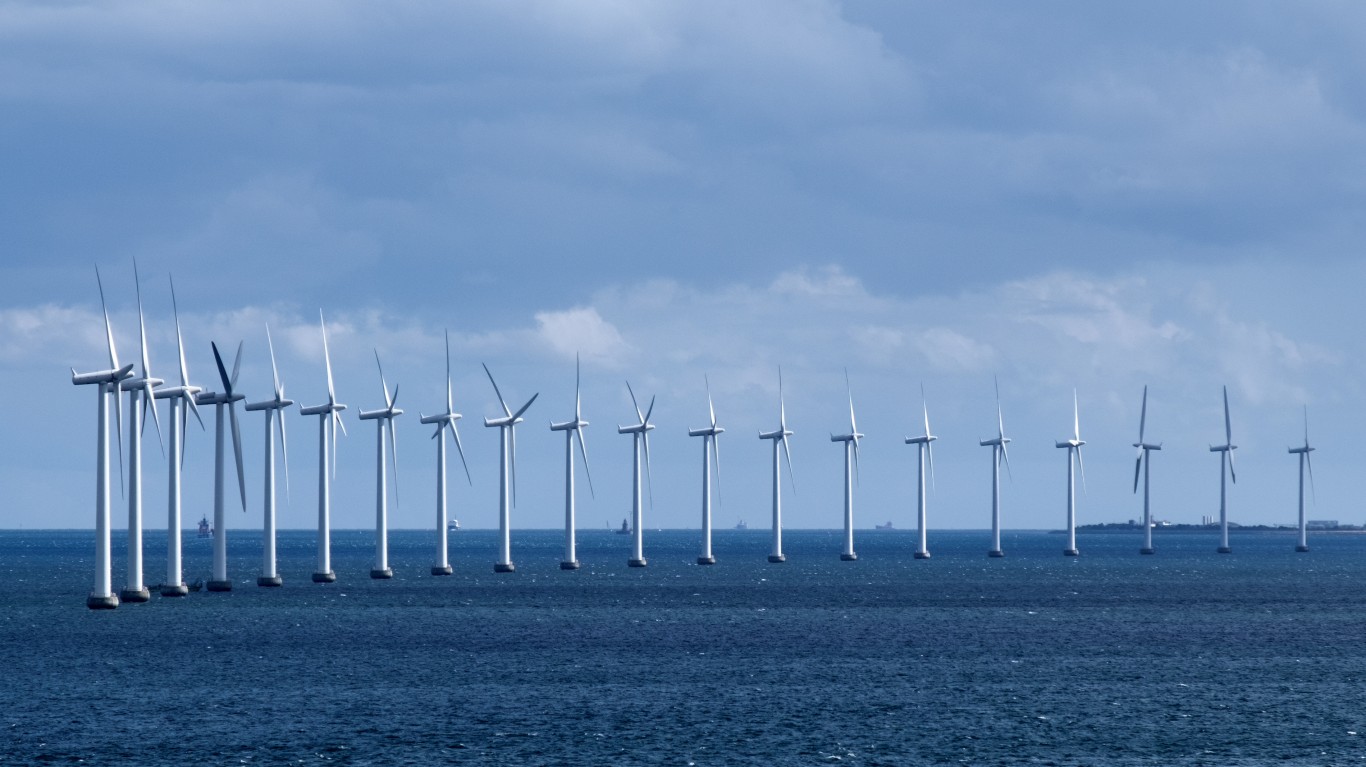
North Atlantic states gear up for era of offshore wind
. . . . The Northeast has asserted itself as possibly the most aggressive region in the U.S. when it comes to climate action, and after years of hang ups and permit delays, the offshore wind industry there has lurched to a start, George Barker writes from Boston. Experts believe wind power on the Atlantic Coast can eventually yield up to 2,058GW if completely harnessed — roughly double the total consumption of electricity in the U.S. last year. Led by European companies, the projects up and down the coast have a lot of catching up to do with Northern Europe. A full look at who is doing what and where. . . .
Tuesday’s insights: Spiders, flooding, insurance, flight pollution
. . . . Spiders are the least of Australia’s insurance problems. The record flooding in New South Wales this week triggered stampedes of spiders into people’s homes as they escaped the rising waters. But it’s the waters themselves causing financial issues as insurers report massive claim filings that some worry could ultimately bring down the financial system when the climate risks are priced in. For those worried about systemic risk from climate, a worrying development. Read more here. . . .
. . . . Thinking of flying to Stockholm? Well, your jet could soon be one of the most modern in the air. That’s because Sweden is nearing a law that charges airliners higher fees if their aircraft fly in to its capital — and to second city Gothenburg — are more polluting. Read more here. . . .










 Top Gaining Stocks
 Top Losing Stocks