


By David Callaway, Callaway Climate Insights
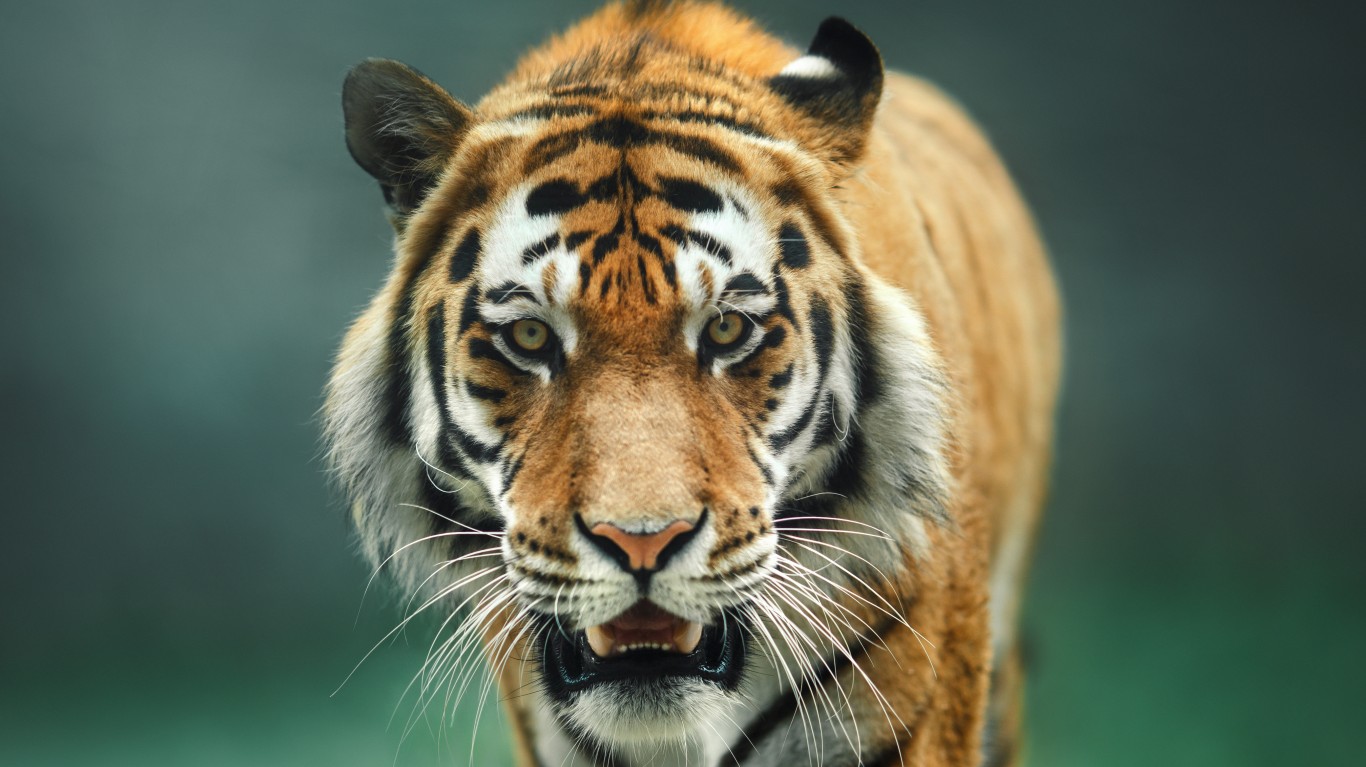
The climate space is not wanting for dire predictions of collapse and calamity, and no Covid-19 surge or summer doldrums will hold back the steady drumbeat of alarming data for those who seek it. But tigers?
As the East Coast and parts of Europe bake, a massive study that came out this week narrowed the range of expectations for how hot it will get in the future, but importantly raised the lower limit of the likely warming range to 2.6°C., which itself is well beyond targets and portends disaster.
Closer to home here in California, a UCLA research team published a new study with expectations that higher temperatures will lead to severe changes in the “atmospheric rivers” that carry moisture around the globe, resulting in 40% more rain, hail and snow in the Sierra Nevada range. Good for skiing, bad for flooding.
We take these predictions with enough skeptical salt to down a tequila shot, but even we sat up at the letter major pension funds and fund managers sent this week warning the Federal Reserve and Securities and Exchange Commission of a “systemic threat” to the U.S. financial markets of climate change unless they act to address it across all of their mandates. The letter, predicting “significant disruptive consequences on asset valuations” from storms and heat and their impact on loans and other assets, underscores that Wall Street is ahead of Washington again on hedging for what’s next.
For our part, as illustrated in the NASA image above of destructive flooding this season in China, it’s not what’s coming but what’s already here that threatens economies and markets. A global re-pricing of risk is not a threat. It is upon us.
More insights, including the tigers, below:
ZEUS: The wind behind renewable energy stocks
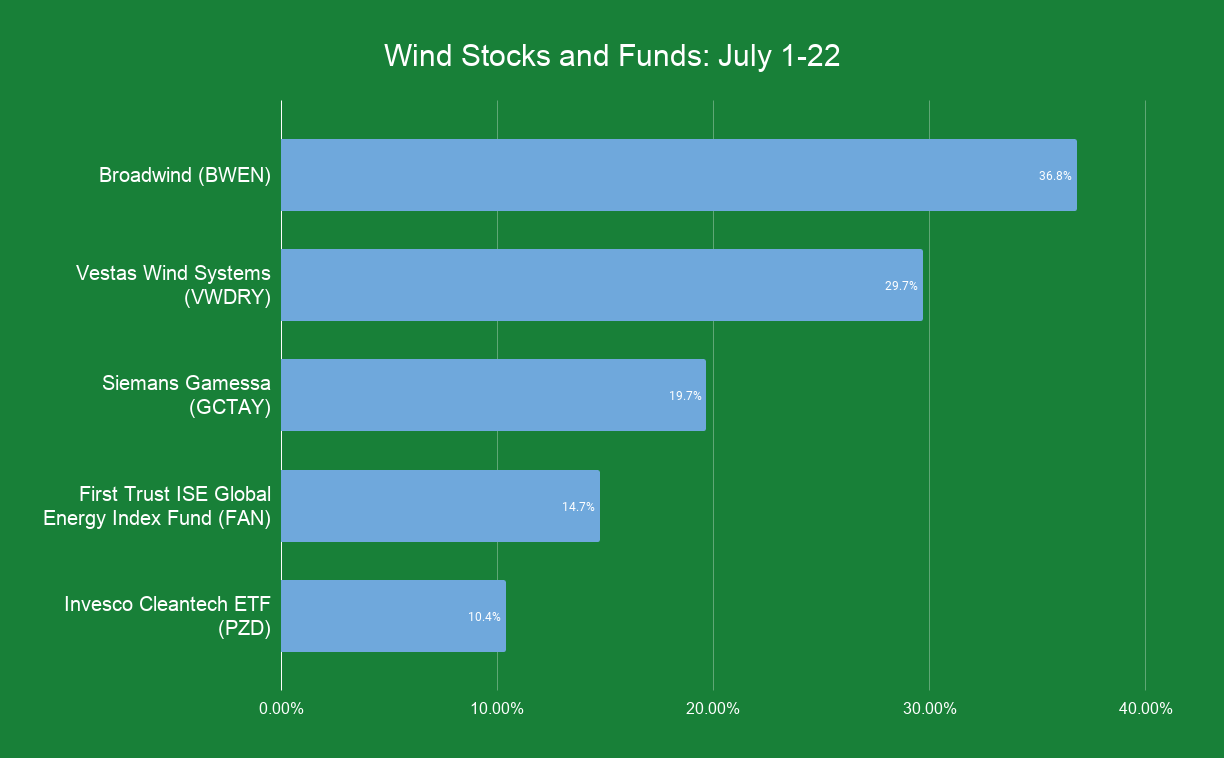
. . . . While Congress bickers over adding renewable energy investment to its massive infrastructure plans post-Covid-19, wind energy stocks have been quietly rallying this month as orders rebounded from the pandemic spring and investors looked to a rebuilding possibility not stymied by politics, writes David Callaway.
While the solar industry is often viewed as sexier than wind power, wind energy is picking up both onshore and offshore. Most of the offshore projects are in Europe and Asia, mostly China. In the U.S., there is only one online, although the Vineyard Wind project off of Massachusetts is making progress.
There are more than 50,000 wind turbines onshore, however, in the U.S., in states like Texas, Oklahoma, the Dakotas and many others. Together they employ more than 100,000 people, though supply chain disruptions tied to the pandemic have hit wind energy just as hard as other renewables. Estimates are more than 600,000 renewable jobs have been lost this past spring. . . .
Add Bengal tigers to your list of climate threats to humans
. . . . They had me with the waist-high water and people sleeping on rooftops. But animators Upamanyu Bhattacharyya and Kalp Sanghvi of Ghost Animation in India made the climate-changed world of the future even scarier.
We often don’t think of the impact of climate change on animals, besides koalas killed in Australia’s wildfires. But the forced migration of much of the human race that is predicted as more of the world becomes uninhabitable will also impact animals, including dangerous ones.
Question: Describe how you chose to combine the impact of the rising waters on animals (tigers) as well as humans. That is an angle of the climate threat which I don’t think is explored enough.
Answer: Once the sea level rises, it will affect forests, cities, humans and animals alike. Everyone will suffer. The Sundarbans delta, just south of the city of Kolkata, is extremely rich and diverse in wildlife. The delta has already begun to flood. Once it is submerged, the animals and humans who have managed to survive will claw their way north toward drier lands in search of shelter and food. This is something that caught our attention. The residents of the Sundarbans delta would practically move to the city. The royal bengal tigers, being a huge part of the ecosystem, will too. This is what we tapped into and built our universe around. . . .






 Top Gaining Stocks
 Top Losing Stocks