


The European Union on Tuesday adopted another package of sanctions on Russia. In a press release, the EU said it had “coordinated” the new round of sanctions with international partners, “notably the United States.”
[in-text-ad]
The press release enumerated six measures:
- A prohibition on “any transactions with certain Russian State-owned enterprises across different sectors – the Kremlin’s military-industrial complex.”
- An EU import ban on certain steel products will cost Russia an estimated €3.3 billion.
- A “far-reaching” ban on new investment in Russian energy projects.
- An EU export ban on luxury products “to directly hit Russian elites.”
- An extension to the list of “sanctioned persons and entities.”
- An EU ban on new credit ratings of Russia and Russian companies.
[nativounit]
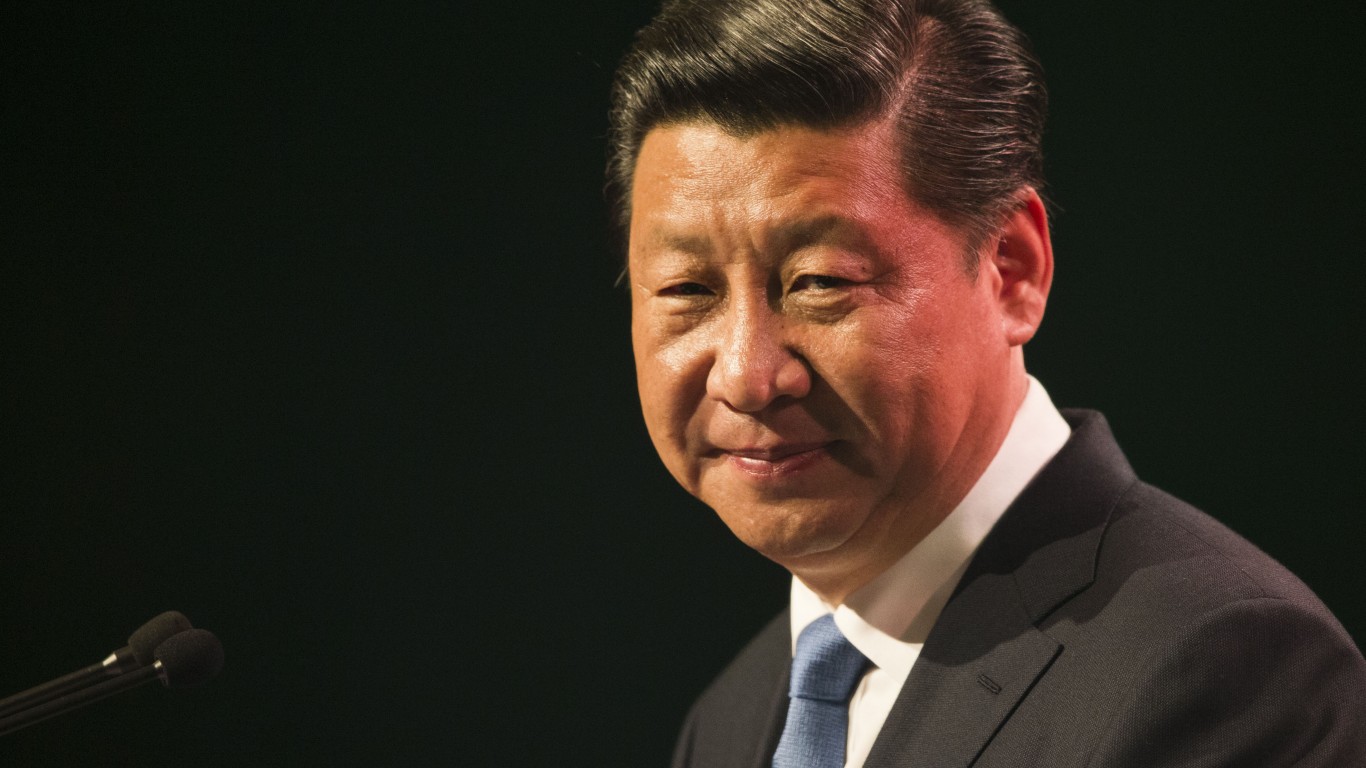
U.S. envoy warned China against supporting Putin’s Ukraine war. In a meeting in Rome Monday, U.S. national security adviser Jake Sullivan specifically warned China’s Yang Jiechi of potential consequences to China if the country provides “any assistance” to Russia to support the invasion of Ukraine. The meeting was scheduled before the invasion and lasted for seven hours, according to a report in The Washington Post.
China wants to avoid U.S. sanctions, according to its Foreign Minister Wang Yi. Bloomberg News reported Monday night that Wang told Spain’s foreign minister that “China is not a party to the crisis, nor does it want the sanctions to affect China. China has the right to safeguard its legitimate rights and interests.”
Following the meeting between Sullivan and Yang in Rome, Chinese officials commented in a statement:
Yang Jiechi pointed out that the situation today in Ukraine has reached a stage that the Chinese side does not want to see. China has always advocated respecting the sovereignty and territorial integrity of all countries and abiding by the purposes and principles of the UN Charter.
The statement did not condemn Russia’s invasion, taking a milder position that “the reasonable concerns of all parties should be responded to.”
Ukraine’s central bank has continued paying creditors, and as of Monday, the Ukrainian foreign exchange market “is going back to business as usual ….” In an interview last week, National Bank of Ukraine (NBU) Governor Kyrylo Shevchenko said that the NBU had $27.7 billion in international reserves as of March 7, a total he said was sufficient to restore “full-fledged operation” of the foreign exchange market. He went on:
Ukraine does not plan to stop meeting its commitments to creditors, so since the beginning of the war, the government has spent USD 342 million to service and repay FX-denominated debt. In addition, we have repaid a USD 100.5 million loan granted by Sveriges Riksbank.
As Izabella Kaminska points out in The Blind Spot, “Unlike Russia, Ukraine is doing everything it can to maintain the normalcy of market operations — as well as everything it can to meet creditor obligations.”
Mohamed El-Erian says the world faces the “toughest” economic challenges of the 1970s, 1980s and 1990s all at once. In an op-ed for the Financial Times, El-Erian wrote that Russia “is being disconnected from the global system, one economic and financial wire after another” and that this disconnection “will devastate the economy” and, along with a “crippled financial system, it will result in a depression undermining the wellbeing of generations of Russians.”
El-Erian also noted that what happens in Russia won’t stay in Russia but will inevitably affect the global economy. The world faces high inflation similar to the oil shock of the 1970s; Russia (and Ukraine) will face debt repayments they cannot meet, as happened in the 1980s; and the surging market yields of the 1990s that led to increased volatility:
All this has three main implications for the global economy. Stagflation has gone from being a risk scenario to a baseline one. Recession is now the risk scenario. And there will be significant dispersion in individual baseline outcomes, ranging from a depression in Russia to a recession in the eurozone and stagflation in the US.
While differentiation will also be visible in market performance, this will come after a period of contagion for some as global financial conditions tighten. The major risk scenario for markets has changed, too — potentially with unsettling volatility and market malfunction.
It is a risk that, unlike in 2008-09, is of less relevance to banks and, therefore, the payments and settlement system. That’s the good news. But its morphing and migration to the non-bank sector still poses blowback risks for the real economy.
[recirclink id=1067826][wallst_email_signup]







 Top Gaining Stocks
 Top Losing Stocks