


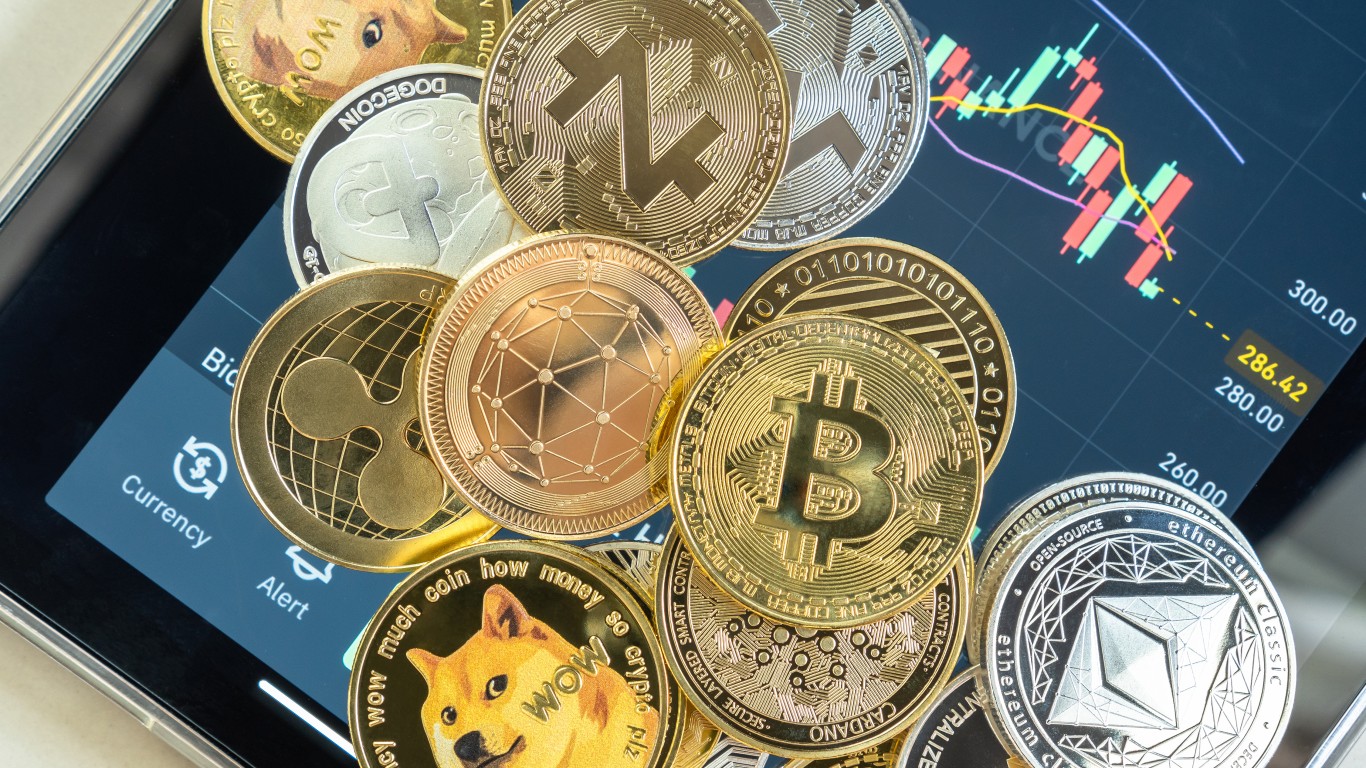
The Financial Stability Board (FSB), an international body that monitors the global financial system, has shared its recommendations for stablecoin regulations. The body also warned that no existing stablecoin currently meets the FSB’s recommendations, which include performance, resilience, security, development, maintenance, and regulatory compliance.
No Stablecoin Meets FSB’s Recommendations
In a recent report, the Financial Stability Board claimed that stablecoins currently fail to meet the standards set by central bankers and financial regulators from the G20 countries. The FSB also questioned the premise that stablecoins are “stable,” claiming that issuers do not have the right tools to maintain their stablecoin peg at all times.
“Most existing stablecoin issuers promise (implicitly or explicitly) to maintain a stable value, typically relative to a single fiat currency. However, many of these existing stablecoins are issued by unregistered and unlicensed entities and do not have credible mechanisms to support their promise of price stability.”
The report noted that many large stablecoin issuers today impose various constraints on users who want to redeem their tokens for fiat currencies. For instance, some issuers offer redemption only weekly, while also reserving the ability to further delay or even deny redemptions. This is why users typically redeem their tokens using crypto exchanges, where the rate can differ based on market conditions.
The FSB added that stablecoin issuers use different tools to stabilize their tokens, with most of them relying on secondary market trading. Furthermore, issuers enable arbitrage activities and largely depend on them to maintain the stablecoin’s value, which might not prove efficient at times of extreme market volatility.
“However, it is unclear how these arbitrage activities would perform under conditions of market stress, raising questions about the effectiveness of the stabilization mechanisms in supporting a stable price at all times.”
The FSB Highlights Problem with UST and USDT
The report also touched on the extraordinary collapse of Terra’s algorithmic stablecoin UST. The stablecoin claimed to maintain its peg, considering that traders would take advantage of arbitrage opportunities between UST and Luna (the native mining token of the Terra blockchain) all the time.
The stablecoin used LUNA to keep its dollar peg through an algorithmic incentive mechanism. This was made possible through arbitrage traders, who could use the inefficiencies in the ratio between LUNA and UST to profit off the difference while simultaneously helping UST hold its peg.
“Terra failed largely because it promised to maintain a $1.00 price but did not support its promise with an appropriate and effective stabilization mechanism. Indeed, Terra’s stabilization relied on another crypto-asset that had no intrinsic or inherent value, Luna.”
The report claimed that UST’s collapse underscores the difficulty of designing a robust stabilization mechanism that only relies on an algorithm and arbitrage traders. Even USDT, which does not depend much on arbitrage traders, failed to maintain its peg during the Terra crash.
At the time, Tether, the largest stablecoin in terms of market capitalization, broke its intended $1.00 peg amid a wave of redemptions. The stablecoin briefly fell to as low as $0.95 on 12 May 2022 before correcting its losses.
The FSB Recommends Applying Bank Rules to Stablecoins
The FSB also outlined some recommendations for how stablecoins can become more reliable. The board largely recommends applying the rules that are made for banks and other financial institutions to stablecoins as well. It also suggests giving authorities more power to comprehensively monitor these assets.
“Authorities should have and utilize the necessary or appropriate powers and tools, and adequate resources, to comprehensively regulate, supervise, and oversee a GSC arrangement and its associated functions and activities, and enforce relevant laws and regulations effectively.”
The report also asked authorities, both domestically and internationally, to cooperate with each other in order to ensure comprehensive regulation. Furthermore, regulators need to make sure all stablecoins have a comprehensive “governance framework with clear and direct lines of responsibility and accountability.”
Nevertheless, currently, the top three stablecoins in terms of market capitalization are Tether (USDT), USD Coin (USDC), and Binance USD (BUSD). These stablecoins have a market cap of $68 billion, $46 billion, and $21 billion, respectively.
This article originally appeared on The Tokenist












 Top Gaining Stocks
 Top Losing Stocks