



Strive Asset Management, which launched its first exchange-traded fund (ETF) in August, has grown rapidly enough that it could soon have $500 million under management. That is a critical tipping point regarding market success, investment philosophy affirmation and potential profitability.
Strive has three ETFs: the Strive U.S. Energy ETF (net assets of $331 million), the Strive 500 ETF (net assets of $54 million) and the Strive U.S. Semiconductor ETF (net assets of $5 million). In sum, that is $390 million.
Strive’s primary investment philosophy is that public corporations should not have to mix business and politics. This has become a large issue in the investing world and has spilled over into the national political conversation, particularly before the midterm elections. Specifically, Strive’s management says American companies are pressured to abide by environmental, social and corporate governance (ESG) standards. Complying can be expensive for these companies and requires a management time commitment. The bigger issue is that public corporations cannot pursue the best practices of serving shareholders if their hands are tied behind their backs due to ESG considerations, Strive argues.
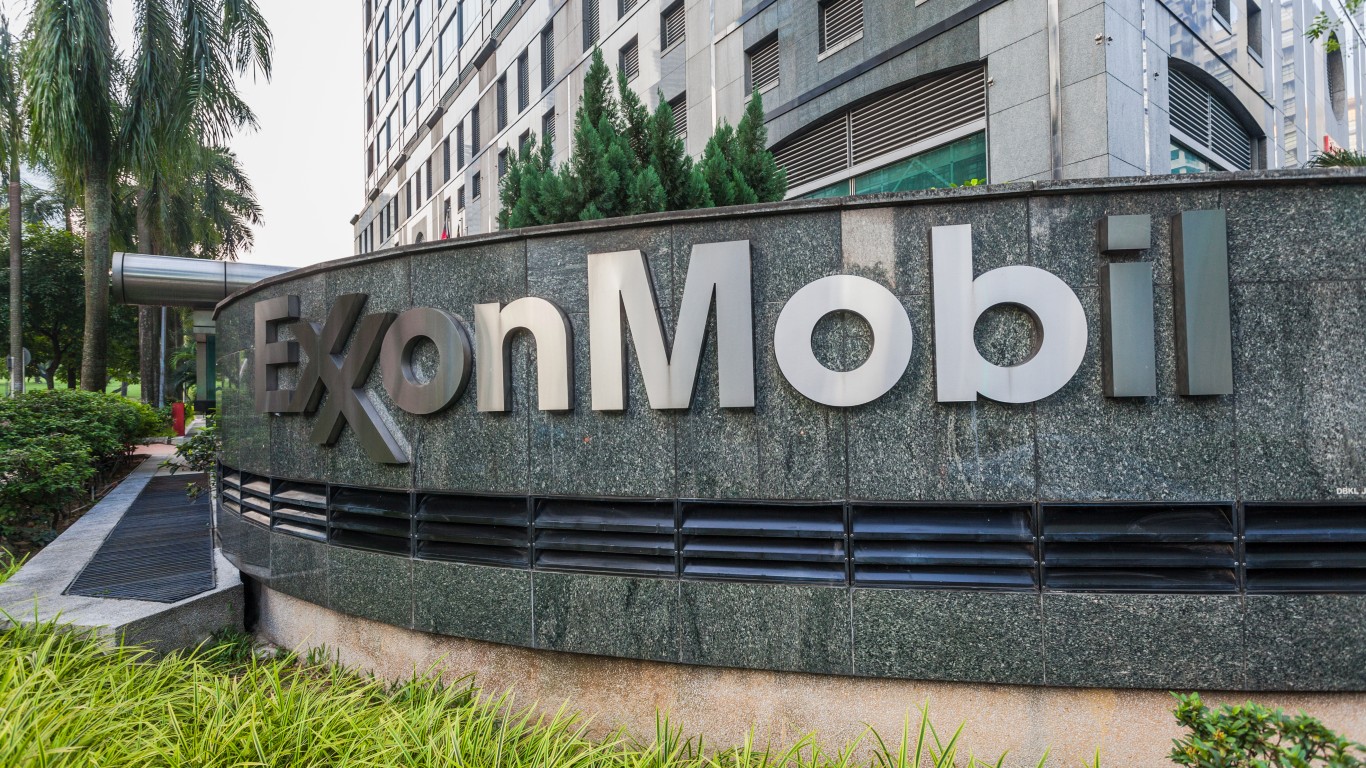
Strive first launched the U.S. Energy ETF. If any industry is under siege by ESG restrictions, it is this one. The energy sector is viewed in some corners as an existential threat to the environment. Strive has made Exxon Mobil the ETF’s largest holding to drive its point home. When the ETF was launched, Vivek Ramaswamy, the executive board chair and co-founder of Strive Asset Management, made the point that energy companies should be able to “maximize long-run profits over short-run social fads.”
[nativounit]
Strive followed that with an S&P 500 product, which tracks the returns of the Solactive GBS United States 500 Index.
The third fund, the Strive U.S. Semiconductor ETF, was launched as a reaction to an international threat to the chip industry. Therefore, it was not part of the ESG-driven pattern. Strive argues China could damage chip production out of Taiwan. It further believes that investors should have a hedge via investments made in American companies operating in the sector.
Strive is a start-up and one that is well-funded. It success long term relies on three factors. The first is the simplest. Funds that produce strong returns tend to gather assets more quickly than those that do not. Strive’s ETFs need to outperform their benchmarks. The Strive U.S. Energy ETF has handily outperformed the market since its launch.
[wallst_email_signup]
The second factor in Strive’s success will be whether what is known as anti-ESG investing remains a major part of the U.S. financial landscape. Certainly, companies like investment giant Blackrock have been punished for their ESG investing programs. Several states have pulled money from Blackrock because their governors or treasurers believe ESG should not be an investment benchmark. The Financial Times recently reported that Blackrock lost over $1 billion because of divestitures by Arkansas, Louisiana, South Carolina and Utah. These losses of state clients are getting worse for Blackrock and other institutional investment firms with similar approaches to the companies they pick for their portfolios. Logic dictates that some of these assets go to Strive.
[recirclink id=1169776]
Finally, one issue for its investors and management is how much money Strive can make. It has an expense ratio of 0.41%. It has a modest-sized staff, and that low overhead means profitability leverage. As Strive’s assets move above $500 million, the chance it will do well financially jumps considerably.











 Top Gaining Stocks
 Top Losing Stocks