


By Herb Greenberg, Empire Financial Research
I go out of my way not to talk about politics because there’s simply no upside…
And I’m not about to start now, other than to say…
I have been a registered independent since I was a journalist, and I’m about as centrist as centrist can be. I tilt left on social issues but to what I’d like to think is “common sense” on everything else.
So when politicians start cheering efforts to punitively tax or shame companies that repurchase their outstanding shares, I just shake my head.
I’m not the first person to say this, and I won’t be the last, but buybacks are simply a more tax efficient way to get money back to shareholders.
Dividends are taxed as income at the date of distribution. Buybacks only impact taxes if they result in a higher share price, taxed at cap gains, and long in the future.
And in a free market, it’s none of the government’s business how public companies spend with their money…
If they want to engage in aggressive or downright smarmy – even embarrassingly scummy – behavior for the sake of goosing short-term results, that’s their prerogative. As long as something isn’t illegal, even dubious corporate governance or egregious pay, it’s between the company and its shareholders. (After all, that’s why short sellers exist!)
Buybacks have sparked controversy for decades… pretty much ever since the early 1980s, when regulators agreed to let companies buy their own shares in the open market as opposed to a tender offer.
The debate often boils down to whether the cash should be only reinvested in the business rather than buying shares, or whether it should go out to shareholders in the form of dividends.
It’s okay to disagree, because as Dartmouth economist Ken French put it during an episode of the Rational Reminder podcast a few years ago…
Buybacks are divisive. They divide people who do understand finance from people who don’t.
They also divide good management teams from bad ones…
Take, for example, the widespread practice of buying shares for the mere purpose of avoiding dilution as employees cash in options received as compensation, which otherwise would flood the market with new shares.
Buybacks blunt the impact, which might be smart… but it’s also disingenuous because they’re buying shares they doled out in lieu of a salary. That, in turn, arguably helped artificially inflate earnings by artificially deflating expenses.
The net result is juicing earnings per share by an extra penny or two.
Never mind that in the end the stock-based compensation is still an expense – it’s just accounted for differently and doesn’t hit earnings the way it would have if expensed in the first place. Worse yet, in that type of situation, nobody notices the expense unless they dive into the cash flow statement.
But that’s not the real issue…
The real issue is the risk that companies will wind up throwing good money after bad.
There’s no better example than retailer Bed Bath & Beyond (BBBY), which from 2004 to 2011 bought back $11.6 billion of its stock as it crashed to its current level of around $2 per share from $40 per share… on its way to probable bankruptcy.
Or tech giant IBM (IBM), which over the past 10 years has bought back roughly $45 billion of its shares. During the same period, its stock has lost 17% of its value while earnings have continued to slide.
There are so many others, but here’s the thing…
For every IBM or Bed Bath & Beyond, there’s a Berkshire Hathaway (BRK-B) or Apple (AAPL).
In 2021, Berkshire bought back $27.1 billion of its shares, which it viewed as a “mildly attractive” alternative for the company’s hoard of cash. It’s unclear how much, if any, Berkshire bought back last year.
As for Apple… Over the past 10 years, the company has bought back $566 billion in stock – lowering its share count by 30%. As strategist Charlie Bilello points out, that’s “greater than the market cap of 494 companies in the S&P 500.” During the period, reflecting the strength of its business, Apple’s stock is up roughly 670%… making those buybacks a great return for investors.
One of my personal favorite examples, which I referenced in yesterday’s Empire Financial Daily, is Allison Transmission (ALSN)…
Allison is the largest manufacturer of truck automatic transmissions, and it has bought back half its shares over the past 10 years. As I said in the June issue of my QUANT-X System newsletter when I recommended readers buy the stock…
Don’t confuse financial engineering and sound financial management. The difference can be whittled down to one question: Does a share repurchase create value for shareholders?
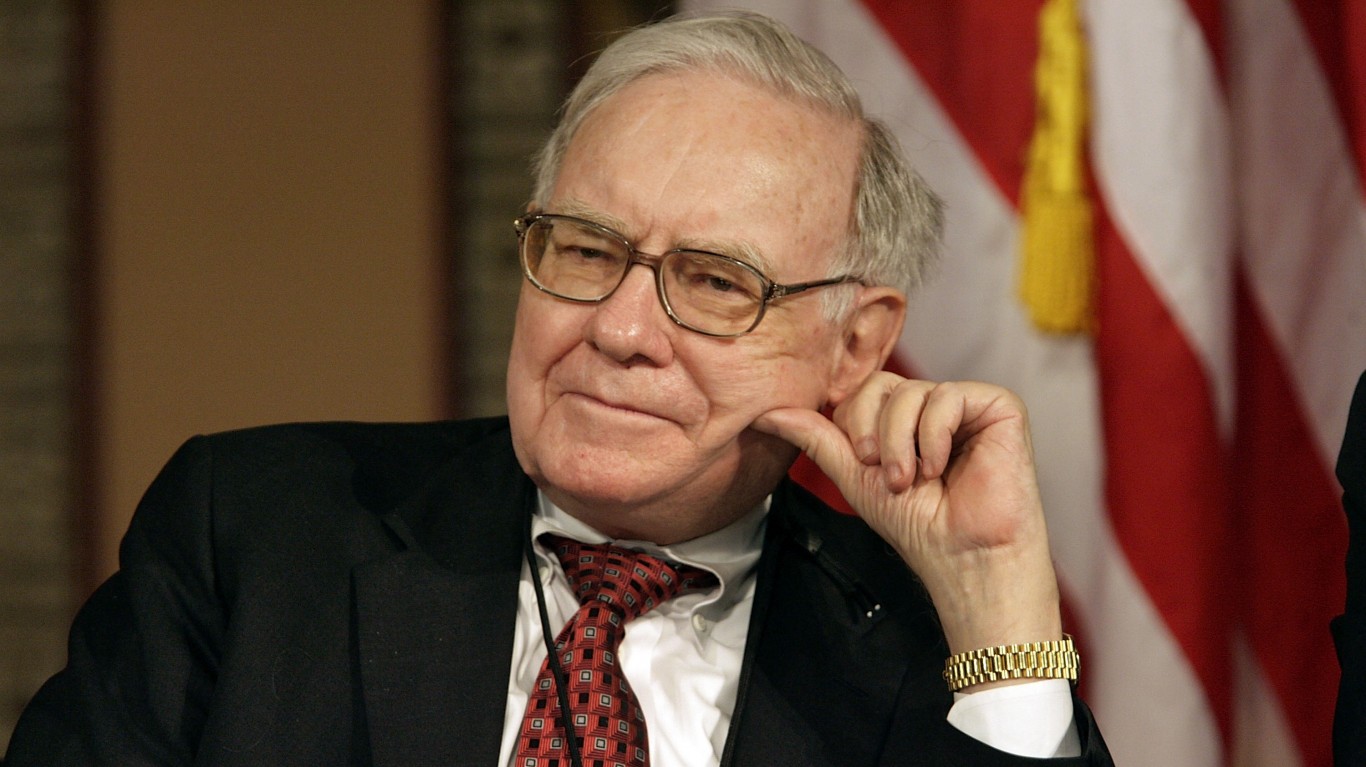
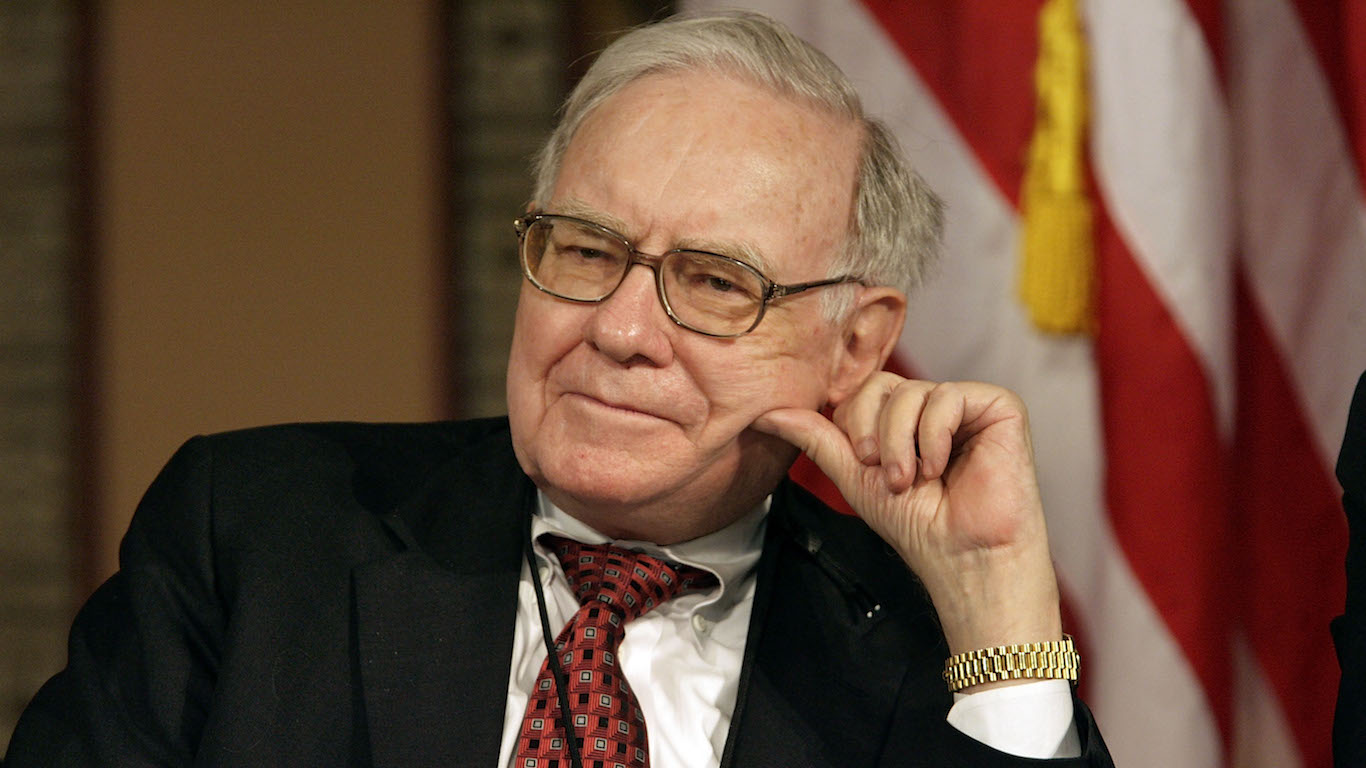
I’m not a fan of financial engineering – I’ve tilted against it my entire career. But as Warren Buffett has hammered home, not all buybacks are created equal. Show me a great business with huge margins and a management team that uses cash flow to repurchase undervalued stock… and I’m all in.
The key is the price paid… just like for you and me! The only difference is that when you buy a stock, you may intend to hold it for a short time or for a long time. When a company buys back its own stock, it effectively holds it forever. The company can’t count on a bull market to bail it out, and it doesn’t have to worry about a bear market – the only question is whether the company is buying back its own stock at a price that creates long-term value.
Accordingly, the price paid is the thing that matters more than anything… And I’ve seen way too many companies like IBM think they can financially engineer themselves out of a mess. (Hint: They usually can’t.)
That’s what makes Allison so attractive. The company is buying back stock that has a mid-teens FCF yield – essentially, it’s paying itself a guaranteed mid-teens return on every share it buys!
Or as one of my friends likes to say…
The truth about buybacks is that they are just another form of investing. Even though the buyer is different – the company itself, rather than an individual – the message is the same. It’s a really good idea to buy undervalued securities. And it’s a really bad idea to spend your money on overvalued stock.
Whether it was a meme-following “ape” that got suckered into Bed Bath & Beyond – or the company itself: they both bought into a business which was running off the rails, and both got smoked in the end.
In other words, buybacks are really another way to return cash to shareholders. It really shouldn’t be any more complicated than that – politicians be damned.




 Top Gaining Stocks
 Top Losing Stocks