


Key Points:
- Major NATO members falling short of the 2% target include Canada, Italy, Spain, and Belgium.
- Reasons include Canada’s low urgency, Italy’s high debt, and Spain’s historical reluctance.
- Smaller nations like Croatia and Portugal are close to meeting the target.
- As hot as the defense sector seems right now, the smart money is looking at “the next Nvidia” for major gains in 2025. Unlock the investments set to soar by clicking here now.
Austin Smith and Michael Muir continue their discussion on NATO, focusing on which member countries are falling short of the 2% GDP defense spending commitment. Michael highlights that smaller countries like Iceland, which lacks a military, are exceptions. However, significant countries like Canada, Italy, Spain, and Belgium are not meeting the threshold for various reasons, including Canada’s geographical position and Italy’s financial constraints. Michael also notes that while these countries are falling short, they are still contributing significantly, with Canada at 1.3% and Italy at 1.5%, emphasizing the need to contextualize these shortfalls.
Transcript:
So let’s talk about that threshold because there’s an interesting line here.
It’s very easy to look at which countries are meeting their obligations to NATO and which are falling short.
So let’s start with the latter.
Which countries are missing their NATO funding today?
Who’s falling short of that 2% threshold?
Well, a few minor countries.
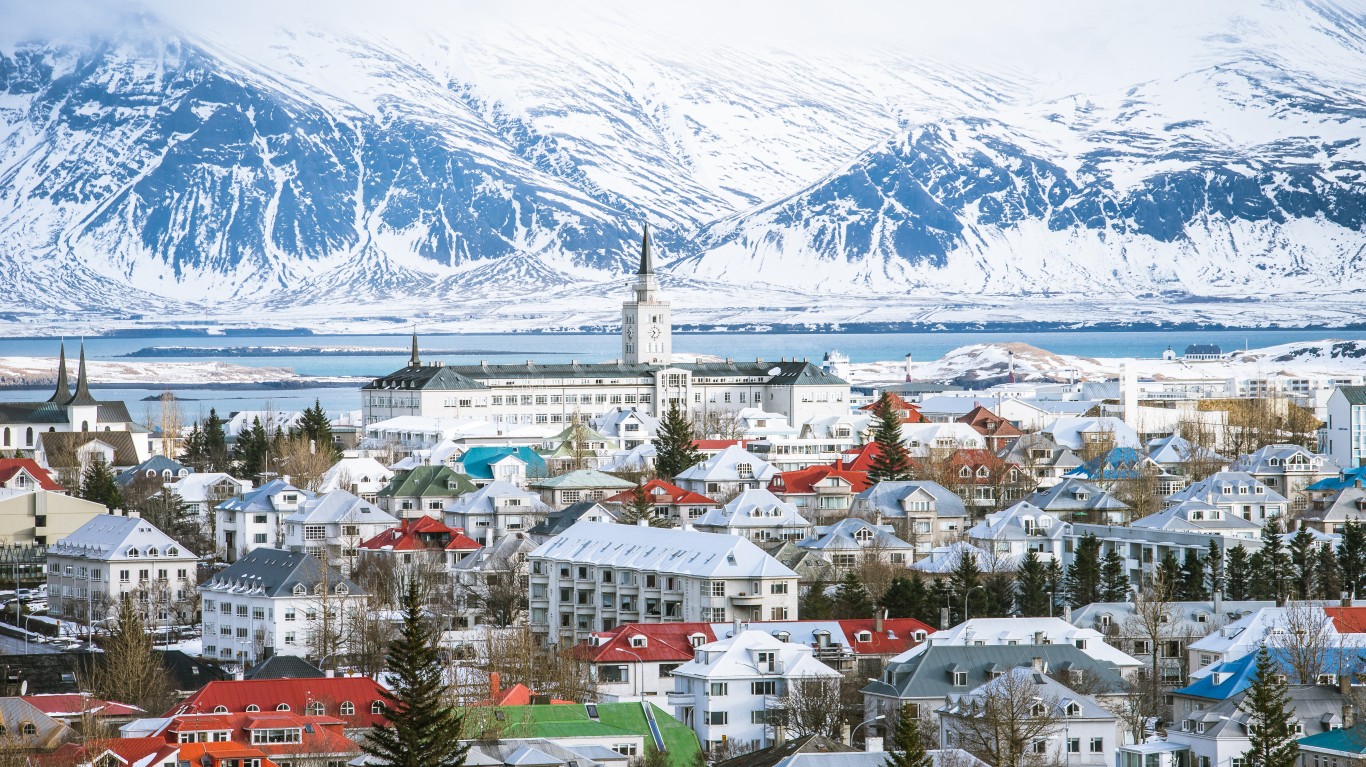
Iceland simply doesn’t have a military.
They’re not going to get one.
They’re kind of an exception to the rule.
Their main purpose is just they have a really important strategic location.
But of the sort of bigger players that should be doing more, the most egregious examples would be Canada, Italy, Spain, and to a lesser extent, Belgium.
For Canada, the problem there is location.
They don’t have that same kind of sense of urgency as a lot of Eastern European allies in NATO might have.
I mean, they haven’t been seriously threatened since the War of 1812.
So it’s kind of a difficult sell to significantly increase defense spending.
And I believe Justin Trudeau was quoted as saying he doesn’t believe Canada is ever going to reach that two percent target.
In Europe, Italy’s main problem is financial.
They have one of the highest debt to GDP ratios in the world.
So there isn’t quite the same scope to expand defense spending, although they do have plans to meet that threshold within the next decade.
They initially delayed it by four years, but it looks like it’s going to be a few more.
Spain has never really been fully on board with NATO.
They only joined in 82 after the death of Franco in 75.
They almost pulled out entirely in 86.
So for them, that’s going to be a challenge to reach that threshold.
Belgium is making progress.
Of course, the headquarters is in Brussels, so they should probably lead by example.
The rest are really just minor states that don’t have a huge impact.
A lot of them are actually pretty close.
Croatia is only just under, and they should make that.
And Portugal plans to reach 2% by 2028, I believe.
And just to put some specifics there for our readers.
So Croatia technically falling short, but as you said, they’re extremely close.
I think their 2021 spending was 1.95%.
So an honorary maybe 2% contributor.
And when we’re talking about Canada and Italy, so these are major economies falling short, but we should also clarify they’re not contributing zero.
In the case of Italy, they are at 1.5%.
Canada is at 1.3%.
So while they are falling short, and you explained some of the good reasons why, it’s also important to maybe put in context that maybe the magnitude of the shortfall isn’t as scary in reality.








 Top Gaining Stocks
 Top Losing Stocks