



Outrunning Manufacturing’s Recession
The U.S. manufacturing sector is grappling with a significant downturn, as shown by the latest ISM Manufacturing PMI index, which fell to 48.0 in July, marking its fifth consecutive month of contraction and the lowest reading since November 2024.
This prolonged decline, with 31 out of the last 33 months showing contraction, underscores a deepening recessionary trend. It has been worsened by a 1.6-point drop in the employment index to 43.4 — the lowest since 2020 — and a surge to 25% of manufacturers cutting payrolls, the highest since June 2020.
Amid this challenging landscape, the Trump administration’s initiatives to streamline regulations, incentivize domestic production, and renegotiate trade deals could spark a turnaround by fostering local manufacturing and reducing reliance on volatile global supply chains.
However, the immediate outlook remains uncertain. Despite the uncertain outlook, some manufacturing stocks have outperformed both their sector and the S&P 500 so far in 2025, positioning them as prime investments for the expected manufacturing recovery.
Deere (DE)
Deere (NYSE:DE | DE Price Prediction) is a global leader in agricultural and construction machinery since 1837 that has demonstrated remarkable resilience amid the manufacturing contraction. Its strength stems from robust demand in the agricultural sector, fueled by global food security concerns and the adoption of cutting-edge precision farming technologies, such as autonomous tractors and data-driven crop management systems.
In 2025, Deere’s stock is up 18% year-to-date, outpacing the broad market index’s 6% returns, exceeding analyst expectations with second-quarter earnings of $6.64 per share against a $5.56 forecast. While that reflects Deere’s operational efficiency and strong market positioning, the results were below last year’s earnings of $8.35 per share.
With a market cap exceeding $135 billion, Deere’s financial stability is evident. The company’s strategic investments in automation, sustainable equipment, and digital solutions like the See & Spray technology enhance its competitive edge.
Looking forward, Deere is poised to outperform as potential infrastructure spending under new policies and a shift toward domestic production bolster demand for its heavy machinery. Its diversified revenue streams — spanning agriculture, construction, and forestry — further insulate it from sector-specific volatility, making it a cornerstone investment for the anticipated manufacturing recovery.
Caterpillar (CAT)
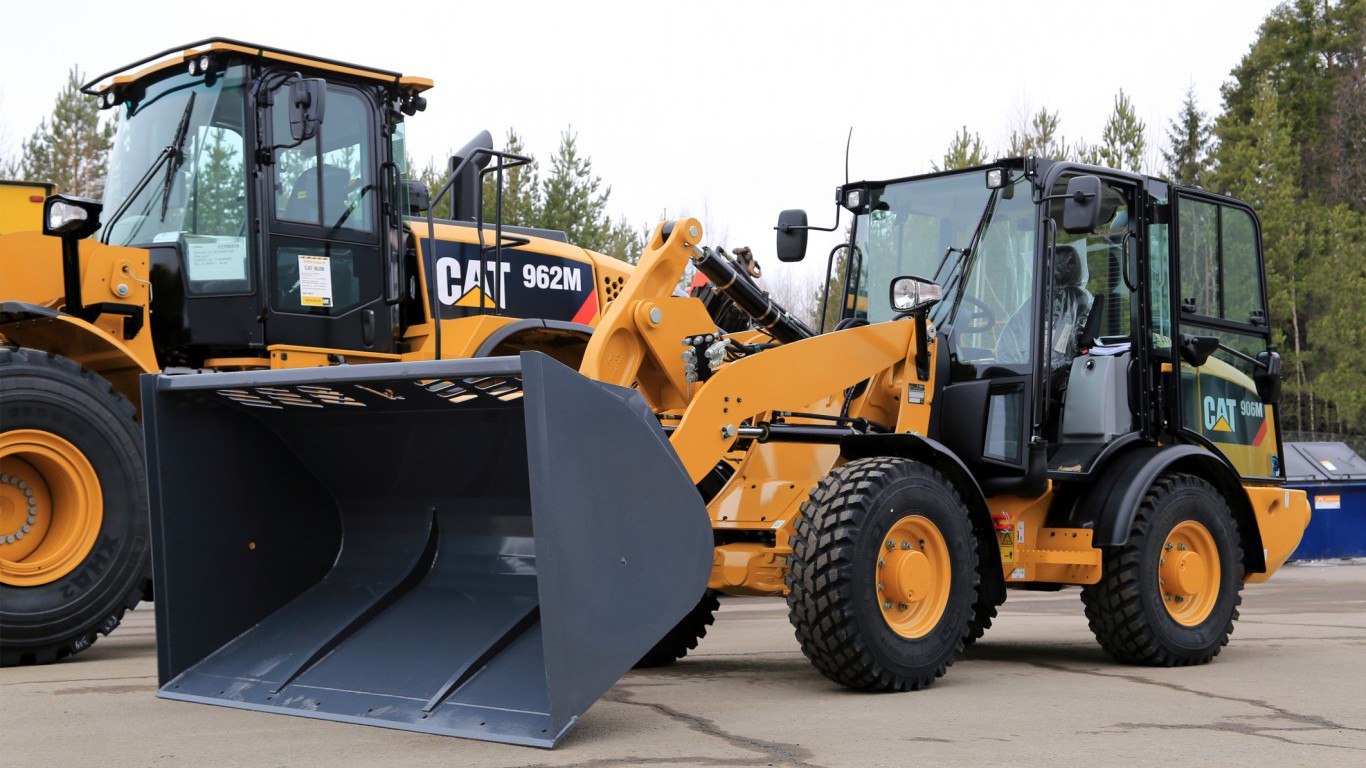
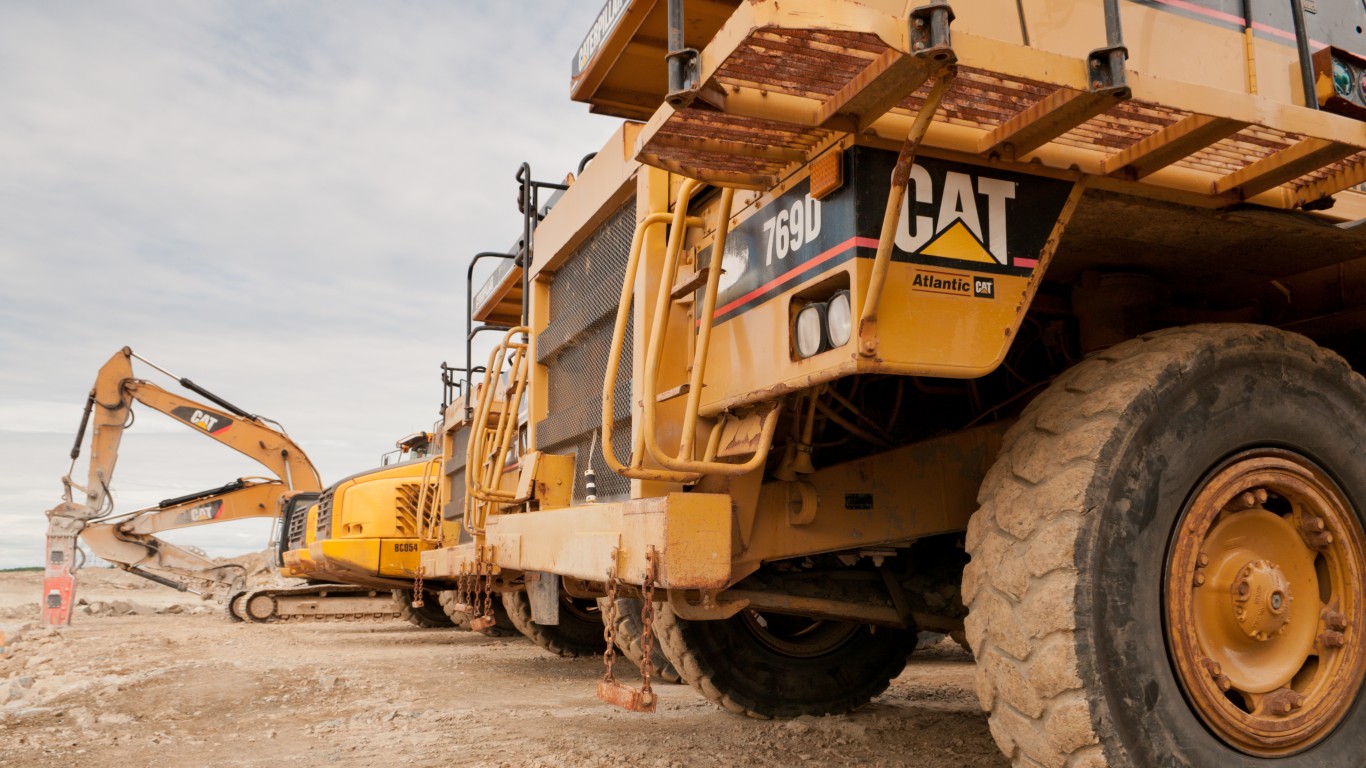
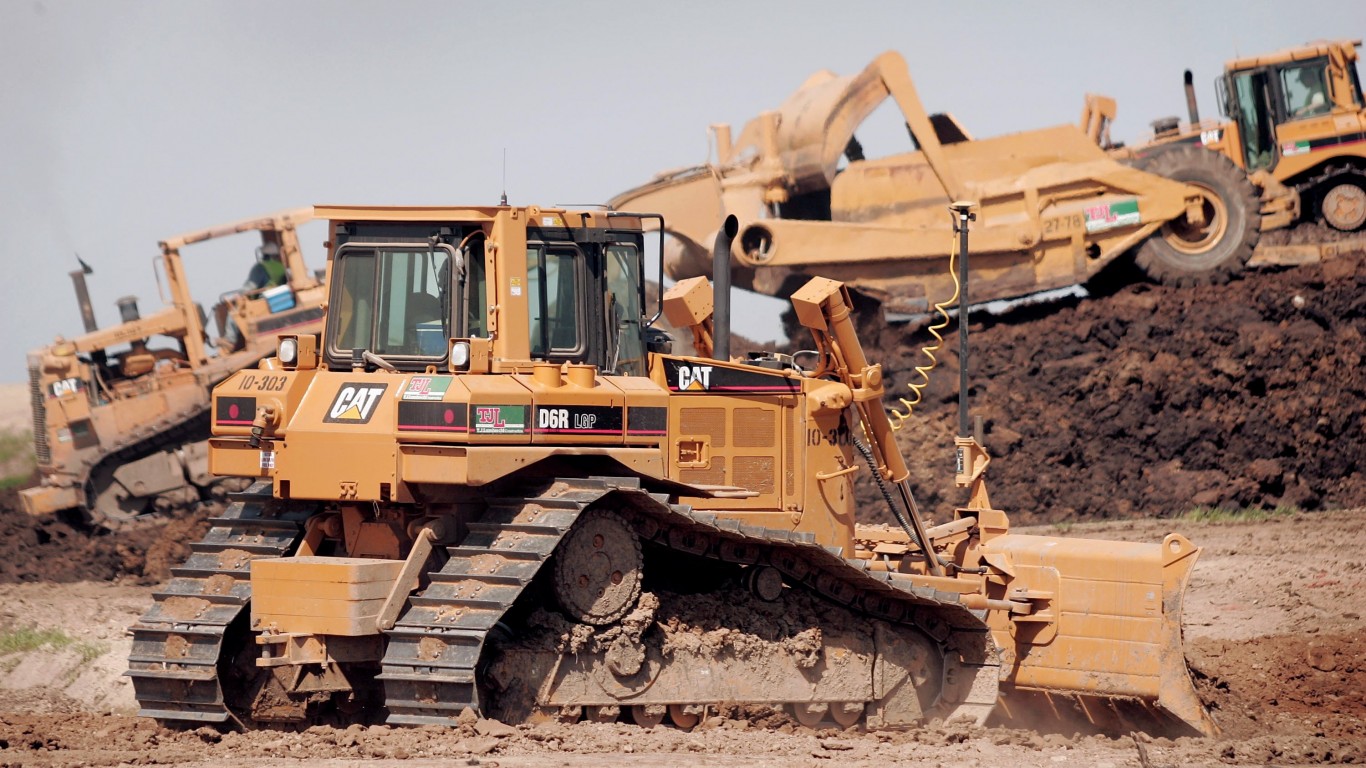
Caterpillar (NYSE:CAT), a titan in construction and mining equipment, diesel and natural gas engines, and industrial gas turbines, has thrived despite the manufacturing downturn, leveraging its status as a Dow Jones Industrial Average component.
In the first quarter, CAT reported a 10% revenue decline to $14.2 billion on lower sales volume and price, with analysts forecasting a 14.6% contraction in earnings for the full year, before surging 13.5% in 2026. However, CAT stock is up 18% in 2025.
Trading under $430 per share, Caterpillar’s business reflects resilience, supported by a robust service network that minimizes downtime and boosts efficiency. This has enabled the company to return over $4 billion to shareholders through stock buybacks and dividends.
During the contraction, Caterpillar’s focus on digital solutions, like Cat Connect and its expansion into renewable energy equipment have maintained profitability. Looking ahead, its alignment with potential infrastructure investments and tariff-driven reshoring trends positions it for outperformance.
With a global footprint and strong order backlog growth, Caterpillar is well-equipped to lead the sector’s revival as manufacturing policies evolve and demand for heavy machinery surges.
Eaton (ETN)
Eaton (NYSE:ETN) is a powerhouse in power management and electrical components that has defied the manufacturing slump with a stock increase of more than 32% over the past 12 months, reflecting its strategic focus on renewable energy and sustainable infrastructure. Shares are up almost 15% this year.
This growth is driven by surging demand for electrical solutions in microgrids, electric vehicle charging stations, and renewable energy integration, aligning with global decarbonization efforts.
With a market cap around $160 billion, Eaton’s financial health is robust, supported by a diverse customer base spanning utilities, data centers, and industrial clients. Its resilience during the contraction is enhanced by strategic acquisitions, such as the 2024 purchase of a smart grid technology firm, which expanded its product offerings and market penetration.
Looking ahead, Eaton is well-positioned to capitalize on anticipated Federal Reserve rate cuts, which could lower borrowing costs and spur investment in infrastructure projects. Additionally, potential trade policy shifts favoring domestic production could amplify demand for Eaton’s solutions. Its commitment to innovation and sustainability ensures it will lead the sector’s recovery, making it a compelling long-term investment.








 Top Gaining Stocks
 Top Losing Stocks