



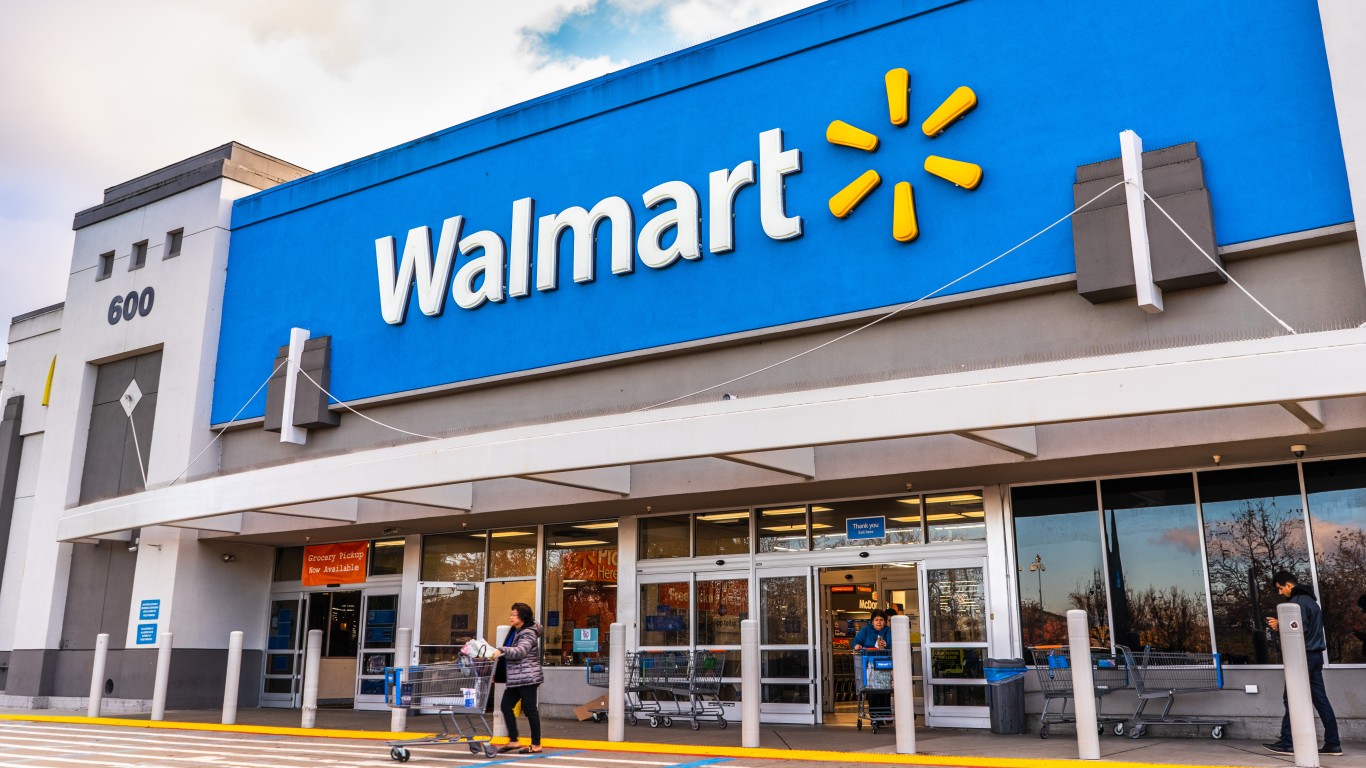
The latest Walmart Inc. (NYSE: WMT | WMT Price Prediction) earnings show it is still the dominant retailer in America. Based on revenue, it will remain ahead of Amazon as the nation’s largest company based on sales. What continued to worry the market about Walmart was macroeconomic factors. If consumer sentiment faltered, Walmart would not be able to overcome the headwinds. Because of its size, it is a proxy for the behavior of U.S. consumers.
The headwinds are real. Unemployment, although still fairly healthy, has crept up for months. Consumer sentiment has wobbled. Inflation has reached an inflection point because of tariffs. The holiday season might be undercut by consumer worry, many economists said. Recently, the Federal Reserve of Philadelphia reported that its Fourth Quarter 2025 Survey of Professional Forecasters showed expectations for only a 1.9% increase in gross domestic product this year.
Walmart has caught a tailwind. According to MasterCard SpendingPlus, Black Friday retail sales rose 4.1% compared to last year. It described consumer spending by adding that “momentum builds.”
Before the good news, Walmart had already posted a strong third quarter. Revenue rose by 5.8% in the most recently reported quarter to $179.5 billion. Per-share earnings rose from $0.57 to $0.77. Management commented, “For fiscal year 2026, the Company raises outlook for growth in net sales to 4.8% to 5.1% and adjusted operating income to 4.8% to 5.5%.”
Walmart’s stock is up 22% this year, compared to 16% for the market overall. However, investors have not been so optimistic in recent years. Walmart’s performance trailed the S&P 500 from November 2020 until August 2024. There was a continued fear that e-commerce and a phalanx of smaller competitors would keep its sales growth less than modest.
The Black Friday news means that holiday spending will be solid. A rising tide lifts all boats, and, among U.S. retailers, the largest boat lifted is Walmart.
Prediction: Walmart’s AI Arsenal Will Eclipse Costco’s Empire and Dominate Retail by 2030










 Top Gaining Stocks
 Top Losing Stocks