


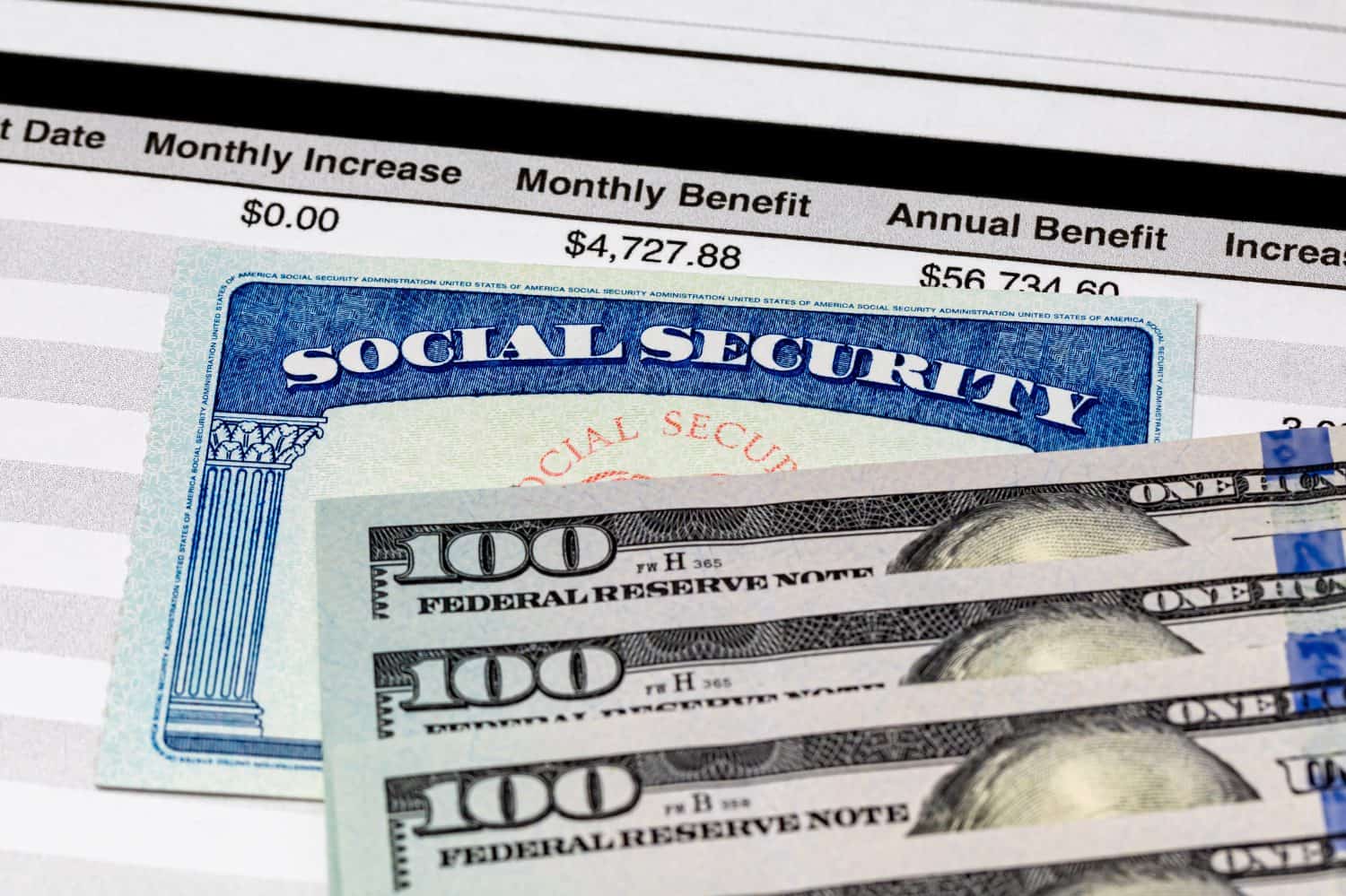
There are millions of retired Americans today who get most of their income from Social Security. And that, frankly, is not a good position to be in.
There are multiple reasons for this. Here’s why it’s unwise to retire on just those benefits — and what you should do instead.
Why retiring on Social Security alone isn’t smart
You might assume you’ll get plenty of monthly income from Social Security once you retire. But did you know that the average retirement benefit today is only $2,015 a month? That’s barely over $24,000 a year.
In fact, if you earn an average paycheck, you can expect Social Security to replace about 40% of it once you retire. But there’s a caveat, and it’s that the program is facing the possibility of benefit cuts in the next 10 years.
In the coming decade, as baby boomers retire in droves, Social Security will lose out on key revenue it needs to keep up with benefits. And once the program’s trust funds run dry, Social Security may have to slash benefits unless lawmakers find a way to give the program a cash infusion.
But Social Security’s insolvency isn’t the only issue plaguing the program. Another big problem is that Social Security’s annual cost-of-living adjustments, or COLAs, often tend to fall flat, leaving seniors with raises that don’t actually keep pace with inflation like they’re meant to.
Social Security COLAs aren’t measured based on a senior-specific index. Rather, they’re based on the Consumer Price Index for Urban Wage Earners and Clerical Workers (CPI-W), which measures the costs incurred by working folks in cities.
A big reason Social Security COLAs tend to fail seniors is that healthcare costs, which are a huge expense for retirees, commonly rise faster than inflation broadly. But that’s not something that’s captured in COLA calculations, leaving seniors with annual raises that cause them to lose out on buying power.
A smart way to attain financial security in retirement
Social Security clearly has some major flaws. It will only replace a limited amount of your paycheck, benefits may be cut in the future, and COLAs don’t do the job they’re supposed to.
For this reason, it’s important to set yourself up with income outside of Social Security so you’re able to maintain a comfortable retirement lifestyle. And a good option in that regard is to build a portfolio of high-yield ETFs, or exchange-traded funds.
The nice thing about high-yield ETFs is that they can generate consistent income for your portfolio you can use to supplement your Social Security checks. And if you invest in high-yield ETFs ahead of retirement, by the time that stage of life rolls around, you may be sitting on a pretty nice nest egg.
There are different high-yield ETFs you can choose from. Some options you may want to look at include:
- The JPMorgan Equity Premium Income ETF (JEPI)
- The SPDR Portfolio S&P 500 High Dividend ETF (SPYD)
- The iShares Core High Dividend ETF (HDV)
- The Vanguard International High Dividend Yield ETF (VYMI)
And these are only a few choices of many.
A financial advisor can help you put together a portfolio of ETFs that addresses your income needs while accounting for your personal tolerance for risk. It’s a good way to help ensure that you don’t fall short on retirement income by banking too much on Social Security.














 Top Gaining Stocks
 Top Losing Stocks