


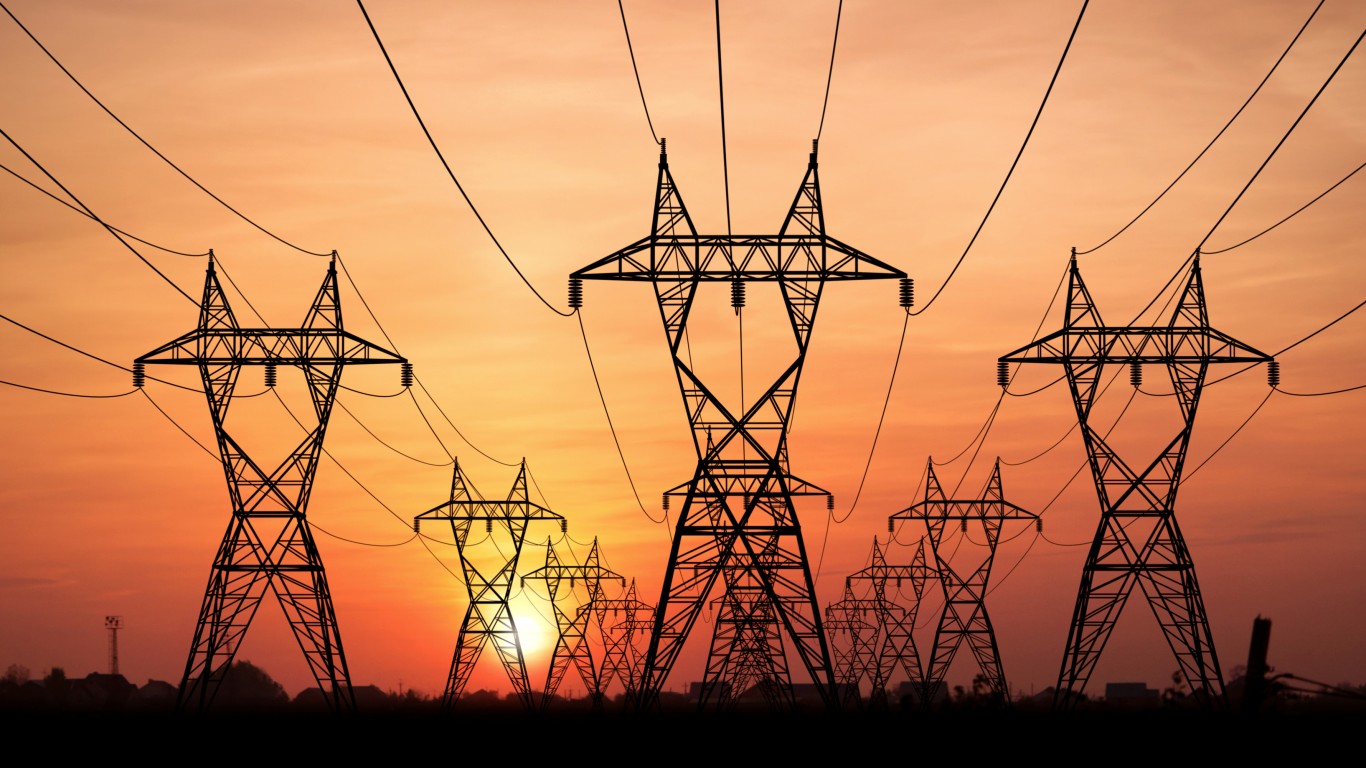
The S&P 500 utilities sector had gained well over 15% in 2025, before rolling over in mid-October. After hitting a high of 471, the sector has traded back to the 434 level, offering investors a new chance to own the top stocks in the industry. It is important to remember that as the S&P 500 approaches its third consecutive year of double-digit gains, a correction could be on the way in 2026. Equities will be affected if the major stock market indices experience another significant decline similar to the one earlier this year.
However, history shows that stodgy utility stocks are likely to hold their ground much better than high-flying technology stocks, especially those chasing the artificial intelligence mania. Oddly enough, AI and data center growth are becoming a massive tailwind for the utility sector, as power demand surges, allowing utility stock investors to participate in technology without the associated risk. With a product always in demand, high-yielding utilities may be the best option now for cautious investors seeking passive income.
Large hyperscale data centers, which are increasingly common, require the power of 100 megawatts or more, equivalent to the annual electricity consumption of around 350,000 to 450,000 electric cars. This skyrocketing demand is expected to continue as AI adoption grows. A significant portion of data center energy consumption is attributed to cooling systems that maintain optimal operating temperatures. Big tech will continue to find solutions for this issue. Of the 11 sectors in the Global Industry Classification Standard, utilities are among the most recession resistant. That is because the power they generate is always in demand, regardless of the state of the business cycle.
We decided to screen the S&P 500 Utility sector, and four of our favorite companies also rank among the highest yielding. Based in the south and the Midwest, and near many areas with operating data centers, all make sense for investors looking to play the AI/data-center trade more safely. Plus, all four are rated Buy at top Wall Street firms.
Why do we cover the highest-yielding S&P 500 utility dividend stocks?

Since 1926, dividends have accounted for approximately 32% of the S&P 500’s total return, while capital appreciation has accounted for 68%. Therefore, sustainable dividend income and potential capital appreciation are essential to total return expectations. A study by Hartford Funds, in collaboration with Ned Davis Research, found that dividend stocks delivered an annualized return of 9.18% over the past 50 years (1973 to 2023). Over the same timeline, this was more than double the annualized return for non-payers (3.95%).
Dominion Energy
This integrated energy utility offers electricity, natural gas, and related services. Many Wall Street firms remain positive on utilities, and this company pays a strong 4.60% dividend. Dominion Energy Inc. (NYSE: D | D Price Prediction) serves approximately 7 million customers and operates through four segments:
- Dominion Energy Virginia
- Gas Distribution
- Dominion Energy South Carolina
- Contracted Assets
The Dominion Energy Virginia segment generates, transmits, and distributes regulated electricity to residential, commercial, industrial, and governmental customers in Virginia and North Carolina.
The Gas Distribution segment engages in:
- Regulated natural gas gathering
- Transportation
- Distribution and sales activities
- Distributes nonregulated renewable natural gas
This segment serves residential, commercial, and industrial customers.
The Dominion Energy South Carolina segment generates, transmits, and distributes electricity and natural gas to residential, commercial, and industrial customers in South Carolina.
The company’s portfolio of assets included approximately:
- 30.2 gigawatts of electric generating capacity
- 10,500 miles of electric transmission lines
- 85,600 miles of electric distribution lines
- 94,200 miles of gas distribution lines
Wells Fargo has an Overweight rating with a $67 target price.
Duke Energy
Duke Energy Corp. (NYSE: DUK) is an American electric power and natural gas holding company headquartered in Charlotte, North Carolina, a growing part of the country. It pays a hefty 3.67% dividend, and it operates through two segments.
The Electric Utilities and Infrastructure segment generates, transmits, distributes, and sells electricity in the Carolinas, Florida, and the Midwest. To develop electricity, Duke Energy uses the following:
- Coal
- Hydroelectric
- Natural gas
- Oil
- Solar and wind sources
- Renewables
- Nuclear fuel
This segment also sells electricity to municipalities, electric cooperative utilities, and load-serving entities.
The Gas Utilities and Infrastructure segment distributes natural gas to
- Residential
- Commercial
- Industrial
- Power generation natural gas customers
The segment also invests in pipeline transmission projects, renewable natural gas projects, and natural gas storage facilities.
The Goldman Sachs price target for the Buy-rated shares is $141.
Exelon
Exelon Corp. (NYSE: EXC) is the largest electric parent company in the United States by revenue and the largest regulated electric utility. This is another top utility stock that makes good sense now for conservative investors, and it pays a dependable 3.67% dividend. Exelon is a utility services holding company engaged in the energy distribution and transmission businesses in the United States and Canada.
The company purchases and sells retail electricity and natural gas, and transmits and distributes these products to retail customers. It also offers support services, including:
- Legal
- Human resources
- Information technology
- Supply management
- Financial
- Engineering
- Customer operations
- Distribution and transmission planning
- Asset management
- System operations
- Power procurement services
The company serves:
- Distribution utilities
- Municipalities
- Cooperatives
- Financial institutions
- Commercial, industrial, governmental, and residential customers
Wells Fargo recently initiated coverage with an Overweight rating and a $52 price target.
Southern Company
Southern Co. (NYSE: SO) is a leading energy company that serves 8.8 million customers and pays a solid 3.45% dividend, offering considerable total return potential. It operates through three segments:
- Gas Distribution Operations
- Gas Pipeline Investment
- Gas Marketing Services
The company also develops, constructs, acquires, owns, and manages power generation assets, including renewable energy projects, and sells electricity in the wholesale market; and distributes natural gas in Illinois, Georgia, Virginia, and Tennessee, as well as provides gas marketing services, gas distribution operations, and gas pipeline investment operations.
Southern Company serves approximately 8.8 million electric and gas utility customers and offers digital wireless and fiber-optic services.
BMO Capital Markets has an Outperform rating and a $109 price target for the shares.
Five Blue Chip Stocks to Buy Now That Pay Reliable 4%+ Dividends










 Top Gaining Stocks
 Top Losing Stocks