



After a year like 2023, investors are probably still taking the proverbial victory lap, and with good reason, with the Nasdaq up a stunning 43% and the S&P 500 up 24%. However, the tide could turn this year, and the fact that inflation remains sticky, as evidenced by the December consumer and producer prices, may be part of the reason.
While interest rates probably start to come down by the summer or, at the latest, the fall, one sector that was a victim of rising rates last year may be a benefactor if they decline this year: utility stocks. Everyone needs power, regardless of the economy.
We screened our 24/7 Wall St. utility stock research and found five top companies that are buy-rated on Wall Street and pay reliable and significant dividends to shareholders.
American Electric Power
This industry-leading utility pays investors a hefty 4.38% dividend. American Electric Power Co., Inc. (NYSE: AEP | AEP Price Prediction) is an electric public utility holding company that generates, transmits, and distributes electricity for sale to retail and wholesale customers in the United States.
It operates through:
- Vertically Integrated Utilities
- Transmission and Distribution Utilities
- AEP Transmission Holdco
- Generation & Marketing segments
The company generates electricity using:
- Coal
- Lignite
- Natural gas
- Renewable energy
- Nuclear energy
- Hydro
- Solar energy
- Wind and other energy sources
It also supplies and markets electric power wholesale to other electric utility companies, rural electric cooperatives, municipalities, and other market participants.
Black Hills Corporation
This Dividend King is way off the radar for many but is among the safest plays now and pays a 4.97% dividend. Through its subsidiaries, Black Hills Corporation (NYSE: BKH) operates as an electric and natural gas utility company in the United States.
It operates in two segments:
- Electric Utilities
- Gas Utilities.
The Electric Utilities segment generates, transmits, and distributes electricity to approximately 220,000 electric utility customers in Colorado, Montana, South Dakota, and Wyoming and owns and operates 1,482 megawatts of generation capacity and 0,024 miles of electric transmission and distribution lines.
The Gas Utilities segment distributes natural gas to approximately 1,107,000 natural gas utility customers in Arkansas, Colorado, Iowa, Kansas, Nebraska, and Wyoming;
- Owns and operates 4,713 miles of intrastate gas transmission pipelines
- 42,222 miles of gas distribution mains and service lines
- Seven natural gas storage sites
- Approximately 50,000 horsepower of compression
- 515 miles of gathering lines
Black Hills Corporation also constructs and maintains gas infrastructure facilities for gas transportation customers and provides appliance repair services to residential utility customers and electrical system construction services to large industrial customers.
In addition, it produces electric power through wind, natural gas, and coal-fired generating plants, as well as coal at its coal mine located near Gillette, Wyoming.
Dominion Energy

The company ranks as one of the favorite ideas at many of the Wall Street firms we cover and pays a strong 5.87% dividend.
Dominion Energy, Inc. (NYSE: D).
The company operates through four segments:
- Dominion Energy Virginia
- Gas Distribution,
- Dominion Energy South Carolina
- Contracted Assets.
The Dominion Energy Virginia segment generates, transmits, and distributes regulated electricity to residential, commercial, industrial, and governmental customers in Virginia and North Carolina.
The Gas Distribution segment engages in{
- Regulated natural gas gathering
- Transportation
- Distribution and sales activities
- Distributes nonregulated renewable natural gas
- This segment serves residential, commercial, and industrial customers
The Dominion Energy South Carolina segment generates, transmits, and distributes electricity and natural gas to residential, commercial, and industrial customers in South Carolina.
The company’s portfolio of assets included approximately:
- 30.2 gigawatts of electric generating capacity
- 10,500 miles of electric transmission lines
- 85,600 miles of electric distribution lines
- 94,200 miles of gas distribution lines
Dominion serves approximately 7 million customers.
Duke Energy
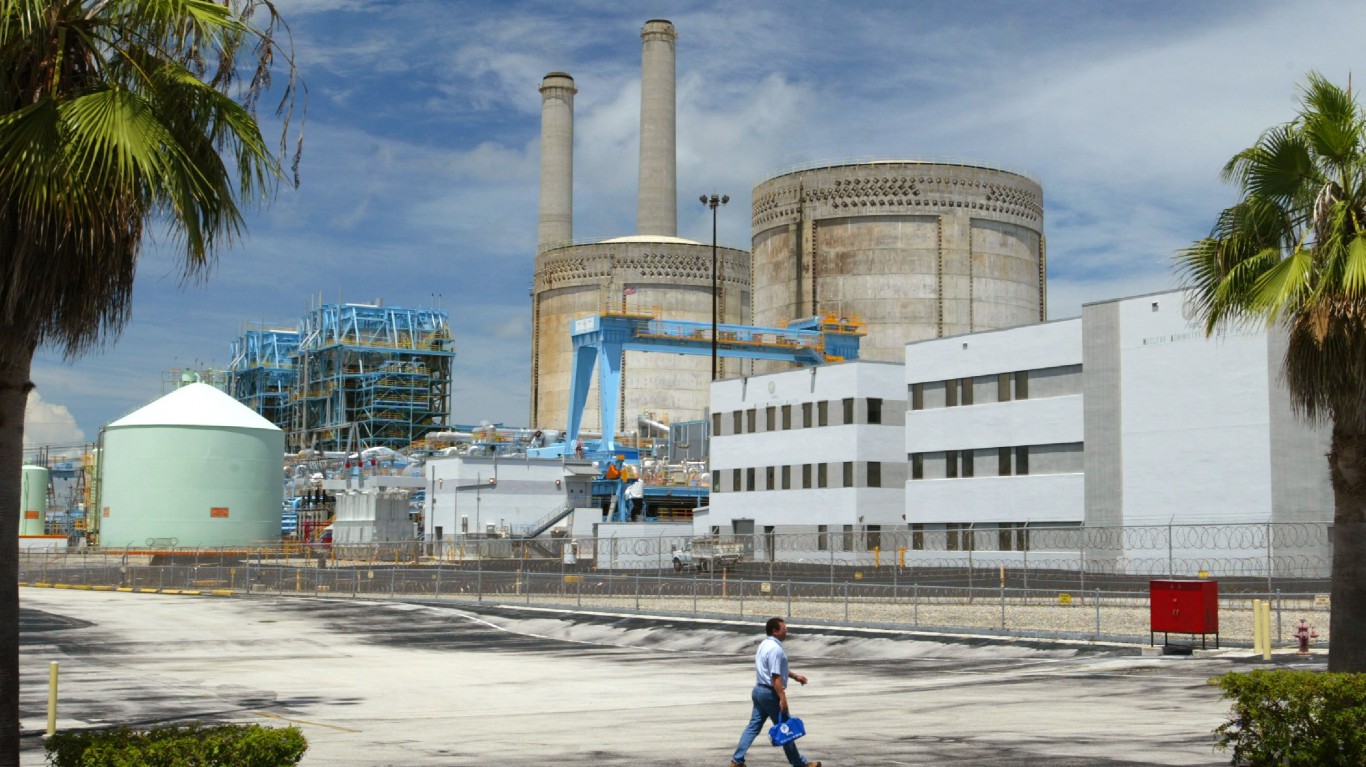
This is an excellent idea now, located in a growing part of the country and paying a hefty 4.44% dividend. Duke Energy Corporation (NYSE: DUK) and its subsidiaries operate as an energy company in the United States.
It operates through two segments:
- Electric Utilities and Infrastructure (EU&I)
- Gas Utilities and Infrastructure (GU&I).
The EU&I segment generates, transmits, distributes, and sells electricity in the Carolinas, Florida, and the Midwest.
To develop electricity, Duke Energy uses the following:
- Coal
- Hydroelectric
- Natural gas
- Oil
- Solar and wind sources
- Renewables
- Nuclear fuel
This segment also sells electricity to municipalities, electric cooperative utilities, and load-serving entities.
The GU&I segment distributes natural gas to:
- Residential
- Commercial
- Industrial
- Power generation natural gas customers
The segment also invests in pipeline transmission projects, renewable natural gas projects, and natural gas storage facilities.
Entergy
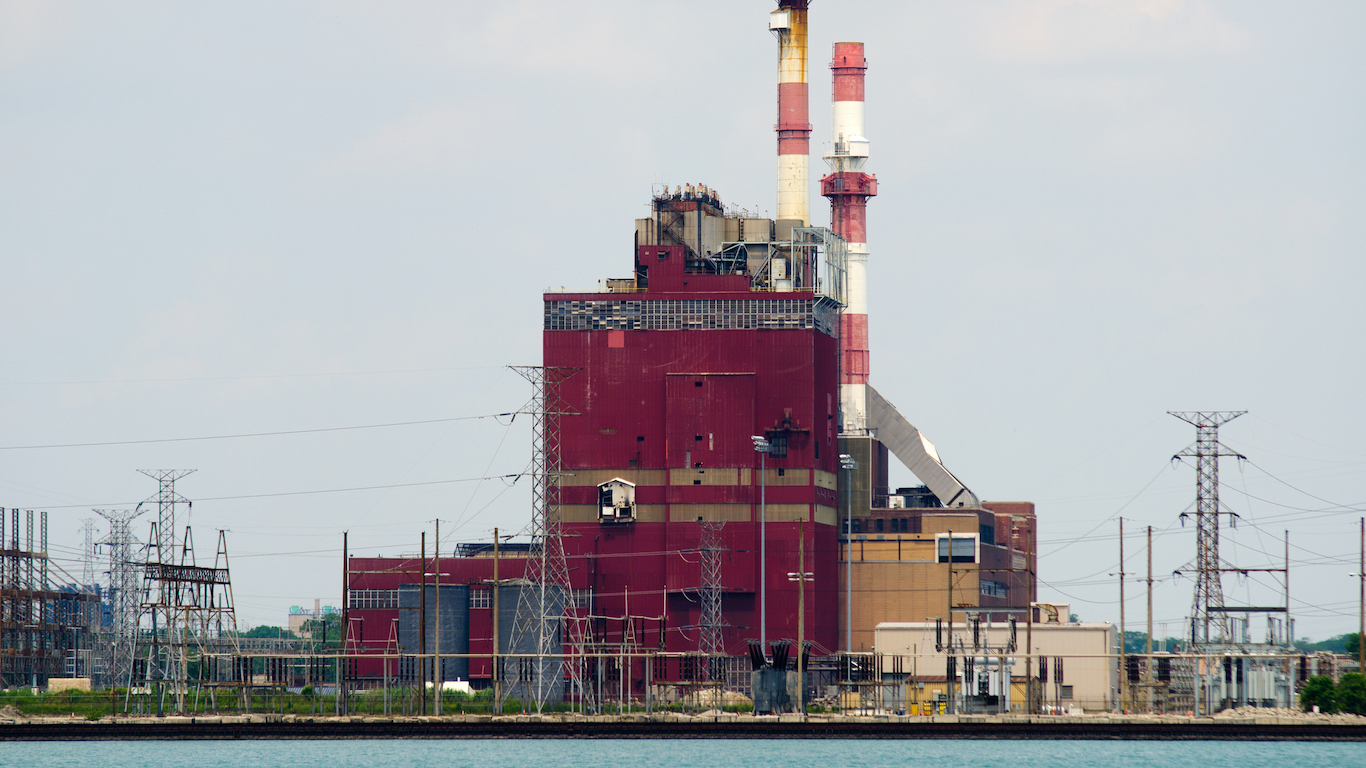
This top utility stock always makes sense for conservative investors and pays a rich 4.52% dividend. Entergy Corporation (NYSE: ETR) produces and distributes electricity in the United States with its subsidiaries.
It operates in two segments:
- Utility
- Entergy Wholesale Commodities.
The Utility segment generates, transmits, distributes, and sells electric power in portions of:
- Arkansas,
- Louisiana, including the City of New Orleans
- Mississippi
- Texas
It also distributes natural gas.
The Entergy Wholesale Commodities segment is involved in the following:
- Ownership, operation, and decommissioning of nuclear power plants located in the northern United States
- Sale of electric power to wholesale customers
- Provision of services to other nuclear power plant owners
- Ownership of interests in non-nuclear power plants that sell electric power to wholesale customers
The company generates electricity through gas, nuclear, coal, hydro, and solar sources. It sells energy to retail power providers, utilities, electric power co-operatives, power trading organizations, and other power generation companies.
Its power plants have approximately 24,000 megawatts (MW) of electric generating capacity, which includes 5,000 MW of nuclear power.
The company delivers electricity to 3 million utility customers in Arkansas, Louisiana, Mississippi, and Texas.
.









 Top Gaining Stocks
 Top Losing Stocks