



Every individual and household is different both in their income trajectory (driven by their career choices and modes of income) as well as their spending and investing habits. For some, investing is a nice-to-do, but not something that’s a necessity. For others, investing is more like a religious obligation that must be taken seriously.
The reality is that living one’s life, and putting some capital away for a big and beautiful tomorrow, can work simultaneously. It just depends on the size of one’s shovel (how much income can be brought in), and how diligently (and more importantly, patiently) investors can put capital aside and let compounding do its thing.
While I do think that comparison is the thief of joy, I also understand that having something to compare oneself to is also helpful when determining the trajectory one is on. So, for those looking for a benchmark of where they ought to be (relative to the median, not average) American at age 50, let’s provide some metrics to dive into.
Median 401(k) Balance At Age 50

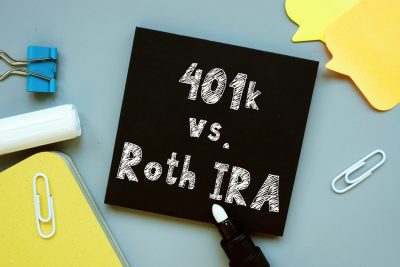
401(k) visual
Let’s dive right into the numbers.
For the 45-54 age group, the median 401(k) balance comes in at a midpoint of around $67,796. That’s a far cry from the average, which is $188,643. But that makes sense, when investors consider the reality that the top percentiles of savers hold the vast majority of overall retirement savings and equity exposure as well, so that’s to be expected.
I think it goes without saying that a mid-$60k 401(k) balance is far from enough to sustain investors in retirement, particularly when using the “safe” 4% withdrawal rate. Such a withdrawal rate would only provide around $2,700 per year (or a little more than $200 a month) at that point. And while we hope that folks who put money into their retirement accounts won’t pull it out (due to penalties, and the fact that any financial advisor would scream at you for doing so), the reality is that these retirement accounts have become leakier in recent years as inflation has eaten into households’ ability to survive.
Most financial experts suggest having around $500,000 invested by age 50 to get to the $1 million – $1.8 million level which would be required to withdraw around $72,000 per year, or $6,000 per month in retirement (on the high end). I think most of us who live on such sums couldn’t imagine living without that income – so that’s really the ultimate goal. And shockingly, that statistic shows that even the average American isn’t on track to hit these goals. With inflation rising and meaning more may be needed down the road, that’s another factor to price into your own expectations.
What Can Be Done to Catch Up?

IRS office in Washington, D.C.
The good news is that for investors who are over the age of 50, catch-up contributions are allowed (and encouraged) by the IRS. This allows higher earners to put as much as $20,000 per year extra into tax-advantaged plans, which have significant potential to grow over a 15 year period or longer (depending on when one chooses to declare their full retirement age).
The other good news is that investors have the choice of where to invest their funds. For those needing more capital appreciation, moving out the risk curve and holding a higher percentage of equities can be a way to try to catch up. While such a strategy isn’t without risk, it’s what we’re seeing in the data is actually taking place, and those in the younger baby boomer generation and older Gen Xers have benefited from such a strategy in recent years.
The other options can include delaying retirement (to take advantage of 8% social security increases between the age of 65 and 70), working part-time jobs where possible, or creating new passive income sources outside of 401(k) accounts, such as in brokerage accounts or TFSAs that can supplement what one expects to pay in retirement.
These figures don’t factor in what retirees can expect to receive from social security and other private pensions and other funding sources, so everyone’s needs are different. But retirement is an important stage of life to plan for, so this comparison article can at least provide some context for many out there.













 Top Gaining Stocks
 Top Losing Stocks