



The Alpha Architect 1-3 Month Box ETF (CBOE:BOXX | BOXX Price Prediction) has accumulated $9.4 billion in assets since its December 2022 launch, bringing institutional-grade box spread strategies to retail investors. This options-based ETF currently offers a 4.1% annualized yield, positioning itself as an alternative to ultrashort-duration Treasury funds for cash management.
How BOXX Generates Income
BOXX produces returns through box spreads on S&P 500 Index options – four-legged positions combining a bull call spread and a bear put spread at different strike prices. These positions create a risk-free arbitrage structure that locks in a predetermined return at expiration, typically 1-3 months out. The fund earns the difference between what it pays to establish the position and what it receives at expiration, generating returns that track short-term interest rates without holding actual Treasury securities. With zero portfolio turnover, BOXX holds these positions to maturity, creating potential tax advantages over traditional bond funds.
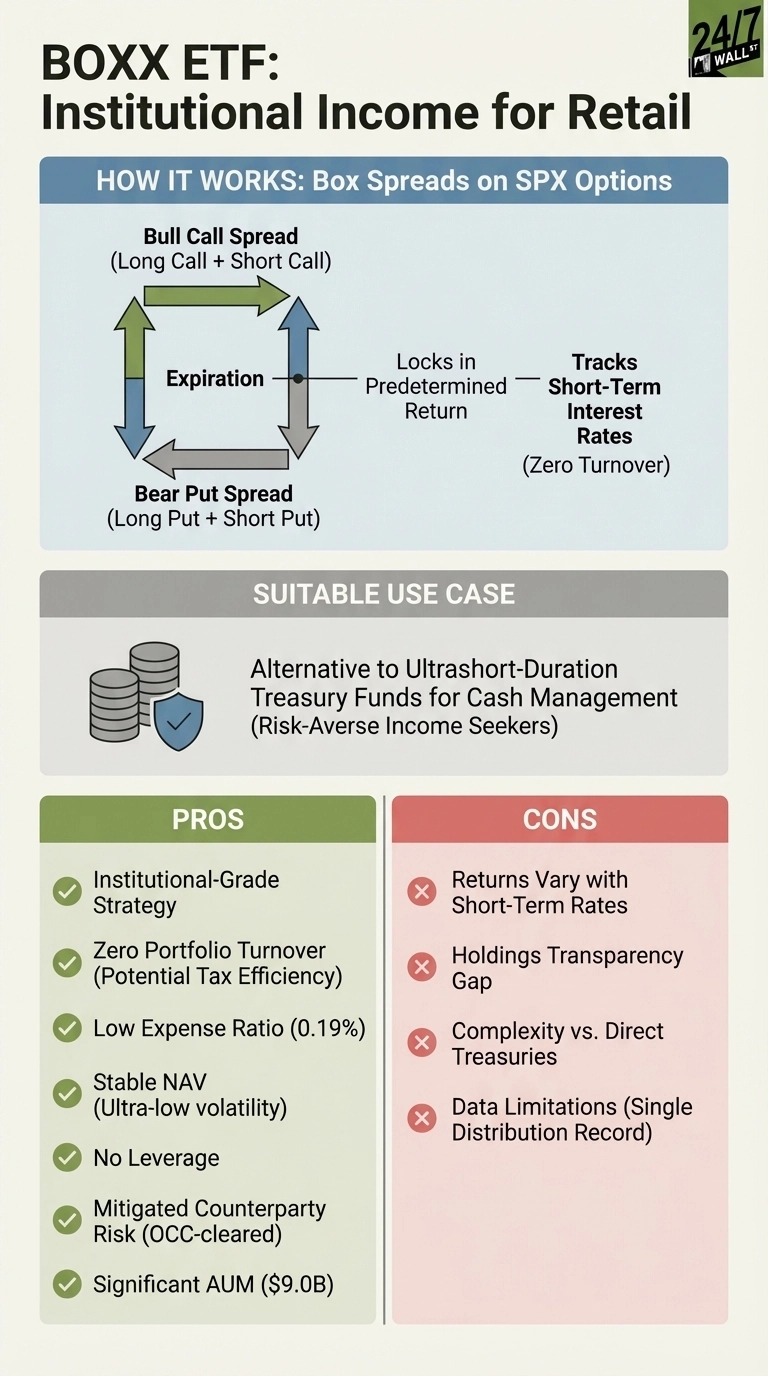
Distribution Sustainability Assessment
The safety of BOXX’s income depends on three factors: options market liquidity, interest rate stability, and execution precision. As of December 26, 2025, the fund’s positions averaged 84 days to expiration with a 4.1% yield to maturity. This yield fluctuates with short-term rates but remains structurally sound—box spreads are mathematically guaranteed to pay the spread between strikes at expiration.
Unlike equity dividend funds vulnerable to corporate earnings, BOXX’s returns derive from options pricing arbitrage. The primary risk is counterparty default, mitigated by using exchange-traded SPX options cleared through the Options Clearing Corporation. Market disruptions could impact the fund’s ability to roll positions efficiently, but the 19 basis point expense ratio provides professional management to navigate these complexities.
The fund’s $9.4 billion in assets demonstrates institutional confidence in the strategy’s viability. However, investors should note that BOXX’s distributions vary with prevailing interest rates—when short-term rates decline, so will the fund’s yield. The 4.33% total return over the past year reflects both income and modest NAV appreciation, showing the strategy performs as designed in the current rate environment.
Alternative: SGOV for Pure Treasury Exposure
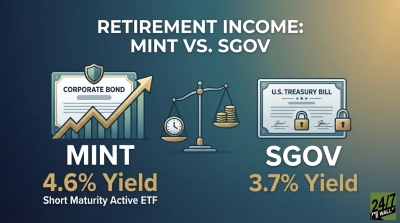
Investors seeking traditional Treasury exposure should consider the iShares 0-3 Month Treasury Bond ETF (NYSEARCA:SGOV), which holds actual U.S. Treasury bills maturing within three months. With $64.7 billion in assets and a 3.9% yield, SGOV offers slightly lower returns than BOXX but provides direct government backing rather than options-based synthetic exposure. The fund charges just 9 basis points annually, making it 10 basis points cheaper than BOXX. For conservative investors prioritizing simplicity and direct Treasury ownership, SGOV represents a straightforward cash alternative, while BOXX appeals to those comfortable with options mechanics seeking modestly higher yields.












 Top Gaining Stocks
 Top Losing Stocks