


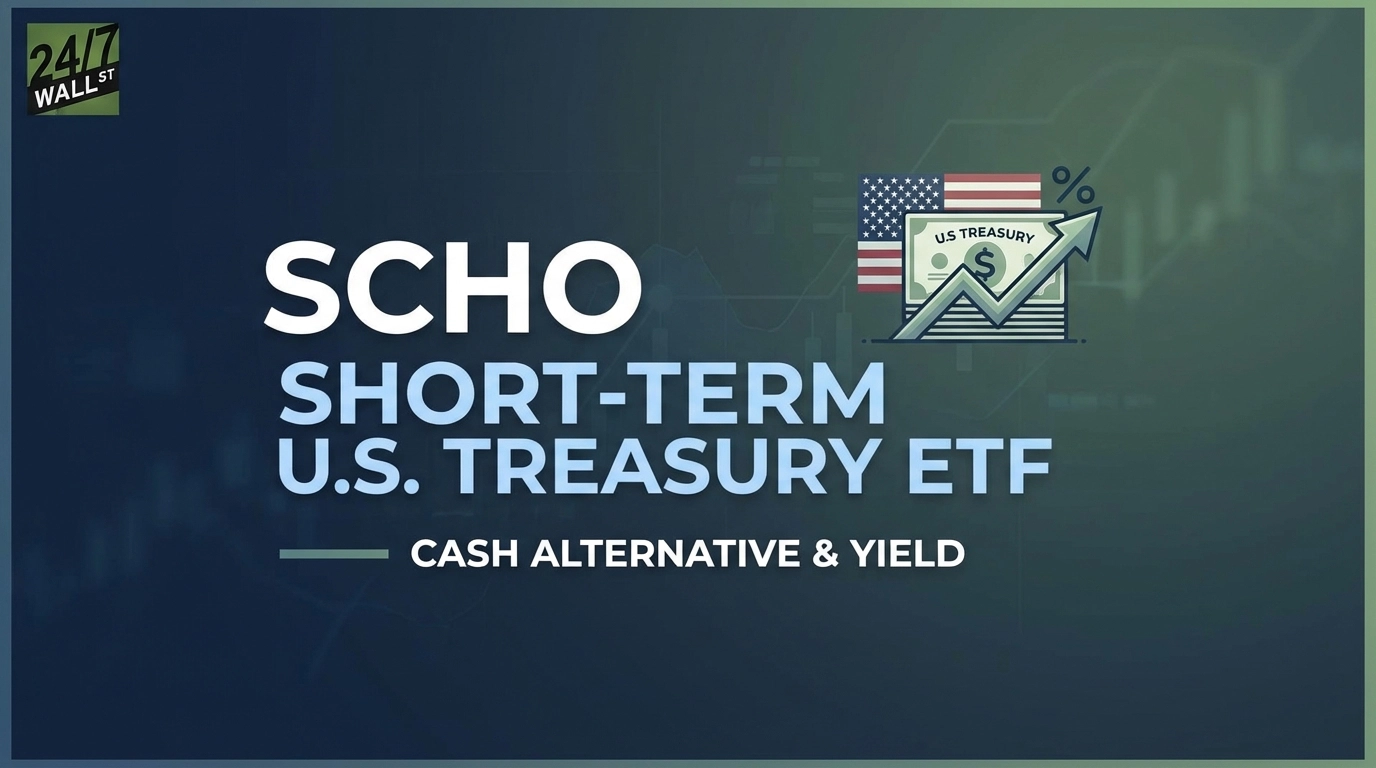
If you’re holding cash and want to earn something while you wait, short-term Treasury ETFs like Schwab Short-Term U.S. Treasury ETF (NYSEARCA:SCHO | SCHO Price Prediction) make sense. SCHO offers a straightforward way to earn Treasury yields without sacrificing liquidity or returns to fees. The fund’s 0.03% expense ratio means investors capture nearly the full yield of short-term Treasuries, which delivered 4.88% over the past year as the Fed maintained elevated rates. This positions SCHO as a cash alternative that combines the safety of government bonds with monthly income distributions.
Institutional investors are divided on SCHO’s outlook. Inspire Advisors LLC reduced their position by 67.7% in Q3 2025, likely betting that falling rates would erode short-term Treasury yields. Other firms increased exposure, viewing SCHO as a defensive position if the Fed pauses rate cuts longer than expected. This divergence reflects broader uncertainty about whether peak rates have passed or if inflation will keep the Fed restrictive.
The Federal Reserve’s Next Move
SCHO’s performance hinges on where the Federal Reserve takes interest rates. Short-term Treasury yields move almost in lockstep with the Fed’s policy rate, meaning any shift in expectations around rate cuts or hikes will immediately impact what SCHO earns. If the Fed signals more cuts, yields on one to three year Treasuries will likely fall, reducing SCHO’s income. If inflation proves stickier and the Fed holds rates steady or raises them, SCHO’s yield becomes more attractive relative to other fixed income options.
Watch the Federal Reserve’s policy statements and Summary of Economic Projections, released after each Federal Open Market Committee meeting. These happen roughly every six weeks and provide the clearest signal on rate direction. Pay attention to the dot plot, which shows where individual Fed members expect rates over the next few years. When that shifts, so does the entire Treasury curve.
Duration and Reinvestment Risk
SCHO holds Treasuries maturing in one to three years, meaning the fund constantly rolls over its portfolio as bonds mature. This creates reinvestment risk. If rates fall sharply, the fund buys new bonds at lower yields, directly reducing future income. If rates rise, SCHO benefits as it reinvests at higher yields. As market expectations around rate cuts shift, SCHO faces potential headwinds if investors broadly move away from short-duration positioning.
Track this through the fund’s monthly fact sheet on Schwab’s website, which shows the current weighted average maturity and yield to maturity. Those figures tell you what SCHO earns today and how quickly it will adjust to rate changes.
The macro factor to watch is Fed policy direction, while the micro signal is how quickly SCHO’s portfolio yield adjusts as bonds mature and reinvest at prevailing rates.







 Top Gaining Stocks
 Top Losing Stocks