



Notions of “Fairness”
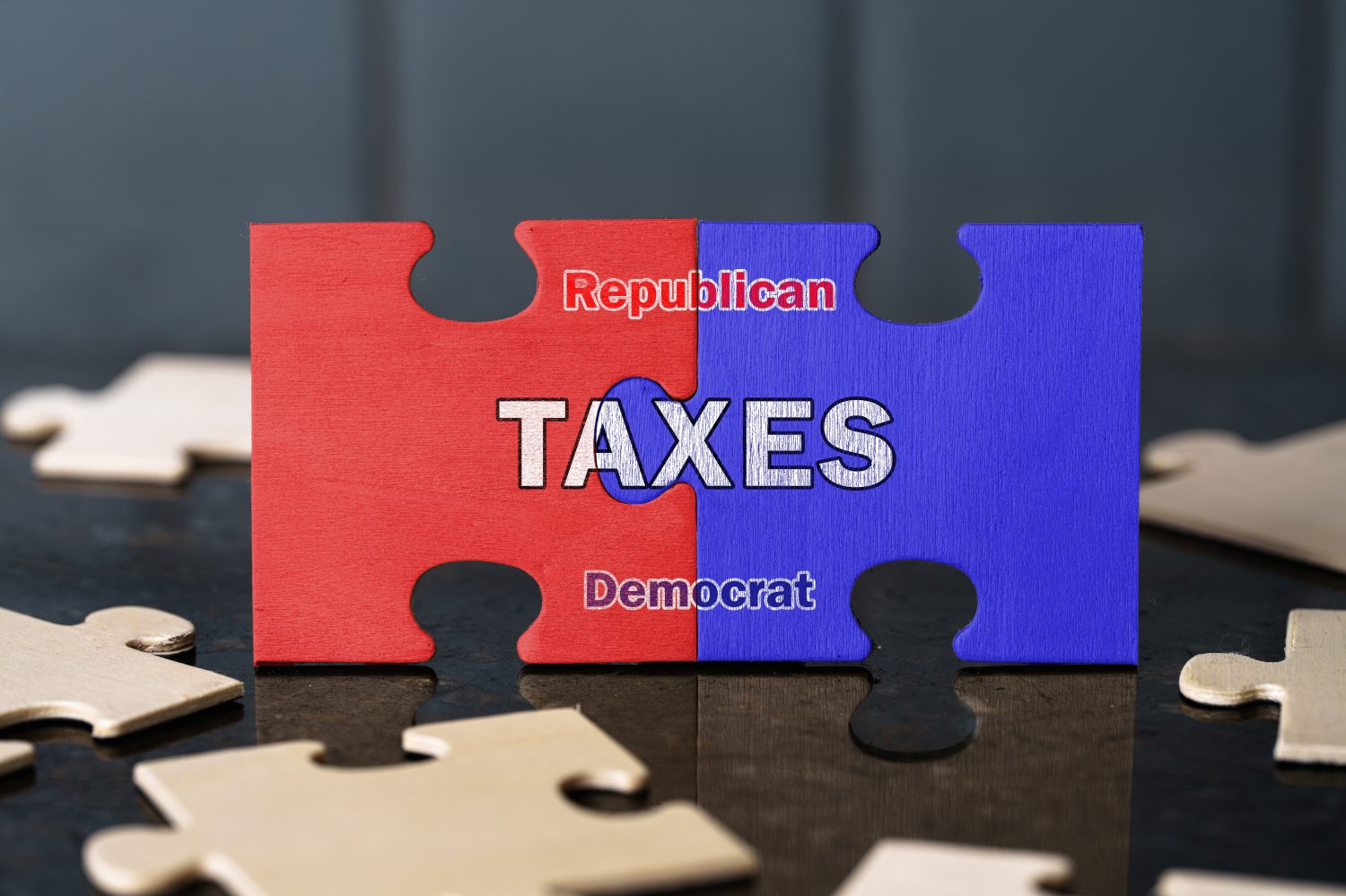
While the concept of fairness in the US is usually the equal application of a charge on anyone regardless of race or religion, income tax sharply divides Republicans and Democrats.
When it comes to financial charges, most Americans will agree that the notion of “fairness” is when it is applied equally, regardless of one’s race, creed, or color. An example would be a movie ticket. All adults, children under 12, and senior citizens over 65 are all charged the same, regardless of their ethnicity or religion. An example of a tax that all Americans would also deem to be fair, would be something like a sales tax. Regardless of who is paying it, the percentage of sales tax remains the same for large or small items.
One topic, however, that divides Americans along political lines is that of income tax. Those on the Right believe that income taxes are too high, and that those who have taken risks should not be penalized if they are successful. The often used argument from those on the Left who feel that anyone’s success is achieved through unethical means favor confiscating larger amounts from them to “pay their fair share.”
Taxation that escalates based on greater earnings success is technically labeled as “progressive”, while flat taxes that apply to all equally, even though it is the grammatically proper term, are pejoratively described as “regressive”. Ironically, in real life, those at the highest wealth tiers, with the exception of perhaps Elon Musk, pay a smaller percentage of their overall income than those in the upper middle class.
History of Income Tax
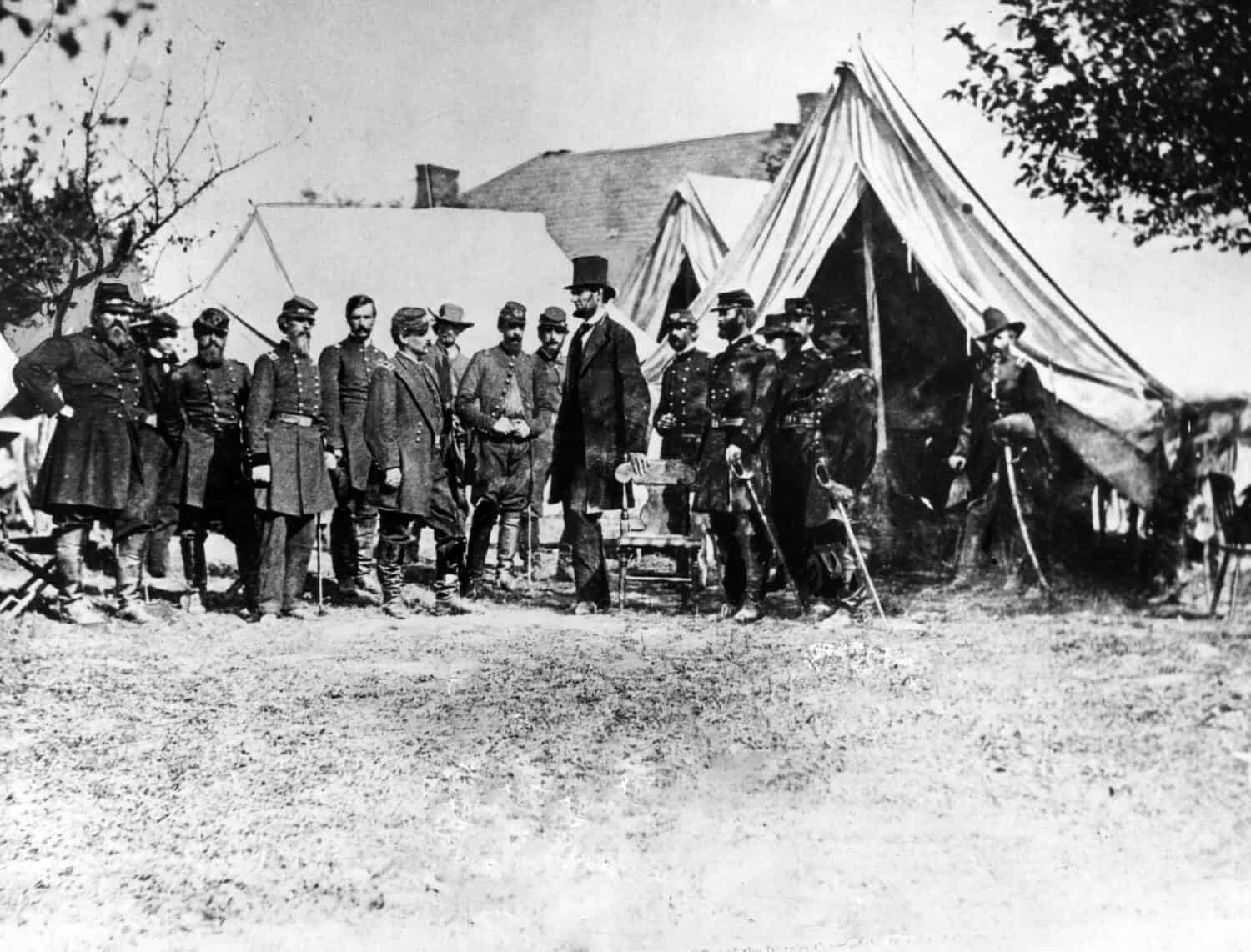
Although the Republican platform advocates reducing taxes and shrinking the Federal government while Democrats want more taxation and more Federal government power, Abraham Lincoln, the first Republican president, was also the first to enact an income tax in 1861 to help fund the Union Army during The Civil War.
The US system has been historically successful for the most part, because its cultural societal roots and governmental structure are founded in the notion of private property protection, and equal opportunity for anyone to try to realize the American dream through his or her own efforts.
Despite being the nation’s first Republican president, Abraham Lincoln created the first income tax in 1861 to fund the Union side of the Civil War: a flat tax of 3% on incomes over $800. It was later amended in 1862 to a 3% tax on incomes between $600 and $10,000 and 5% above $10,000 as the Civil War dragged on. It was later rescinded in 1872 due to public outcry.
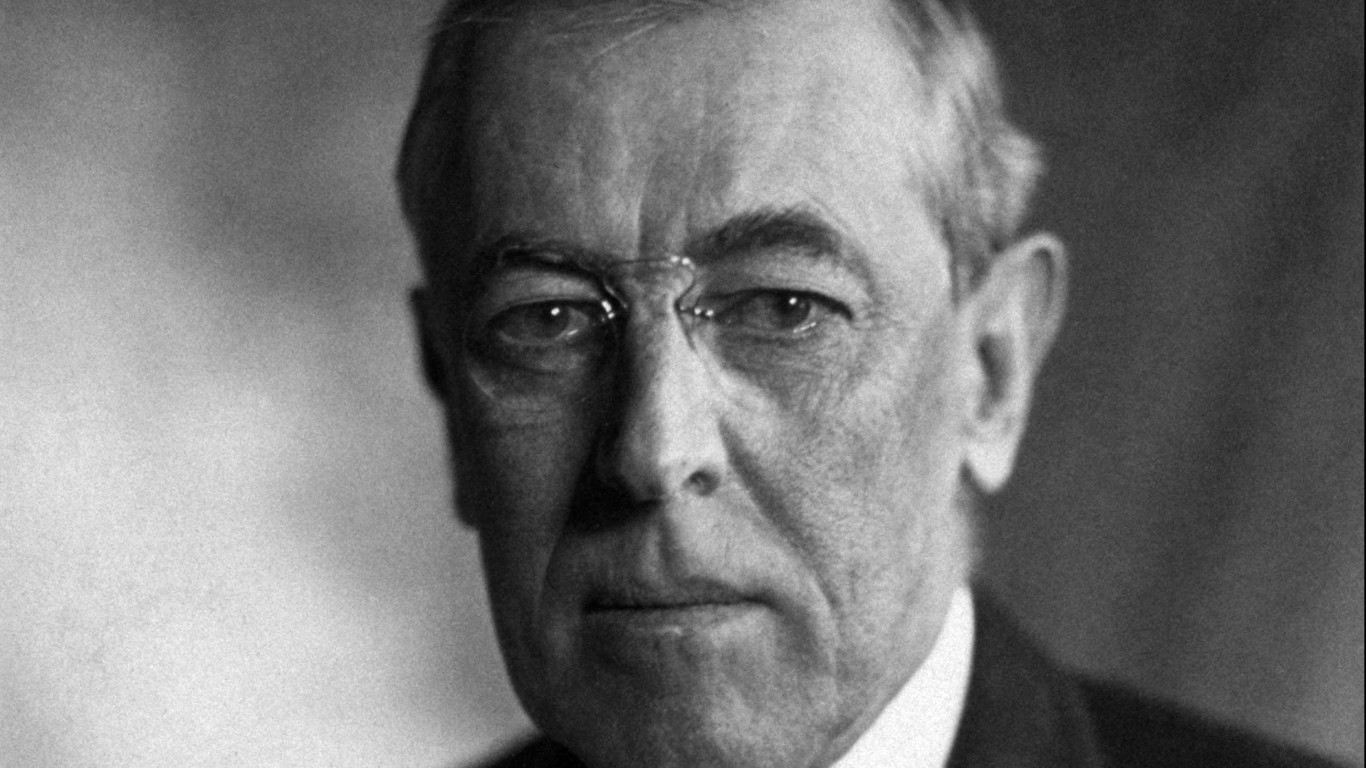
Income tax was revived in 1913 under President Woodrow Wilson. It escalated into a full-blown “mass tax” during World War II, and has continued to grow ever since, as Congressional spending increased exponentially since the 1960s.
At the Root of Federal Income Tax Inequality: Progressive Income Tax
The Progressive Income Tax system is the major reason for the discrepancy between why some citizens might pay in the mid 4-figures in tax, while other might pay many times more.
The confiscatory nature of the progressive income tax in the US has advanced far beyond the two tiers of 1862. Federal Income Tax currently has (7) tiers: 10%, 12%, 22%, 24%, 32%, 35%, and 37%. Since the tax rates are marginal, one only pays the amount of income that goes into the next bracket, so if someone earned $50,000, they are taxed roughly 10% on the first $12,000; 12% on the next w$36,000, and 22% on the remaining $2,000. As one can easily calculate, this system takes its percentage on the full legal amount of taxable income at every tier. This is why a per personal tax range can vary so widely, since the percentage is skewed higher the more one earns. At least, that is the theory. In practice, this is not often the case, which is why politicians continually rail against “the rich not paying their fair share” when, in fact, the loopholes used by the ultrarich are also used by Congressional members themselves.
Why The Rich Treat Good Accountants Like Rock Stars
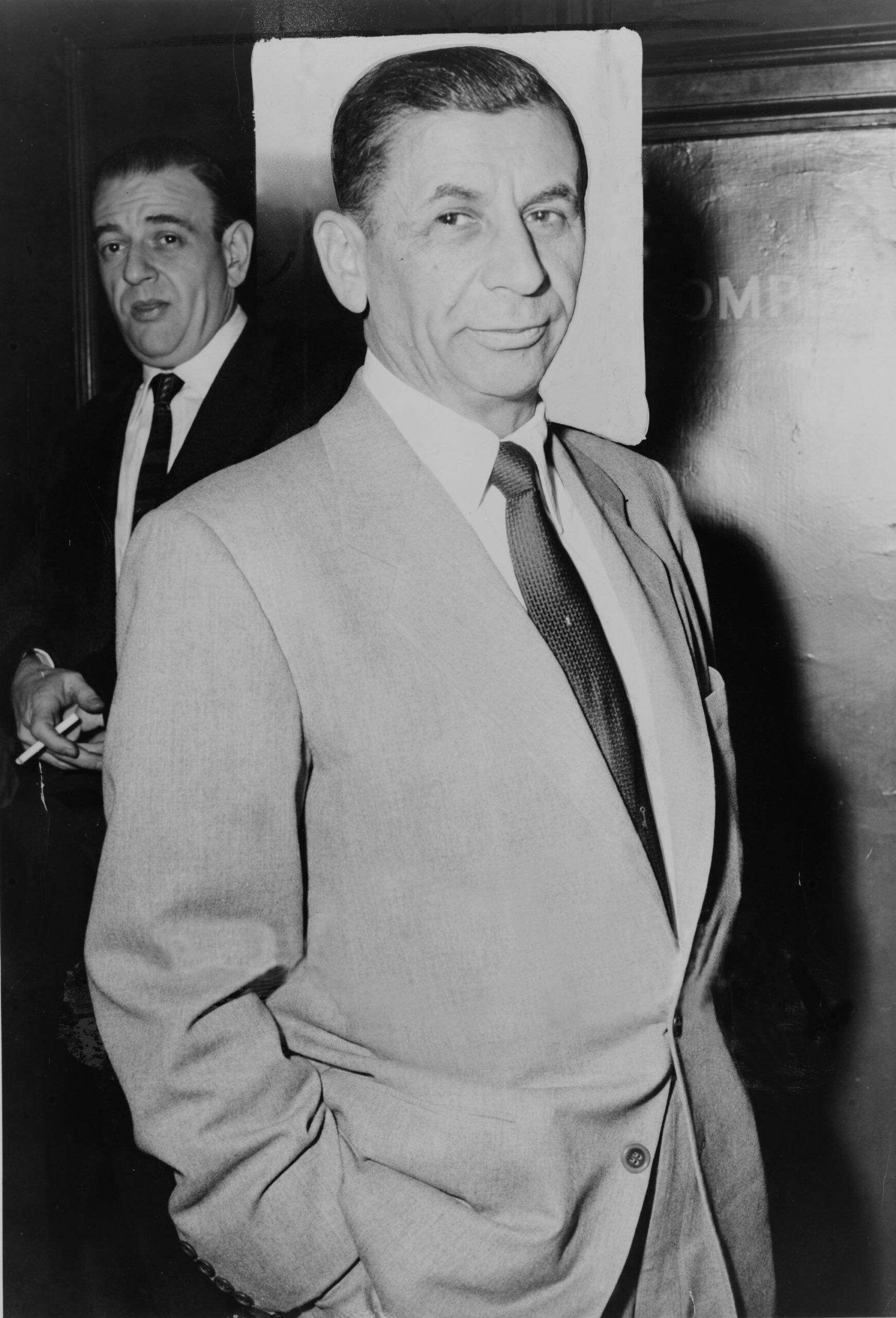
The ultrarich highly value skilled accountants who know how to navigate the voluminous US tax code – even organized crime revered Meyer Lansky for his acumen in laundering and legitimizing the illegal money of mobsters like Bugsy Siegel and Lucky Luciano.
When the tax code became increasingly more confiscatory, politicians inevitably started creating loopholes for both themselves and their rich campaign donors that only those who could afford professional accountants would be able to utilize. The expansion of tax loopholes, regulations, and other details in the US Tax code has exploded by leaps and bounds. According to the Tax Foundation, the 1955 word count was 1.4 million words. By 2015, it was 10 million words, so 2026 is likely going to be considerably higher.
Deductions, exemptions, specialty credits and a panoply of other loopholes on both the federal and state levels can reduce one’s taxable income to very low levels, despite gross amounts that could be 7 figures and above. This is because capital gains and passive income are taxed at lower levels than regular salary income. Smart accountants who can juggle the books to meet specific loopholes in the tax code are highly valued by the ultra wealthy.
This is how multimillionaires are able to pay lower percentages of taxes than those earning less. Nevertheless, the top 50% earners (those over $50,339) in the US pay 97% of all federal income tax. For further clarity, out of that 97%, those earning over w$261,591 pay 61%, and the top 1%, which starts at $663,164 pay 40%. Those under $50,000 across the entire US only pay 3%.
Even organized crime has long recognized the value of skilled and brilliant accountants. For centuries, Chinese Triads valued those holding the White Paper Fan (415) rank. A designated business advisor and accountant, the White Paper Fan manages the illicit profits made from prostitution, opium dealing, and other criminal activities. Meyer Lansky was key in legitimizing the illegal gambling and bootlegging money of American mobsters like Bugsy Siegel and Lucky Luciano. By contrast, in spite of all of his violent crimes, it was tax evasion that allowed the FBI to finally arrest and convict Al Capone.
Tax inequality from a mathematical perspective is unequivocal; however, “fairness” is certainly something in the eye of the beholder. President Trump and Treasury Secretary Bessent have both mentioned the possibility of eliminating federal income tax on multiple occasions. If the tariff revenues continue to increase while inflation and the deficit can recede, then they just might be able to justify such a move in the future.











 Top Gaining Stocks
 Top Losing Stocks