


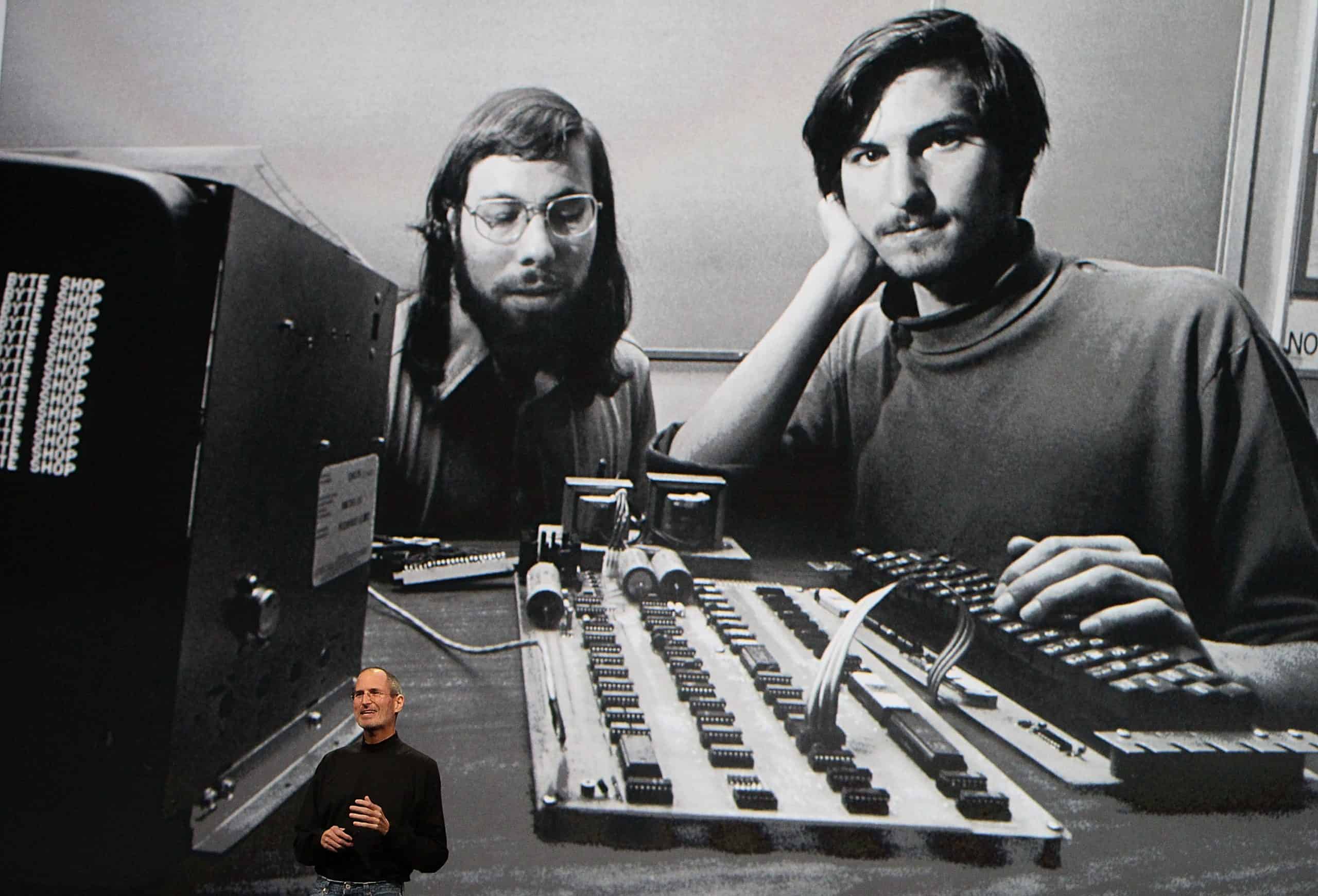
A Steve Jobs-signed check from Apple’s earliest days just sold for $2.4 million at auction, more than doubling pre-sale estimates. The check, made out to Crampton, Remke & Miller for $175 on July 3, 1976, represents payment to the electronics parts supplier that helped build Apple’s first computers. It’s signed by Jobs, co-founder Steve Wozniak, and original partner Ronald Wayne.
The auction, conducted by RR Auction, featured multiple early Apple artifacts that collectively crossed $8 million in sales. An Apple-1 prototype board fetched $2.85 million, while the Jobs-signed check became the second-highest item. These prices reflect intense collector demand for tangible pieces of Apple’s origin story.
The contrast between that $175 check and Apple’s current reality is staggering. Apple (NASDAQ:AAPL | AAPL Price Prediction) now commands a $3.81 trillion market cap, making it the world’s most valuable publicly traded company. The stock trades at $259 after a 10% gain over the past year, though it’s down 5% year-to-date following a recent pullback from its $289 52-week high.
The company just reported record quarterly revenue of $143.8 billion, up 16% year-over-year, with earnings per share of $2.84 beating analyst estimates. iPhone sales hit $85.27 billion while Services revenue reached $30.01 billion. Apple returned $32 billion to shareholders in the quarter and maintains 2.5 billion active devices worldwide.
Wall Street remains bullish. JPMorgan and Morgan Stanley both hold $315 price targets on the stock, citing stronger-than-expected iPhone 17 demand. The company’s 27% profit margin and 35% operating margin demonstrate the pricing power Jobs envisioned when he signed that check 50 years ago. From a $175 parts payment to a $3.81 trillion empire, the trajectory validates why collectors pay millions for these founding documents.







 Top Gaining Stocks
 Top Losing Stocks