


Summary:
Transcript:
Doug: Alright, we’ve watched oil take a pretty big pop, particularly if you go back a year. The U.S. now has two carrier groups in the Mediterranean area, and we’ve only got about 11 total.
Lee: We’ve had the most assets stationed there since the Iraq War.
Doug: There’s a reasonable chance, at least according to the President, that there could be significant military conflict. This isn’t like going to Venezuela and kidnapping a leader. This is very different. If something happens there, and you look not just at Iran but at everyone who could get involved, a real war wouldn’t be limited to just two countries.
Lee: No.
Doug: People forget that when Russia invaded Ukraine in early 2022 and there were concerns about oil disruptions, crude went above $100 a barrel.
Lee: It was close to $120. You’re absolutely right.
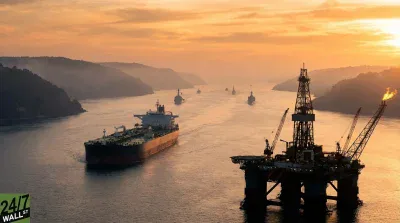
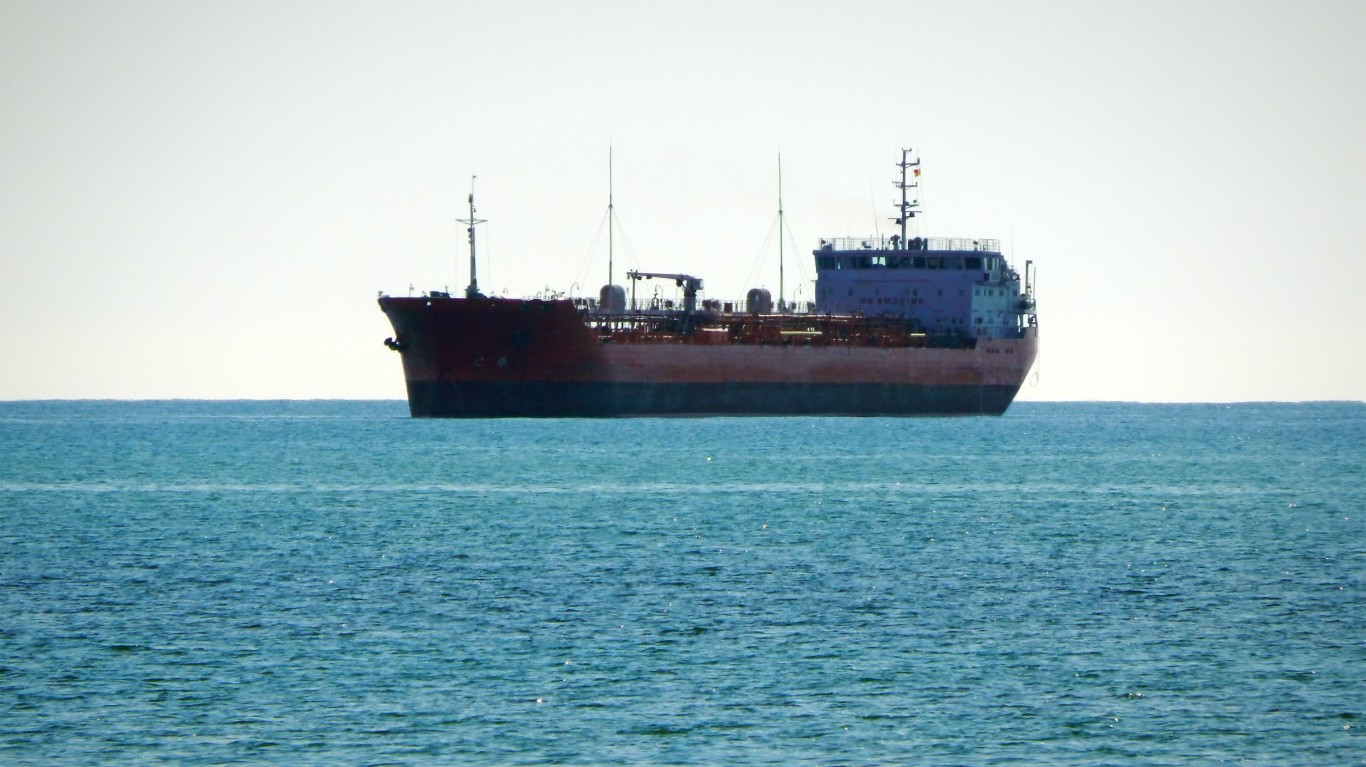
Doug: Gasoline went to $5 a gallon. That was highly inflationary. So keep a close eye on the war situation because one potential flashpoint is the Strait of Hormuz. That’s where tankers must pass to reach the Suez Canal.
Lee: Absolutely.
Doug: The other side effectively controls that chokepoint. About 20% of the world’s crude transits there.
Lee: Yup.
Doug: If there’s even a credible threat of shutting it down, you don’t need direct conflict. Tanker operators and oil companies may simply refuse to pass through, which would sharply increase oil prices.
Lee: They won’t go.
Doug: If oil spikes, gasoline follows. That correlation is consistent.
Lee: And they’ve been rattling the saber over Iran for some time. Two of the best-performing stocks this year have been Chevron (NYSE: CVX) | CVX Price Prediction and Exxon Mobil (NYSE: XOM) because investors were attracted to the dividends. At one point, Chevron’s dividend yield was close to 5%. Exxon’s was near 4% in late summer or early fall. Investors saw stable global oil majors offering strong yields and allocated capital there. Now, because of price appreciation, Chevron’s yield is just over 4%.
Doug: If the situation escalates, Iran could move quickly to shut down the Strait of Hormuz. They’ve already warned vessels to tread carefully. If they fully restrict access, the impact would be immediate. And when we had serious CPI problems, energy was the main driver. Oil, heating oil, gasoline. CPI may be around 2.5% now, but if oil surges, you could easily see it move back toward 3% or higher.
Lee: It would skyrocket. It would absolutely skyrocket. So be careful. The market is extremely overbought at these levels and trading at forward valuations well above historical medians. Keep an eye on oil. There are still solid energy stocks, and most pay strong dividends.
Doug: Oil stocks look attractive to me. Rotate out of the so-called “Mag Seven” and into large-cap oil instead.
Lee: I believe BP (NYSE: BP) still yields over 5%, and TotalEnergies (NYSE: TTE) does as well.
Doug: Great company.
Lee: So, it’s definitely out there. It’s definitely out there.










 Top Gaining Stocks
 Top Losing Stocks