


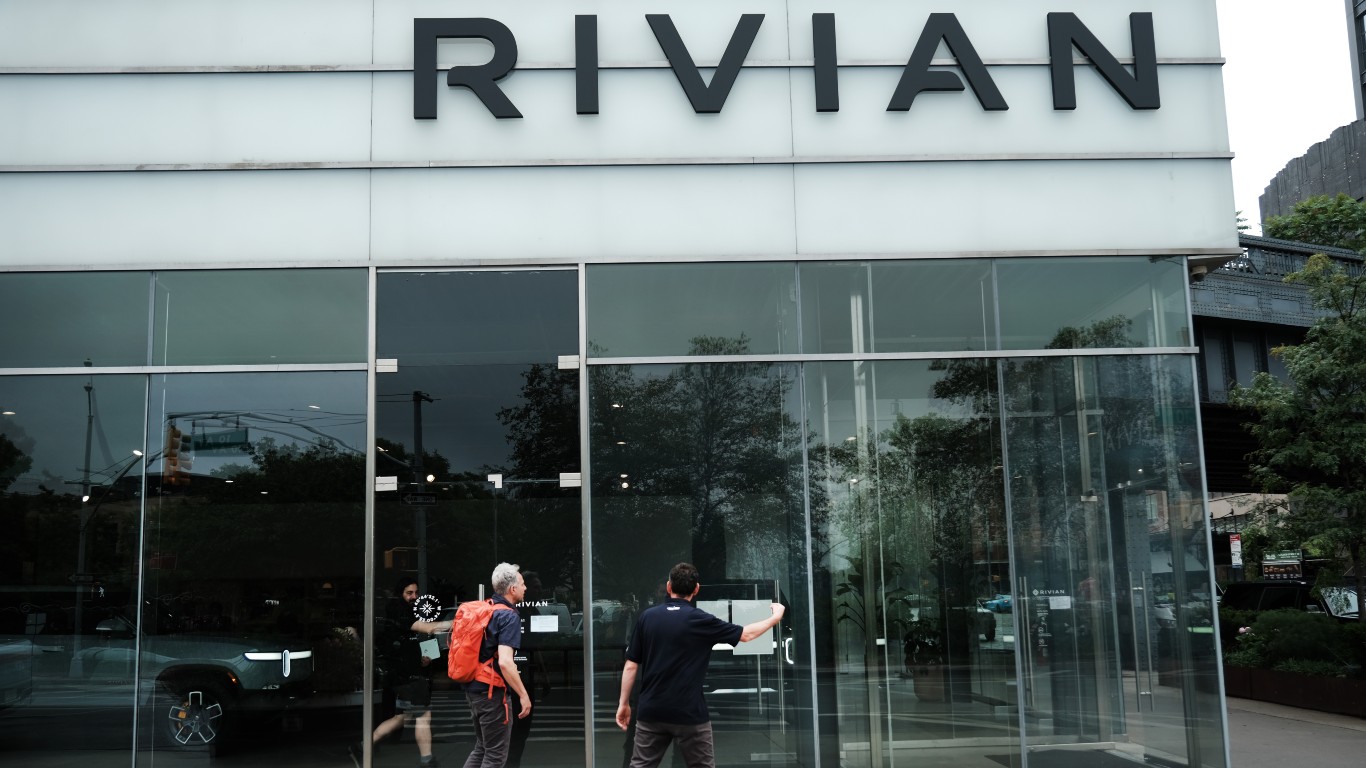
Shares of Rivian Automotive (NASDAQ:RIVN | RIVN Price Prediction) are down approximately 5% today, sliding below $16 as the company holds its highly anticipated R2 SUV reveal event. The setup here is textbook: the stock had already climbed 11.6% over the prior week, from $14.92 to $16.65, pricing in excitement ahead of the R2 unveiling.
It’s the classic “buy the rumor, sell the news” dynamic playing out in real time. Barron’s flagged it this morning with the headline “It’s a Big Day for Rivian R2 EVs. The Stock Is Down.” The reveal was supposed to be a catalyst, but instead it’s a reminder that by the time the event arrives, the easy money is usually already gone.
The R2 Reveal: What Was Priced In
The R2 is the vehicle Rivian needs to matter at scale. It’s a midsize SUV targeting the mass market at approximately $45,000, a significant step down from the premium R1T and R1S lineup. First customer deliveries are targeted for Q2 2026, with the company guiding for 62,000 to 67,000 total vehicle deliveries in 2026.
The technology story around R2 is genuinely interesting. Rivian built its own autonomy chip, the RAP1, a 5-nanometer processor capable of 800 TOPS per chip, manufactured on TSMC’s node.
The third-generation autonomy platform pairs two RAP1 chips for 1,600 TOPS total, with a sensor suite of 11 cameras, 5 radars, and LiDAR. Rivian is also launching an “Autonomy+” subscription service at $49.99 per month, which represents the kind of recurring, high-margin revenue stream that could eventually change the financial profile of the business.
The problem is that Wall Street had already been building all of this into the stock price for weeks. A 30% post-earnings rally in February followed Rivian’s Q4 beat, and then another 11.6% gain last week piled on top. By the time the R2 reveal started, the stock had done a lot of work.
The Numbers Behind the Move
Rivian’s Q4 2025 earnings, reported February 12, gave the bulls real ammunition. Revenue came in at $1.3 billion, beating estimates, and the company posted a gross profit of $120 million for the quarter. Full-year 2025 marked Rivian’s first complete year of positive gross profit, a milestone that matters because it shows the unit economics are moving in the right direction even as the company burns cash at scale.
Still, the full picture is harder to ignore. Rivian’s full-year 2025 net loss was $3.6 billion, free cash flow came in at -$2.489 billion, and cash on hand declined to $3.579 billion. Furthermore, Rivian’s 2026 adjusted EBITDA guidance range of -$2.1 billion to -$1.8 billion tells you this company is not close to profitability.
For more on just how much is riding on today’s event, Rivian’s R2 Reveal Is the Moment of Truth for the EV Maker’s Survival lays out the stakes in full.
Where Analysts Stand
The analyst community is genuinely divided on Rivian stock right now. The consensus target sits at approximately $17.20, just above where the stock was trading heading into today.
Needham is bullish, having raised its price target while citing R2 and autonomy as durable competitive advantages. Morningstar has a fair value of $15 with a “No Moat” rating, calling shares roughly fairly valued. Also, Morgan Stanley (NYSE:MS) has a Sell rating with a $12 price target, and Mizuho also carries a Sell.
The bear case is straightforward: Rivian is not expected to reach profitability within the next three years, faces ongoing cash burn, and carries real execution risk on the R2 ramp. The expiration of federal EV tax credits has already hurt demand, and the $5.8 billion Volkswagen (OTC:VWAGY) joint venture is a critical lifeline, not just a strategic win. A proposed $250 million class action settlement with a court hearing scheduled for May 2026 adds another overhang.
What to Watch
The key question now is whether the R2 reveal produces anything that genuinely surprises the market, whether on pricing, delivery timing, pre-order volume, or autonomy capability. Year-to-date, RIVN stock is still down 19%, even after the recent run.
Nevertheless, today’s selloff doesn’t mean the R2 story is broken. It means the market had already priced in a lot of optimism, and now investors are waiting to see if the execution matches the hype. Looking ahead, watch for any update on Rivian’s pre-order numbers, delivery cadence confirmation, and/or pricing variants that could shift sentiment in the near future.






 Top Gaining Stocks
 Top Losing Stocks