


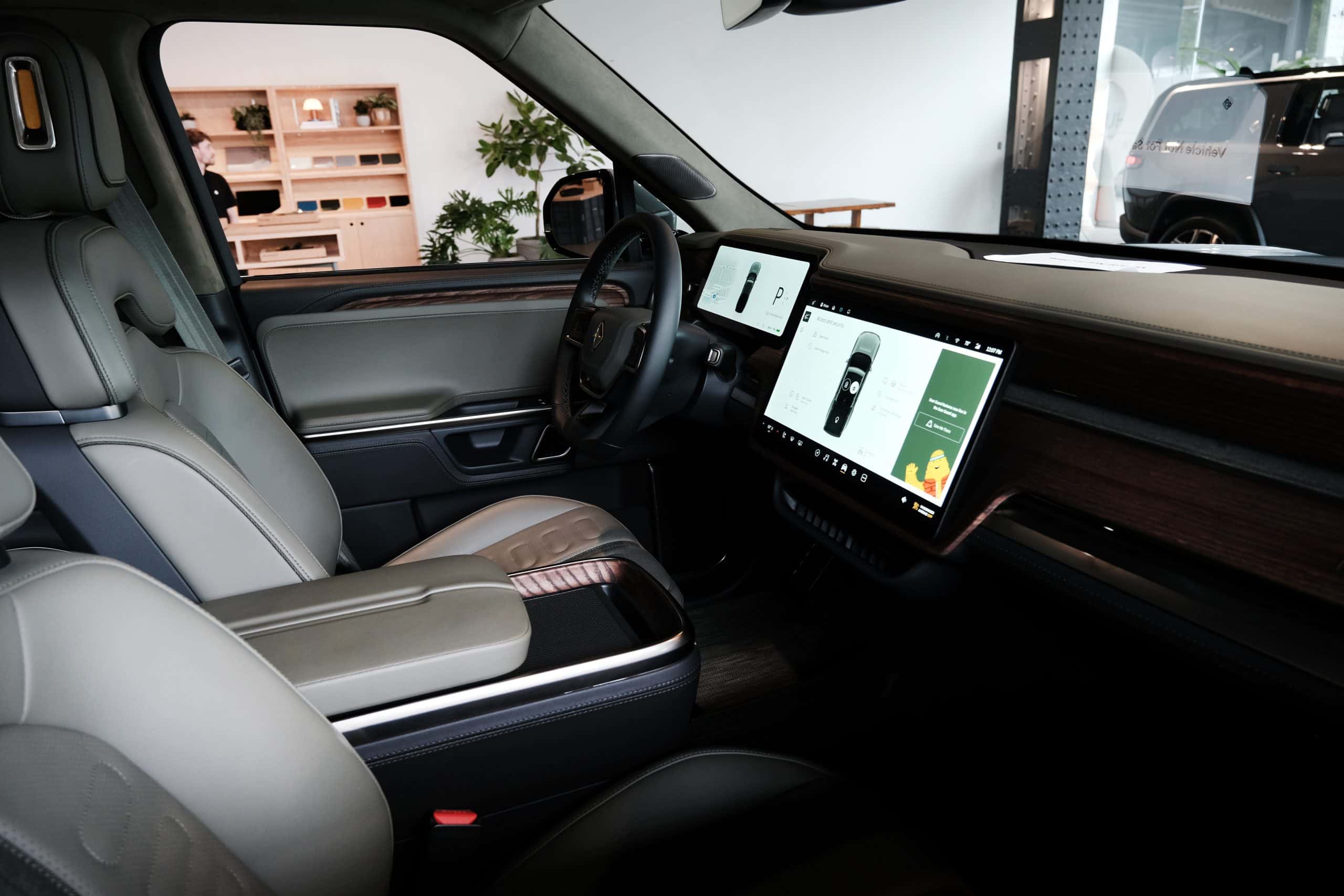
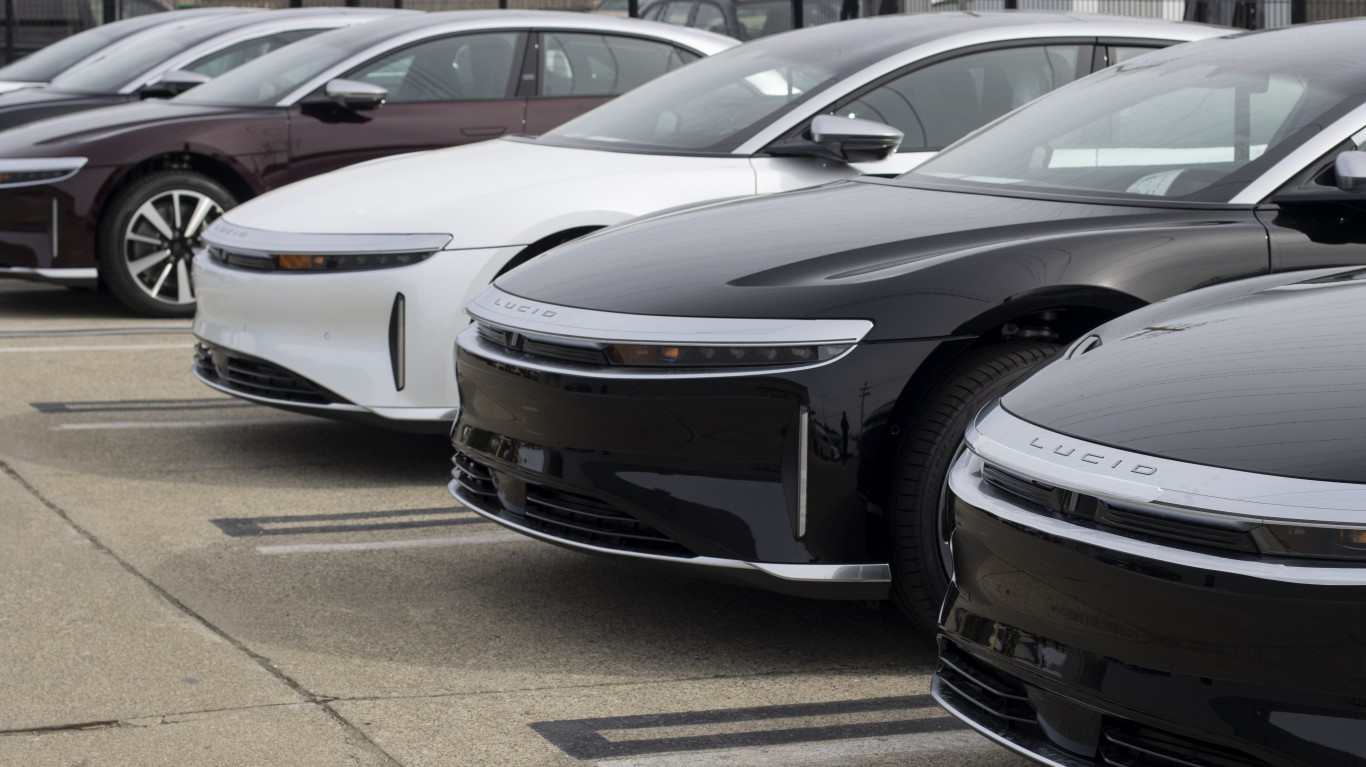
EV makers Lucid (NASDAQ: LCID | LCID Price Prediction) and Rivian Automotive (NASDAQ: RIVN) both have introduced new vehicles, and both are burning cash at a staggering rate. The question for any investor, especially one protecting retirement capital, is whether either company deserves a place in the portfolio, and if forced to choose, which one survives long enough to matter.
Product Pipeline Credibility
Rivian’s R2 reveal at SXSW on March 12, 2026, arrived as a genuine inflection moment. The mass-market SUV, priced from approximately $45,000, targets the highest-volume segment in the U.S. auto market. Manufacturing validation builds were completed mid-January 2026, and first customer shipments are guided for Q2 2026. The R2 is paired with the RAP1 autonomy processor (built on TSMC’s 5nm node at 800 TOPS per chip), with a full autonomous driving platform expected in R2 vehicles by late 2026. This is a credible, near-term volume catalyst.
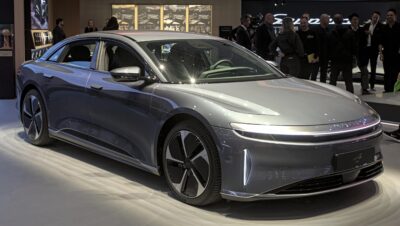
Lucid’s Investor Day unveiled the Cosmos and Lunar vehicles, alongside expanded robotaxi partnerships with Uber and Nuro. The market’s reaction was sharply negative, driven by dilution fears and widening losses. The stock fell 7.87% on March 12 alone and is down 54.44% over the past year. The robotaxi program targets a minimum of 20,000 Lucid Gravity vehicles with Level 4 autonomy, but with only 25,000 to 27,000 total vehicles guided for 2026, the timeline is ambitious against a deeply stressed balance sheet.
Rivian wins this dimension. R2 is imminent, volume-oriented, and backed by completed manufacturing infrastructure.
Path to Profitability
Rivian crossed a structural threshold in 2025: full-year gross profit of $144 million, up sharply year-over-year. Operating cash flow improved 54.6% year-over-year to −$1.4 billion. The Volkswagen joint venture was the primary driver of $1.56 billion in software and services revenue for full-year 2025. Per-vehicle cost reductions exceeded $9,500 year-over-year. These are real improvements, not projections.
Lucid’s economics remain structurally inverted. Cost of revenue in Q4 2025 was $944.64 million against revenue of $522.73 million, meaning Lucid loses money on every car before a single overhead dollar is counted. Full-year free cash flow was −$3.80 billion. No profitability guidance has been issued for 2026.
Rivian wins clearly. It has demonstrated gross profit while Lucid has not.
Downside Risk
Neither company is safe. Prediction markets currently assign a 48.5% probability that Rivian announces bankruptcy before end of 2026, versus 42.5% for Lucid. That is a distinction without much comfort. Rivian holds $3.579 billion in cash against an annual free cash flow burn of −$2.489 billion and $1.95 billion to $2.05 billion in 2026 capex guidance. It is dependent on a DOE loan of up to $6.6 billion and continued VW capital. Lucid carries only $997.8 million in cash, down 46.21% year-over-year, and depends almost entirely on Saudi Arabia’s Public Investment Fund. Up to 69.1 million shares are registered for resale, creating persistent dilution pressure. Analyst consensus on LCID is one Buy, Seven Hold, two Sell; on Rivian it’s 10 Buy, nine Hold, and six Sell.
Rivian edges this dimension on balance sheet depth and broader institutional support, though neither stock offers safety.
Verdict
For retirement-focused investors, the honest answer is that neither stock belongs in a portfolio where capital preservation matters. Both face near-coin-flip bankruptcy odds through year-end per prediction markets, neither pays a dividend, and both are burning billions annually.
If a speculative allocation is on the table (a small, loss-tolerant position), Rivian is the only defensible choice. It has achieved positive gross profit, a near-term volume catalyst in the R2, a strategic anchor in Volkswagen, and a larger cash buffer. Lucid offers a higher-risk lottery ticket: luxury niche, Saudi-dependent financing, equity nearly wiped out, and no gross profit in sight. Rivian stock is up 38.34% over the past year, while Lucid shares are down 54.44% over the same period. The market has already rendered a preliminary judgment, and Rivian wins this comparison. Lucid does not.








 Top Gaining Stocks
 Top Losing Stocks