


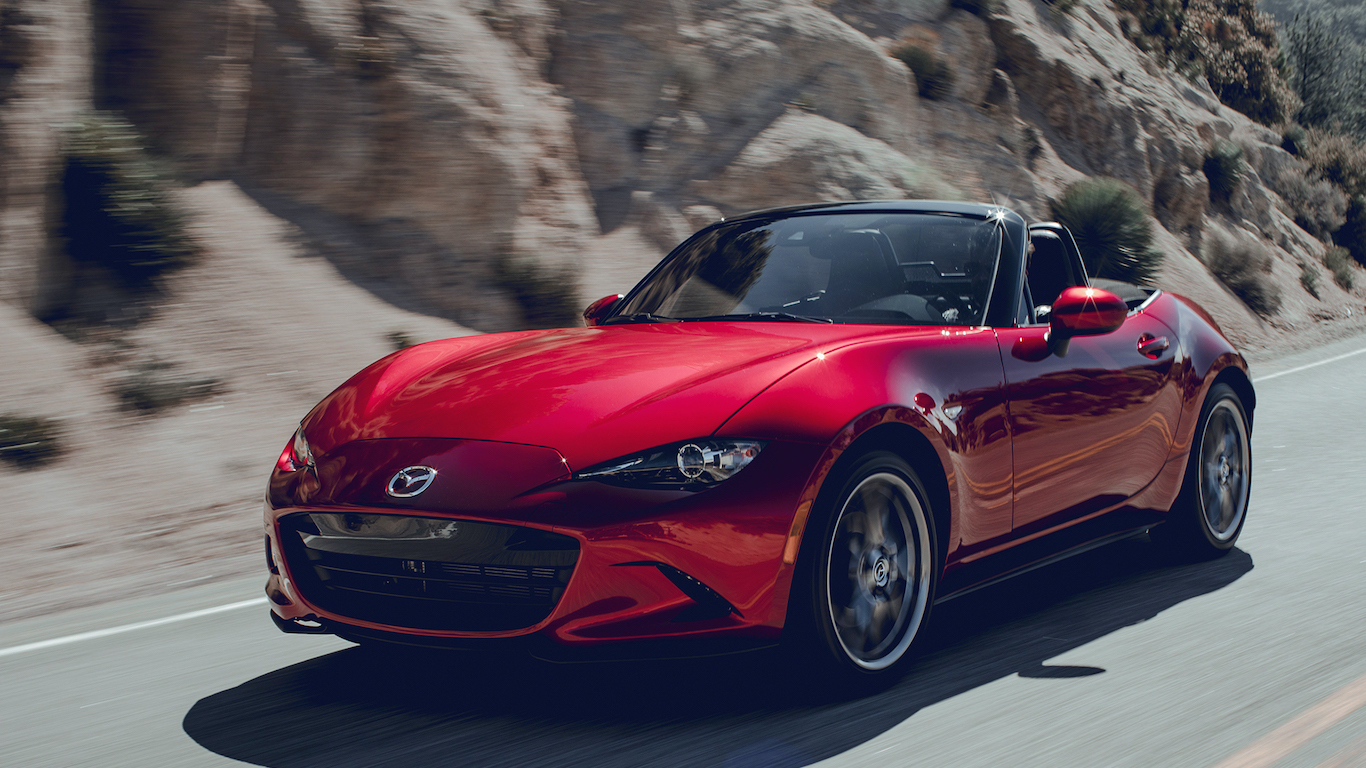
Rachel Cruze told a 24-year-old he could buy a $7,000 Mazda Miata, and she was right. Here is the framework she used to get there, and why it is worth understanding before you make any discretionary purchase of this size.
The Call That Made the Math Simple
Dan, a 24-year-old making around $80,000 a year, called The Ramsey Show on March 27 to ask about buying a $7,000 toy. He drives an older Corolla with just over 100,000 miles and wanted to add a Mazda Miata as a second car. His question was practical: is this a wise decision at this phase of life, and does owning two cars make sense?
Dan confirmed he has no consumer debt and about $22,000 saved in a brokerage account in money market mutual funds. Those two facts changed everything about the answer.
Cruze’s Three-Question Checklist
Cruze ran Dan through a framework worth keeping before giving her answer. She explained: “The big checkmarks of can you just go spend money, number one, do you have it? Number two, financially, are you in a place that that money would be better spent in the present, meaning like getting you ahead financially, which would be to pay off debt or have an emergency fund? You have those, so check, check.”
The third check is the one most people skip. Cruze added: “Anything with motors and wheels, you don’t want the value of those to be more than half of your annual income, but you’re going to be way under that making $80,000.” Dan’s total vehicle value after the purchase would be roughly $7,000 for the Miata plus whatever the Corolla is worth, comfortably under the $40,000 half-income threshold.
That motors-and-wheels rule is underused. It keeps people from parking $45,000 trucks in the driveway on a $60,000 salary and wondering why they cannot save. Dan clears it easily.
Why His Savings Rate Makes This an Easy Call
Dan’s $22,000 saved on an $80,000 salary puts him well above the national average. The national savings rate sat at 4% as of Q4 2025. He is saving at a rate that dwarfs the typical American household. Spending $7,000 on a car he can pay for in cash leaves him with $15,000 still in savings, which covers several months of expenses as an emergency fund.
The national picture makes Dan’s position clearer. Per capita disposable personal income was $67,687 in Q4 2025. Dan earns meaningfully above that and saves aggressively. A $7,000 cash purchase is not reckless for someone in his position. It is the system working exactly as intended.
The Ongoing Cost Reality Check
Co-host John Delony provided the necessary counterweight. He pointed out: “You’ll have two registrations, two tanks of gas, two, you’ll have to insure this car too.” His estimate: “You may be up to $100, $125 a month just in the privilege of keeping the identity car parked in the driveway.”
That number compounds quietly and deserves as much attention as the purchase price itself. At $125 a month, the ongoing cost adds up quickly across years of ownership, potentially exceeding the original purchase price in carrying costs alone. Dan should confirm that fits his monthly budget before he signs anything, not after.
The Miata is also a used sports car with miles on it. Budget for maintenance. A timing belt, tires, or a soft-top repair can arrive without warning.
Who This Framework Fits
Cruze’s checklist works for anyone considering a discretionary cash purchase. Before you spend, ask three questions: Do you have the cash? Is the money more urgently needed for debt payoff or emergency savings? And for vehicles specifically, will your total vehicle value stay under half your annual income?
If all three answers clear, the purchase is financially defensible. If any one fails, that is where to focus first.
For Dan, all three cleared. Cruze’s conclusion: “The new identity is Dan in a Miata.” The math backed her up.














 Top Gaining Stocks
 Top Losing Stocks