


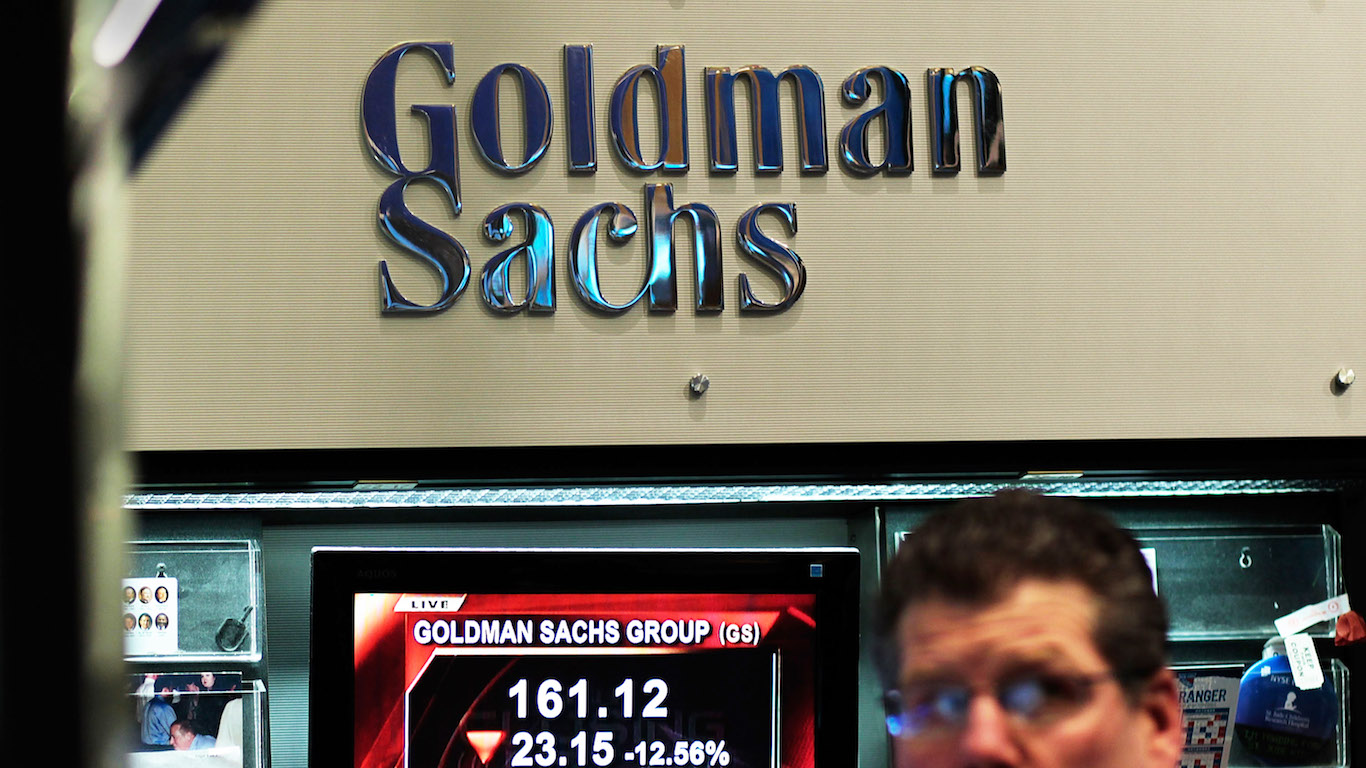
Goldman Sachs (NYSE: GS | GS Price Prediction) reported Q1 2026 EPS of $17.55 versus a FactSet estimate of $16.47, with revenue of $17.23 billion, up 14%, against a $16.99 billion estimate. Net earnings rose 18% to $5.63 billion, EPS climbed 24%, equity trading revenue rose 27%, and investment banking fees rose 48%. Yet the stock fell approximately 4% in premarket trading, as net interest income missed and credit loss provisions disappointed. The gap between operating results and investor reaction reflects uncertainty over credit quality and net interest income trajectory heading into Q2 2026.
From Consumer Retreat to Core Dominance
The past decade saw Goldman transform itself. Management pursued consumer banking, then reversed course, absorbing $2.26 billion in markdowns and termination obligations to exit the Apple Card program and selling the GM credit card portfolio. The pivot back to core strengths paid off. Full-year 2025 equities net revenues hit a record $16.54 billion, up 23% year over year, while investment banking fees reached $9.34 billion, up 21%. Assets under supervision reached a record $3.61 trillion, rising $469 billion during 2025, supported by 32 consecutive quarters of long-term fee-based net inflows. CEO David Solomon summarized the arc bluntly: “Since our first Investor Day where we laid out our comprehensive strategy, the firm has grown its revenues by 60%, improved returns by 500 basis points and delivered total shareholder returns of more than 340%.”
What $1,000 Became Over 10 Years
| Period | Start Price | End Price | Return |
|---|---|---|---|
| 1 Week | $863.04 | $907.80 | +5.2% |
| 1 Month | $823.76 | $907.80 | +10.2% |
| Year to Date | $874.43 | $907.80 | +3.8% |
| 1 Year | $479.89 | $907.80 | +89.2% |
| 5 Years | $293.40 | $907.80 | +209.4% |
| 10 Years | $125.67 | $907.80 | +622.4% |
A $1,000 investment 10 years ago would be worth approximately $7,224 today, based on that 622.4% return. The S&P 500 returned 229.96% over the same period, meaning Goldman roughly tripled the index. Over five years, Goldman’s 209.41% dwarfed the S&P 500’s 65.1%. One-year returns: +89.2% for Goldman versus +29.5% for the S&P 500.
Goldman Versus Its Peers
| Ticker | 10-Year Return | 5-Year Return | 1-Year Return |
|---|---|---|---|
| Goldman Sachs | +622.4% | +209.4% | +89.2% |
| JPMorgan Chase (NYSE: JPM) | +582.2% | +125.1% | +39.1% |
| Morgan Stanley (NYSE: MS) | +857.3% | +158.0% | +71.2% |
| Financial Select Sector SPDR Fund (NYSEARCA: XLF) | +236.0% | +57.5% | +12.3% |
Goldman leads JPMorgan over 10 years but trails Morgan Stanley, which delivered +857.3%. Both firms crushed the financial sector ETF, which returned +236.0% over the decade. The divergence underscores how much Goldman’s franchise-specific execution mattered.
The Case for and Against
Goldman’s setup strengthens if the M&A cycle accelerates. The firm holds a significantly enlarged advisory backlog in 2026, investment banking fees rose 48% in Q1 2026, and roughly $32 billion in buyback capacity remains. The 24/7 base price target is $976.91, implying 7.6% upside, with a five-year target of $1,226.44 and a Buy recommendation. The analyst consensus target is $933.75, with eight Buys and 17 Holds.
But hesitation is warranted if macro headwinds intensify. Operating expenses rose 18% year over year in Q4, pushing the efficiency ratio to 72.3%, well above the 60% target. Net interest income missed in Q1 2026 and credit loss provisions disappointed, which is why the stock sold off on a strong beat. Tariff uncertainty flagged by management adds unpredictability.
The 10-year track record is exceptional. The near-term setup is solid but not clean. Goldman’s refocused franchise, capital return program, and alternatives growth runway offer measurable support for a long-term position for investors comfortable with volatility. For those expecting a smooth ride, today’s premarket drop on a strong beat is a useful reminder of what owning this stock actually feels like.





 Top Gaining Stocks
 Top Losing Stocks