


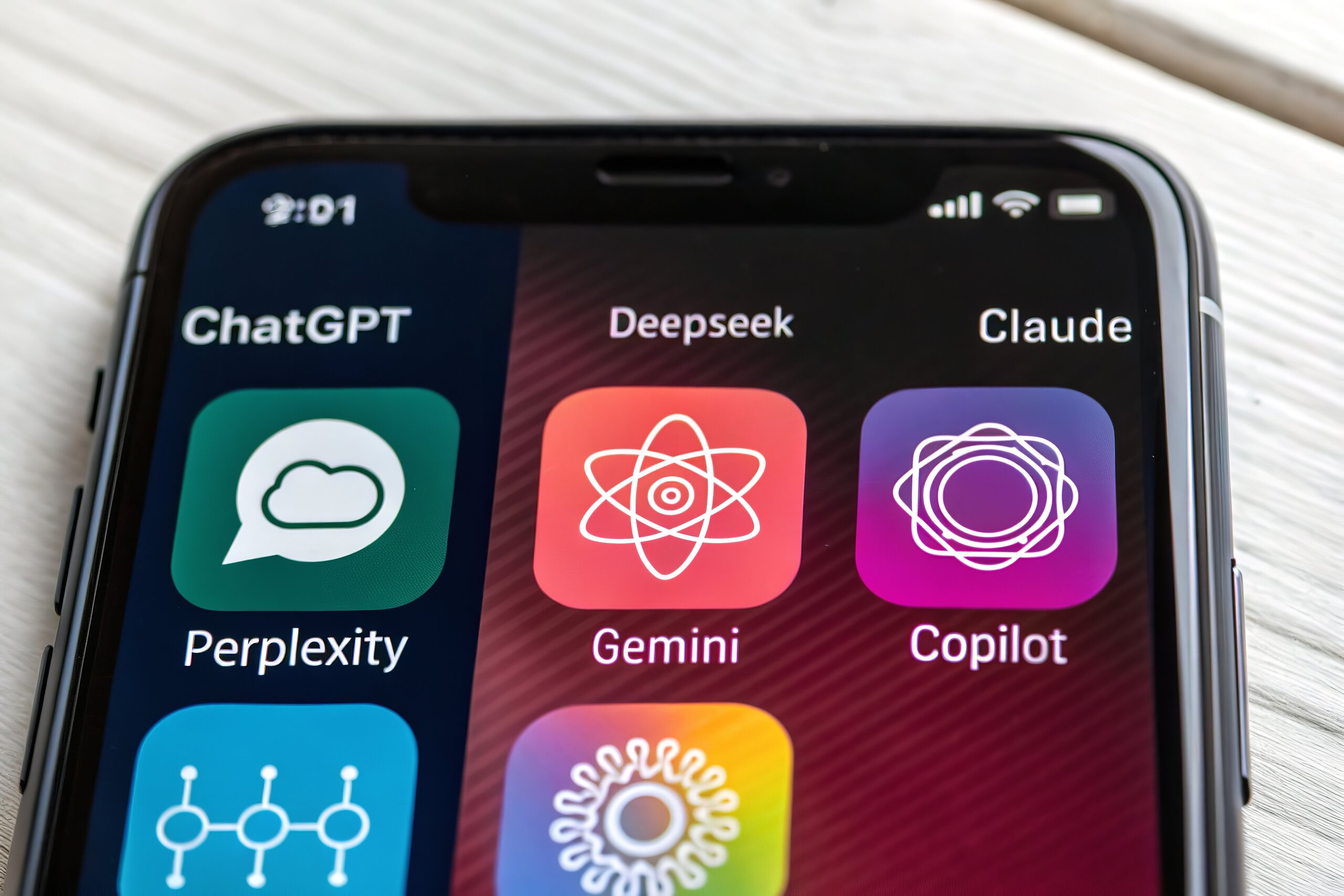
Smartphone sales have hovered in a rut for years, with global shipments often flat or down amid longer replacement cycles. Investors wondered whether AI could spark the next big upgrade wave — or if the iPhone’s ecosystem lock would keep Apple (NASDAQ:AAPL | AAPL Price Prediction) dominant no matter what.
Now a fresh report changes the script. According to TF International Securities analyst Ming-Chi Kuo, OpenAI is teaming with Qualcomm (NASDAQ:QCOM) and MediaTek to co-develop specialized processors for an “AI-first” smartphone, with mass production eyed for 2028 and Luxshare handling exclusive system design and manufacturing.
Qualcomm shares jumped as much as 13% in premarket trading this morning on the news. Apple’s shares dipped 1.7%. Let’s dig into what this means for Qualcomm, the broader smartphone narrative, and whether Apple has real reason to worry.
The OpenAI-Qualcomm Partnership
OpenAI has explored consumer hardware for years, including its $6.5 billion acquisition of Jony Ive’s io Products startup last May. The new project targets a device optimized for on-device AI tasks — think faster local inference for smaller models, better power efficiency, and agent-like capabilities — rather than chasing raw CPU/GPU benchmarks alone.
Qualcomm brings its Snapdragon expertise in neural processing units (NPUs), while MediaTek adds another high-volume partner. Specs and suppliers could firm up by late 2026 or early 2027. The goal? Tap into long-term replacement demand if AI agents become must-have features. Analysts see potential for 300 million to 400 million annual units in a successful push, directly challenging the roughly 40% global share held by Apple and Samsung combined.
In short, this isn’t just another Android chip tweak. It’s an attempt to build hardware from the silicon up for ChatGPT-style experiences that feel native, not cloud-dependent.
Apple’s iPhone Sales: Upgrade Cycles Matter
iPhone revenue hit a record $209.5 billion in fiscal 2025, up 4.1% year-over-year and accounting for about 50% of Apple’s total revenue. The company shipped an estimated 247 million units that year, up from 232 million in 2024. In the December 2025 quarter, iPhone revenue surged 23% year-over-year to over $85 billion — an all-time high — even as unit growth was closer to 5%. Higher average selling prices drove much of the lift.
Apple led global smartphone shipments in Q1 2026 with 21% market share, up 5% year-over-year, while overall industry shipments fell 6%. China sales rebounded sharply, too. Yet analysts note the broader market faces headwinds: Morgan Stanley projects global shipments could drop 13% in 2026 before a modest 3% rebound in 2027.
That suggests pent-up demand and solid hardware have kept iPhone humming, but longer cycles mean the next growth leg depends on compelling reasons to upgrade.
How Apple Has Shifted on AI
Apple Intelligence rolled out on iPhone 16 and later models (plus select older Pro devices with A17 Pro or better), emphasizing on-device processing for privacy. Features include writing tools, image generation, and Siri enhancements. The company has leaned on its Neural Engine in A-series chips for efficiency.
That said, Apple isn’t going it alone. It partnered with OpenAI to integrate ChatGPT into Siri and recently expanded plans to open Siri to additional third-party AI assistants in iOS 27, including Google’s Gemini via a multiyear deal for cloud support and foundational models. Apple generates revenue from generative AI apps on the App Store — nearly $900 million in fees in 2025 — but its own AI push has lagged behind cloud-heavy rivals in perceived “wow” factor.
An “AI-native” iPhone — one built from the ground up with deeper agentic capabilities — isn’t expected until later generations, potentially 2027 or beyond, as Apple balances hardware refreshes with software maturity. The iPhone 17 series and an accessible iPhone 17e aim to broaden the Apple Intelligence installed base in 2026.
Could a Qualcomm AI Phone Deliver Meaningful Competition?
Qualcomm’s Snapdragon platform already powers many premium Android flagships, with strong NPU performance for on-device AI. Recent generations have closed gaps with Apple’s A19 Pro in multi-core and GPU tasks, though Apple still leads in single-core efficiency and tight iOS optimization.
A dedicated OpenAI device could differentiate on software — native AI agents handling complex tasks with less cloud reliance — potentially appealing to users frustrated with current Siri limitations. If it hits 300 million to 400 million units annually, that would represent a serious slice of the market and pressure upgrade cycles across the board.
That said, Apple owns a loyal ecosystem with 1.5+ billion active iPhones, services revenue topping $100 billion annually, and seamless hardware-software integration that Android rivals struggle to match. OpenAI’s phone remains years away, with execution risks around manufacturing, pricing, app ecosystem, and consumer adoption. Apple shares trade at a premium valuation partly because investors bet on its ability to adapt.
Granted, a successful AI smartphone from OpenAI and partners could accelerate industry-wide upgrades and benefit chip suppliers like Qualcomm. But history shows Apple has weathered Android challenges before by refining its own roadmap.
Key Takeaway
The OpenAI-Qualcomm tie-up highlights AI’s potential to refresh the smartphone category, but 2028 mass production gives Apple breathing room to evolve Apple Intelligence and Siri. For Qualcomm investors, the news adds a credible long-term growth narrative atop existing Snapdragon momentum — though near-term results will still hinge on handset demand and competition from MediaTek and others.
Smart investors should watch Apple’s 2026 AI feature rollouts and iPhone 17 uptake for signs of sustained momentum. If unit sales hold or grow amid a softer market, its ecosystem edge remains formidable. Regardless of how the AI phone race unfolds, diversification across chip leaders like Qualcomm and ecosystem kings like Apple can help balance your portfolio. The AI revolution is coming to smartphones — just not overnight.











 Top Gaining Stocks
 Top Losing Stocks