


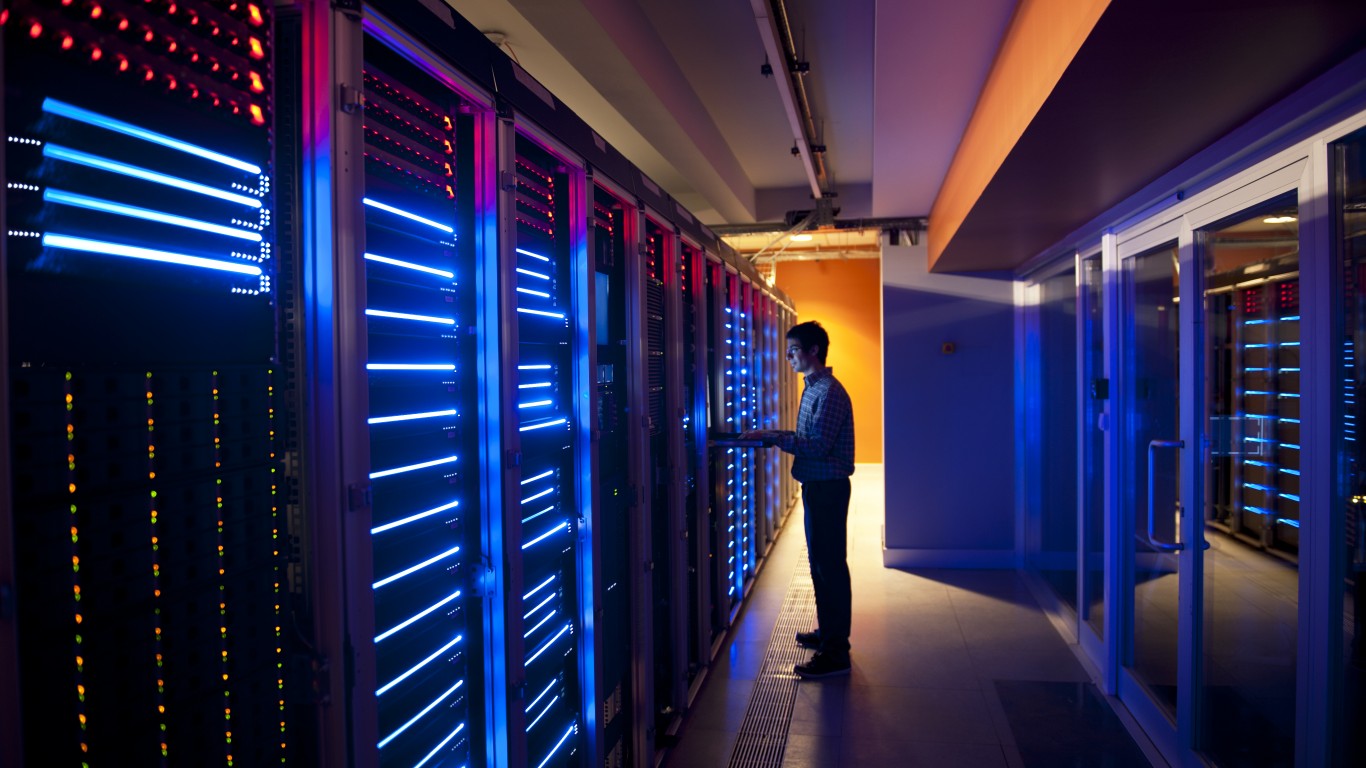
On a recent Prof G Markets segment, data center veteran John Perella described a near-miss in Virginia that should focus every infrastructure investor’s attention. “9 data centers went offline or they went to backup power. And when the grid came back up, the grid was expecting the data centers to be there and they weren’t.” The result was an over-frequency event that nearly triggered rolling blackouts.
Clean-energy financier Jigar Shah framed the stakes bluntly. “When the tech companies say they’re moving fast and breaking things, normally they mean, you know, like little things. In this case, they’re talking about people’s lives.” He pointed to households relying on CPAP machines and other medical devices, and called for Department of Energy oversight of how gigawatt-scale buildouts are integrated with the grid.
The capex driving the stress
The numbers explain the urgency. Alphabet (NASDAQ:GOOGL | GOOGL Price Prediction) reported Q1 FY26 capex of $35.67 billion. Google Cloud backlog nearly doubled quarter on quarter to over $460 billion. Microsoft (NASDAQ:MSFT) spent $30.88 billion in its latest quarter, up 84.39% year-over-year. Amazon (NASDAQ:AMZN) topped the list at $44.20 billion, and Anthropic has committed to up to 5 GW of Trainium chips, with OpenAI another ~2 GW through AWS.
Who is building correctly
Shah singled out Google as the leader on curtailment and load-shifting, the techniques that let data centers behave like flexible loads rather than constant draws. NextEra echoed the model on its Q1 call. CEO John Ketchum described a collaboration with NVIDIA to “temporarily cycle down or shift data center activity for a few hours during extreme cold or extreme heat”, which frees power for households when the grid is tight. Done right, Shah argued, properly managed centers could “reduce a lot of everyone’s electricity bills by 10%”.
The utility side of the trade
NextEra Energy (NYSE:NEE) added 4 gigawatts to its renewables and storage backlog (total now roughly 33 gigawatts) and was selected by the U.S. Department of Commerce to build 9.5 GW of new gas-fired generation in Texas and Pennsylvania. Southern Company (NYSE:SO) saw wholesale kWh sales rise 12.9%, while Duke Energy is deploying a $103 billion five-year capital plan against contracted AI and advanced manufacturing demand. Duke even disclosed the inverse risk in its filings: “Potential for lower-than-projected data center electricity usage.”
What investors should watch
Perella made one more observation worth pricing in. Many developers crowding interconnection queues lack the financial wherewithal to actually build. Announced gigawatts and financed gigawatts are different animals. The hyperscalers with balance sheets, the utilities with permits in hand (see NextEra’s SEC filings), and operators willing to flex load on demand are the ones likely to clear regulatory scrutiny if the next Virginia incident is worse than a near-miss.












 Top Gaining Stocks
 Top Losing Stocks