Unemployment Remains Above 15% in Several Cities

Photo of Douglas A. McIntyre
By Douglas A. McIntyre Published
This post may contain links from our sponsors and affiliates, and Flywheel Publishing may receive compensation for actions taken through them.

The Bureau of Labor Statistics announced good news on the jobs front in major cities as measured in November:

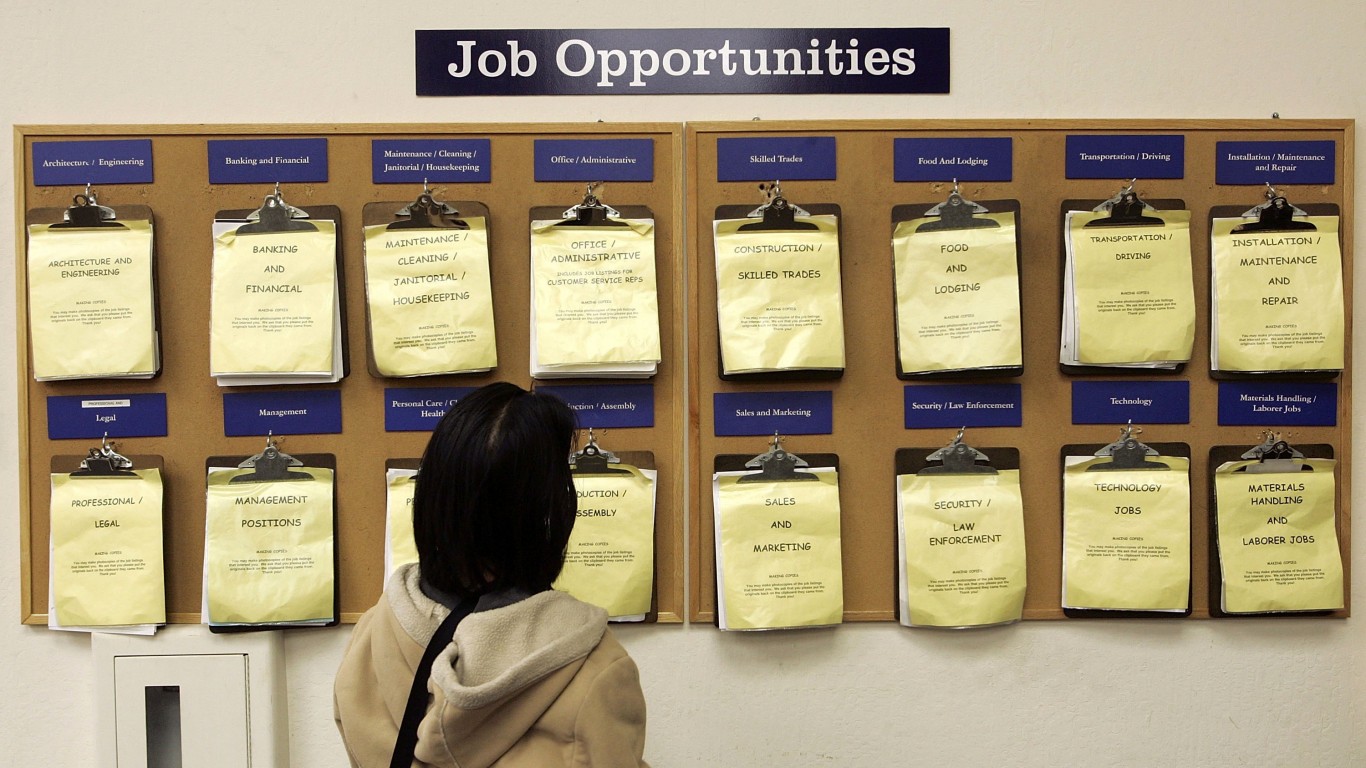
Unemployment rates were lower in November than a year earlier in 322 of the 372 metropolitan areas, higher in 36 areas, and unchanged in 14 areas.

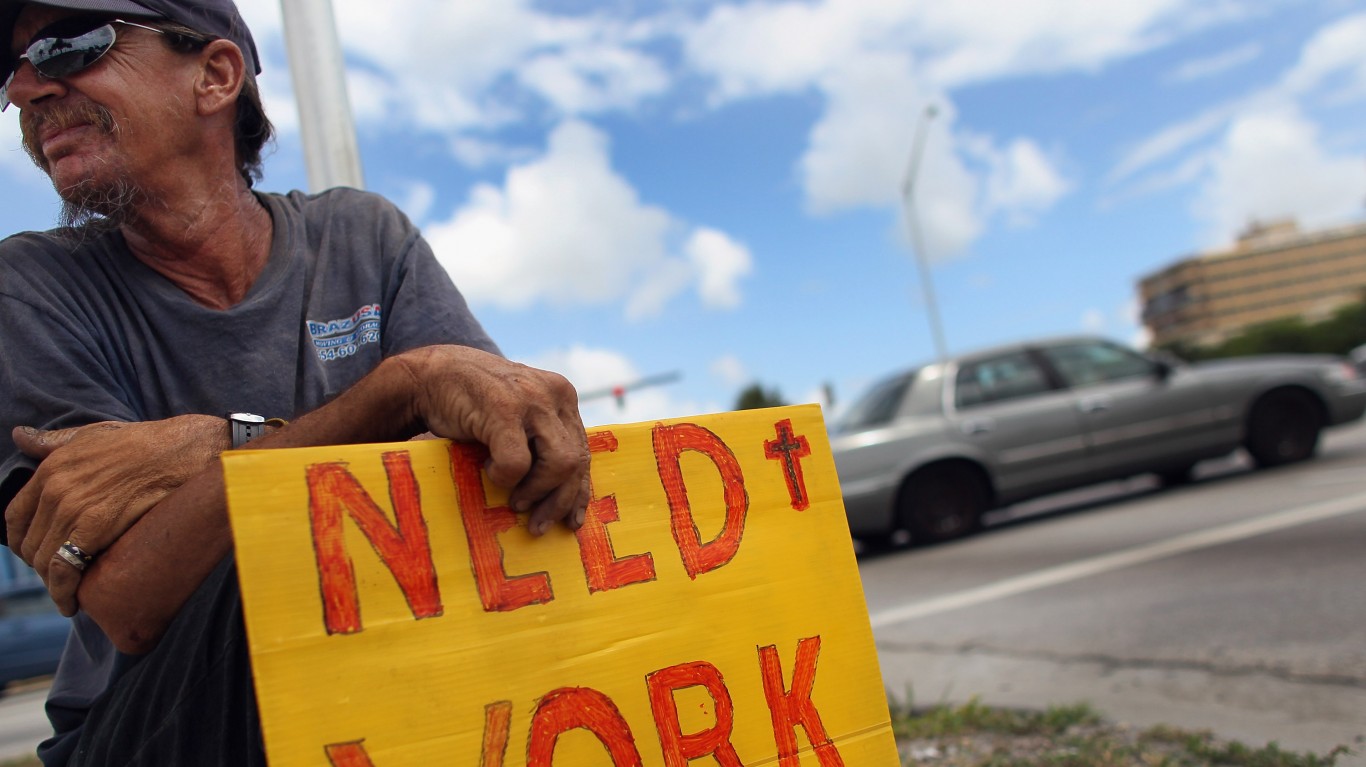
While those numbers where extremely good news for many cities, more than a few areas remain in deep recession, based on the portion of their populations that are unemployed. The federal and state governments have not found any solutions to help these cities, and so far there is nothing to show that situation will change.

Twenty nine metro areas continue to have jobless rates above 10%. In other cities, the figure tops 15%. The most troubled areas are often clustered, and these clusters have a great deal in common. That means there should be some way to improve their desperate problems.

The region that continues to be most mired in high unemployment is interior California, well in from cities like San Francisco, San Jose and Los Angeles. Unemployment is 8.3% in San Diego, but a few miles inland, in El Centro, the figure is 26.6%. In San Francisco, unemployment was 7.5% in November. Not far away in Modesto, the number is 14.5%. In nearby cities, including Stockton and Merced, the figures are not any better. Much of the economic activity in these inland cities comes from agriculture. Hispanics and Latinos make up nearly 36% of the population in Modesto, a figure that is likely to grow. This group lacks the opportunity to use mobility to improve job prospects. The cost to move is relatively high, and there are no guarantees of jobs elsewhere.

Another pocket of high unemployment is 1,500 miles east in Illinois. The jobless rates in Decatur, Kankakee and Rockford were each above 10% in November. In Rockford, almost 21% of the population is African American, and nearly another 16% is Hispanics and Latinos. Manufacturing was the largest industry in these three cities. Many of the factories that employed thousands are gone. Once again, those populations are unlikely to be mobile. With their current skills, they have nowhere to go.

Unemployment among these cities, where 10% to over 25% of the people are out of work, is not likely to get any better, although the causes are easy to understand.


Photo of Douglas A. McIntyre
About the Author Douglas A. McIntyre →

Douglas A. McIntyre is the co-founder, chief executive officer and editor in chief of 24/7 Wall St. and 24/7 Tempo. He has held these jobs since 2006.

McIntyre has written thousands of articles for 24/7 Wall St. He is an expert on corporate finance, the automotive industry, media companies and international finance. He has edited articles on national demographics, sports, personal income and travel.

His work has been quoted or mentioned in The New York Times, The Wall Street Journal, Los Angeles Times, The Washington Post, NBC News, Time, The New Yorker, HuffPost USA Today, Business Insider, Yahoo, AOL, MarketWatch, The Atlantic, Bloomberg, New York Post, Chicago Tribune, Forbes, The Guardian and many other major publications. McIntyre has been a guest on CNBC, the BBC and television and radio stations across the country.

A magna cum laude graduate of Harvard College, McIntyre also was president of The Harvard Advocate. Founded in 1866, the Advocate is the oldest college publication in the United States.

TheStreet.com, Comps.com and Edgar Online are some of the public companies for which McIntyre served on the board of directors. He was a Vicinity Corporation board member when the company was sold to Microsoft in 2002. He served on the audit committees of some of these companies.

McIntyre has been the CEO of FutureSource, a provider of trading terminals and news to commodities and futures traders. He was president of Switchboard, the online phone directory company. He served as chairman and CEO of On2 Technologies, the video compression company that provided video compression software for Adobe’s Flash. Google bought On2 in 2009.

Continue Reading

Top Gaining Stocks

CBOE Vol: 1,568,143
PSKY Vol: 12,285,993
STX Vol: 7,378,346
ORCL Vol: 26,317,675
DDOG Vol: 6,247,779

Top Losing Stocks

LKQ
LKQ Vol: 4,367,433
CLX Vol: 13,260,523
SYK Vol: 4,519,455
MHK Vol: 1,859,865
AMGN Vol: 3,818,618