



A widely covered report from the Federal Reserve Bank of St. Louis’s Center for Household Financial Stability states that:
Average household wealth in real terms, contrary to recent headlines, has not fully recovered; indeed, it is only about halfway back to prerecession levels
And, for some groups, the situation is even worse:
While many Americans lost wealth because of the recession, younger, less-educated and/or African-American and Hispanic families lost the most, in percentage terms.
Some of the results of this analysis should have been expected. Other research has shown that real wages among Americans have fallen over the past decade as income has not kept pace with inflation. However, very few expert opinions have set the problem at a level as worrisome as the conclusion of the Federal Reserve Bank of St. Louis.
For many Americans, the problem will only get worse because of several factors, which could cause these citizens to suffer financially for several more years, if not longer. Among these, the housing crisis has not ended in many regions. Additionally, companies have adopted a habit of replacing highly paid workers with lower paid ones, as well as part-time ones to whom they do not provide benefits. And GDP expansion has been slowed by federal austerity. That falling tide brings down all ships, which in turn undermines consumer spending — which is often tagged as two-thirds of the national economy. An economy without a recovery is obviously not one that will drive up household income or wealth.
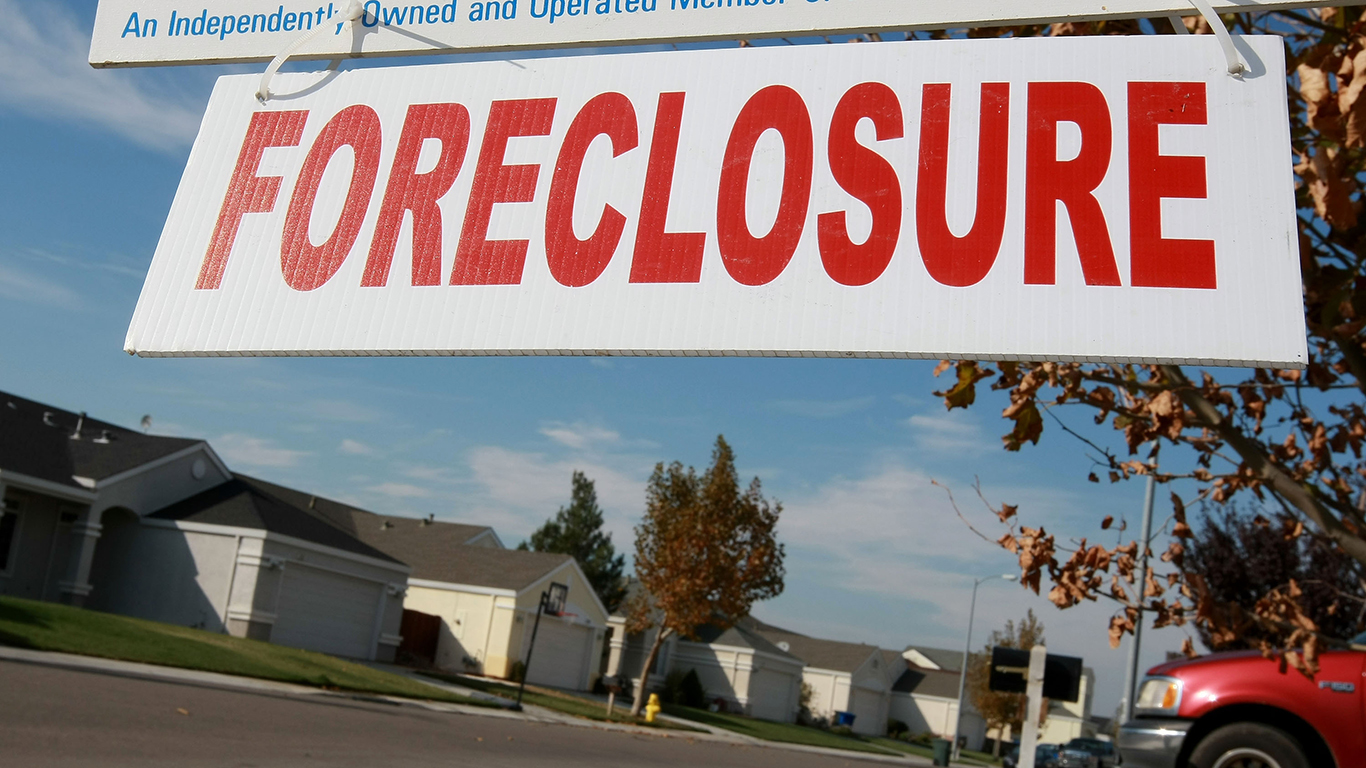
A review of poverty, unemployment and average household income shows that those people worst off often live in geographic areas most badly damaged by the real estate downturn. These include, at least, the inland areas of California, most of Nevada, and Florida and Arizona. Other pockets extend across the south and Rust Belt. If home equity has improved, its is primarily outside these areas. If the presence of underwater mortgages persists, it is likely inside them. The difference between the wealth of people with positive home equity and those with underwater mortgages hardly needs explanation.
One more issue that needs barely any discussion are the troubles of African Americans and Hispanics. Bureau of Labor Statistics data show that while the national unemployment rate is at 7.5%, among Hispanics it is 9.8%. Among African Americans it is 13.2%. The disparity with the national figure shows how far behind these groups are as part of a recovery, and how likely it is that they have a longer way to go as they move back to the employment levels of 2005.
The recession is not nearly over for millions of American, and it will not be from a long time.






 Top Gaining Stocks
 Top Losing Stocks