



The extraordinary improvement in the U.S. labor market includes the great majority of American cities. The jobless rate moved down in 298 of America’s 388 metro areas in May.
The U.S. unemployment rate in May was 4.1%. The jobless rate was below 3% in 57 cities. It was above 10% in only two.
The strongest labor markets were in the upper Midwest and in the Plain States. The worst was in the interior valley of California. According to the Bureau of Labor Statistics (BLS):
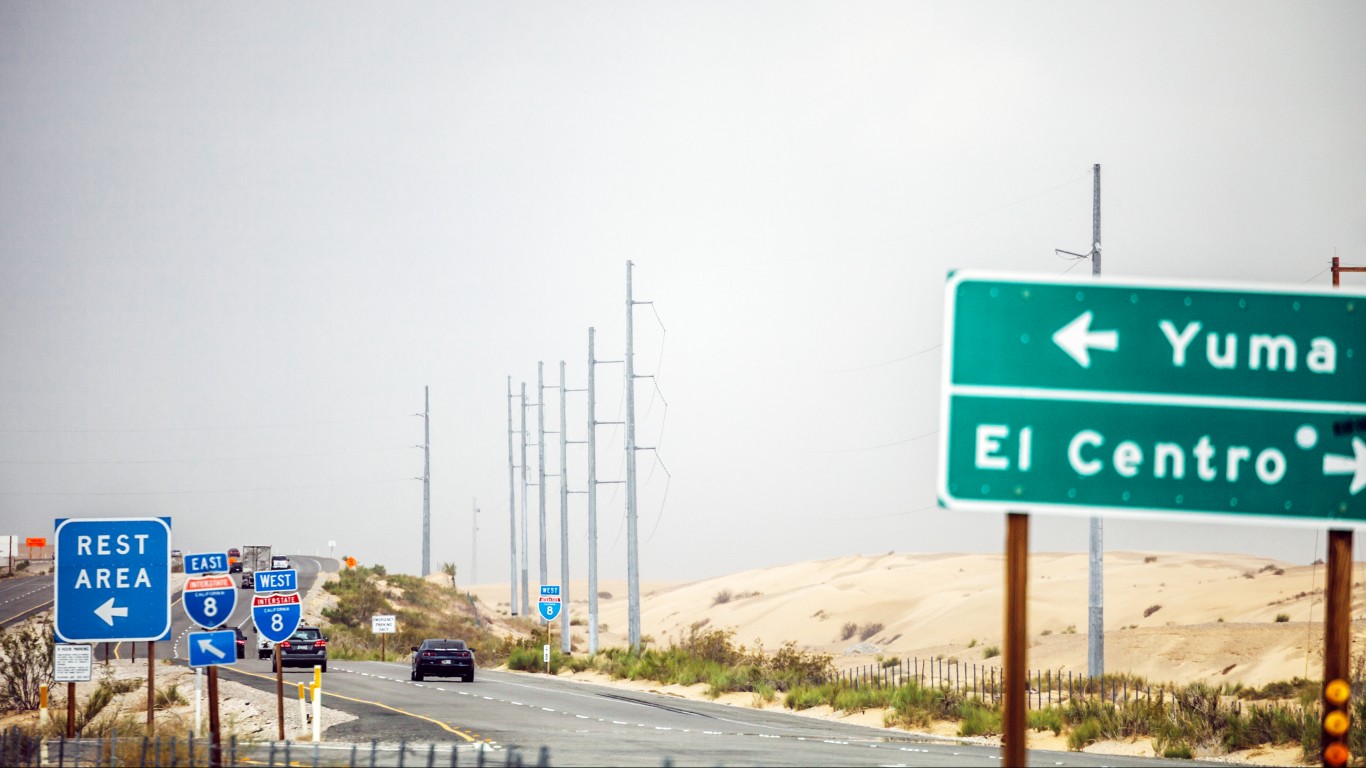
In May, Ames, Iowa; Bismarck, N.D.; and Fargo, N.D.-Minn., had the lowest unemployment rates, 1.9 percent each, closely followed by Fort Collins, Colo., 2.0 percent. El Centro, Calif., had the highest unemployment rate, 20.5 percent. A total of 194 areas had May jobless rates below the U.S. rate of 4.1 percent, 181 areas had rates above it, and 13 areas had rates equal to that of the nation.
[nativounit]
The problem in El Centro is not limited to that city. Several close by have unemployment rates about double the national average. The rate in Merced is 8.5%. It is 8.6% in Visalia-Porterville and 7.9% in Hanford-Corcoran. All these areas were hit hard by the California drought that nearly wiped out the agricultural industry in the region. Despite a large amount of rain in the past several months, the industry has not entirely bounced back.
Most of the cities in North Dakota, Minnesota, Idaho, South Dakota, Iowa and Nebraska have unemployment rates below 3%. In the case of North Dakota and some parts of adjoining states, the oil fracking industry continues to supply thousands of jobs. As oil prices hover around $50, the health of the sector is likely to continue. Ironically, the industry that has hurt employment in California so badly has thrived throughout portions of the middle part of the country. The agricultural economy is robust in Nebraska, Iowa and parts of adjoining states.
One optimistic note about the jobs recovery is that several rust belt cities, so badly damaged by the Great Recession, have rebounded. The unemployment rate in the Detroit-Dearborn area is down to 3.9%. The Flint figure is 4.9%, above the national average, but still impressively better than in 2009 and 2010. The unemployment rate in Buffalo is down to 4.8%. It has dropped to 5.3% in Toledo. In Peoria, it has dropped to 5%. BLS numbers show that in most of these cities, the labor situation has improved considerably since May 2016.
All job situations are basically local, as is true with related data like poverty and income. For the most part, region to region, state to state and city to city, the broad reach of the economic recovery has taken hold.
[wallst_email_signup]







 Top Gaining Stocks
 Top Losing Stocks