


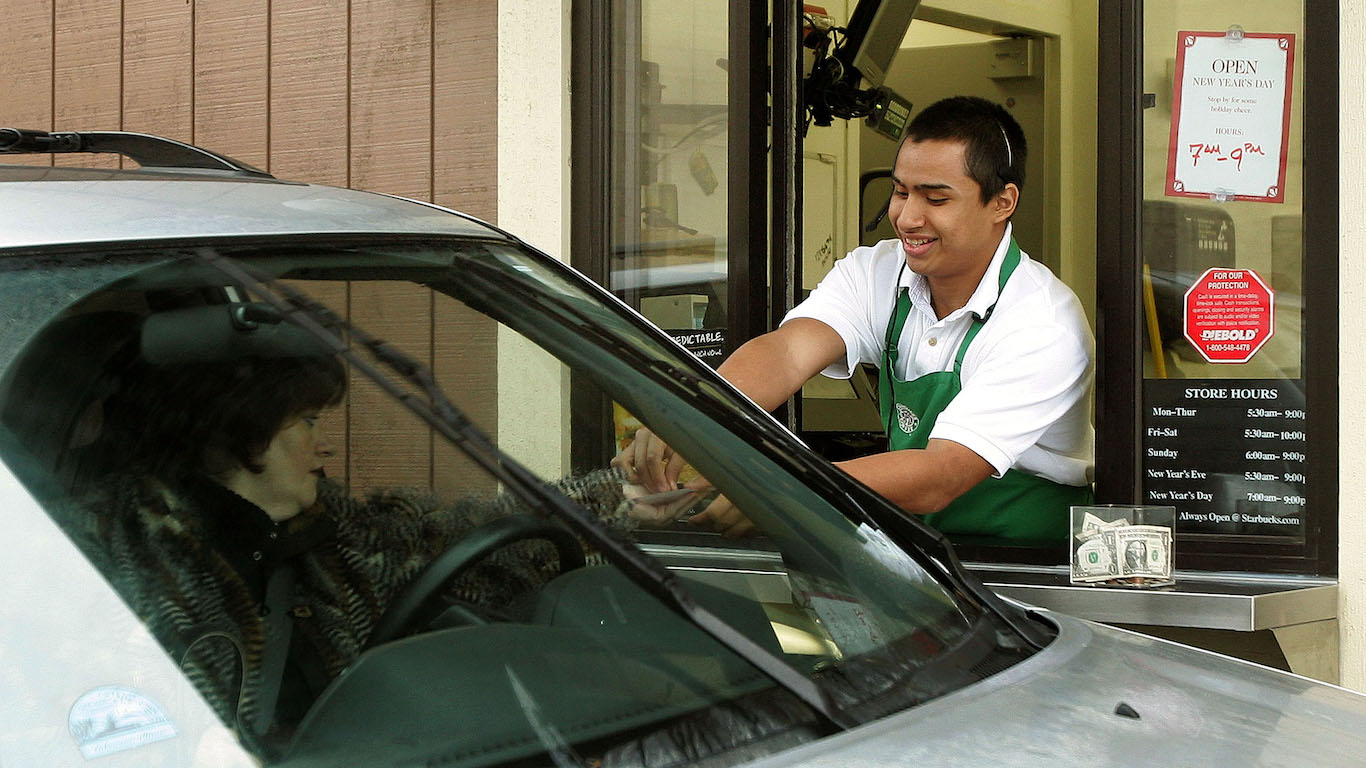
Despite a veritable mountain of recent research showing the exact opposite, the Congressional Budget Office (CBO) on Monday released a new report indicating that raising the federal minimum wage to $15 an hour by 2025 would lift the pay of about 27 million workers while costing 1.3 million employees their jobs.
Are Americans willing to make that trade-off? More to the point, do they have to make that trade?
The federal minimum wage of $7.25 an hour has not been raised since 2009, although many cities and states have pushed the state and local minimums to as much as $14 (Washington, D.C., where the minimum will rise to $15 next July). In other states, the minimum wage is $5.15 (Georgia and Wyoming), while five states (Alabama, Louisiana, Mississippi, South Carolina and Tennessee) have no mandated minimum.
The CBO’s report estimates that there is about a two-thirds chance that raising the minimum wage to $15 would result in job losses of zero to 3.7 million, with a median estimate of 1.3 million jobs lost. Raising the minimum to $12 an hour by 2025 would result in a median loss of 300,000 jobs, while raising it to $10 results in no lost jobs.
[nativounit]
The impact of raising the minimum wage to $15 would benefit low-income families, but the CBO says, higher-income families would also feel the effects: “The loss in business income would be mostly borne by families well above the poverty line. All consumers would pay higher prices, but higher-income families, who spend more, would pay more of those costs.” The effects, according to CBO, “would generally accrue to families in proportion to their income, which means they would largely be absorbed by families with income well above the poverty threshold.”
Low-income families would receive an additional $8 billion in real (adjusted for inflation) income in 2025 with a $15 minimum, moving about 1.3 million families out of poverty. However, according to CBO estimates, real income would decline by $16 billion for families above the poverty line, reducing their total income by 0.1%.
The overall effects of raising the minimum wage are uncertain for two reasons: future wage growth absent an increase in the minimum wage could either rise faster or slower than projections, leading to larger or smaller effects from a mandated increase, or the effect of a higher minimum wage could result in higher or lower employment. The CBO refers generally to contradictory studies that “have found little or no effect of minimum wages on employment, but many others have found substantial reductions in employment.”
A new study to be published in the Quarterly Journal of Economics by Anna Godøy and Michael Reich of the University of California-Berkeley’s Institute for Research on Labor and Employment, concludes: “We find positive wage effects but do not detect adverse effects on employment, weekly hours or annual weeks worked. We do not find negative employment effects among women, blacks and/or Hispanics. We do find substantial declines in household and child poverty.”
In another study on the effect of raising minimum wages on low-wage jobs, the authors report that “the overall number of low-wage jobs remained essentially unchanged over the five years following the increase.” Arindrajit Dube, one of the researchers, noted in a tweet Monday that the study “specifically show[s] how a variety of past studies went wrong … [for example,] we show that the type of analysis in [a 2016 research study by Meer and West] suggests large job losses spuriously suggests its happening for high wage jobs.”
Dube posted a Twitter thread that goes into more detail and which he concludes by saying that the CBO “correctly suggests” that likely wage gains from raising the minimum greatly outweigh likely job losses but that the CBO’s projected job losses are “too large based on the weight of high quality evidence.”
Raising the minimum wage to $15 an hour could lift the income of 27 million Americans. That part of the CBO estimate is not being disputed. The CBO’s estimate that an increase of that size will cost 1.3 million Americans their jobs is being disputed. And the weight of current research indicates that CBO’s estimate for job losses is overstated.
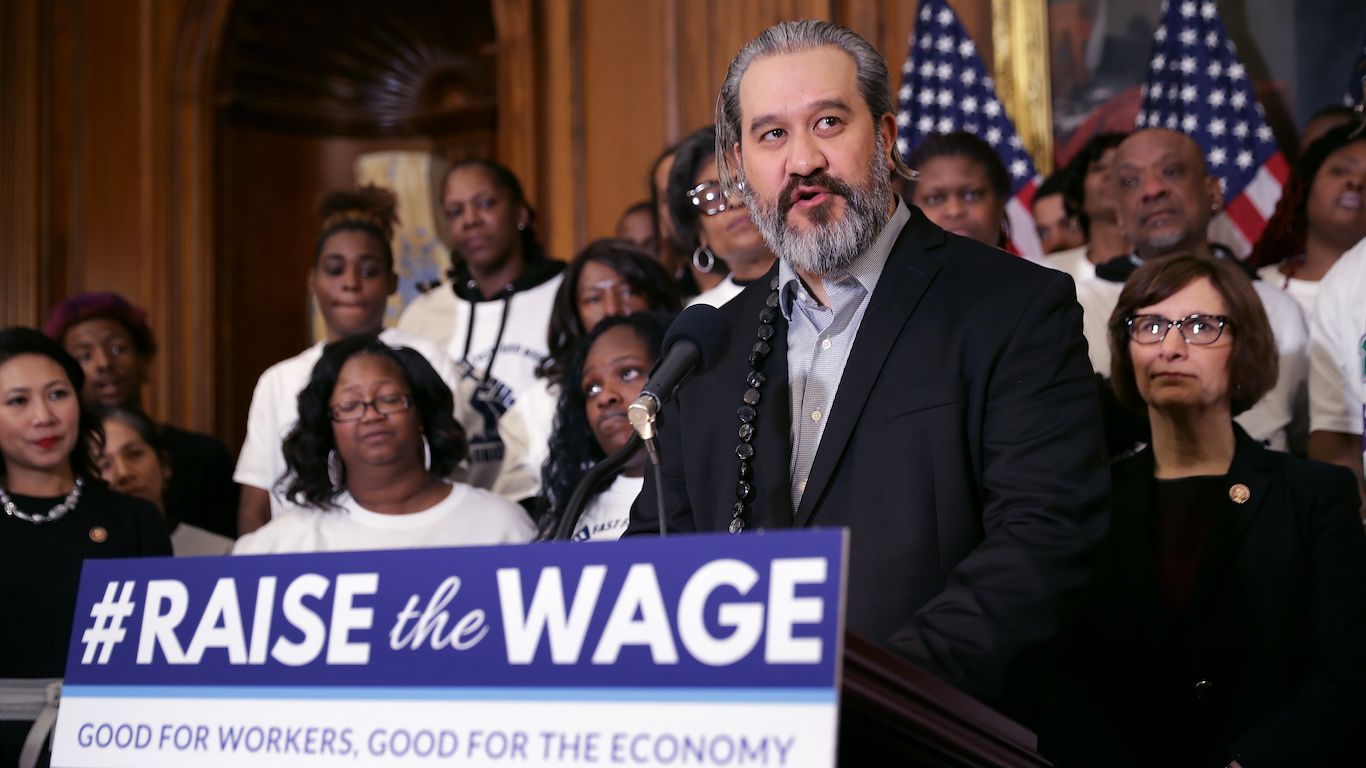
The U.S. House of Representatives is scheduled to vote soon on a Raise the Wage Act that would raise the federal minimum wage to $15 an hour by 2024 and then rise with inflation in subsequent years. Nearly 40 million Americans are forecast to see an increase in their incomes if the bill is passed by the House, the Senate and signed by the president. The CBO report doesn’t make the likelihood of all that happening any better.
[recirclink id=558877]
[wallst_email_signup]







 Top Gaining Stocks
 Top Losing Stocks