Will Trade Deal Bring Back Millions of Jobs Lost to China?

Photo of Douglas A. McIntyre
By Douglas A. McIntyre Published
This post may contain links from our sponsors and affiliates, and Flywheel Publishing may receive compensation for actions taken through them.
Will Trade Deal Bring Back Millions of Jobs Lost to China?

© Kinwun / iStock

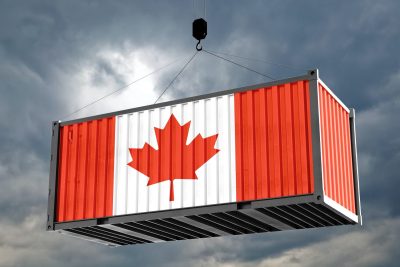
There is a widely held belief that as American companies turned to inexpensive manufacturing in China, millions of workers in the United States lost their jobs. This was particularly true after China became part of the World Trade Organization. New research shows those jobs will never return to U.S. shores.

The trade deficit is a proxy for why 3.7 million jobs were lost to China since it joined the WTO in 2001. The Economic Policy Institute reports that the job loss topped a million in 2005. It rose above 2 million in 2008 and 3 million in 2015.

Theoretically, if China’s trade deficit with the United States shrinks, as it should under the new trade agreement, some of those jobs should return to America. However, much of the deficit is not due to goods and services. The Economic Policy Institute explained the reasons for the trade deficit: “The single most important cause of growing trade deficits with China is its history of currency manipulation and dollar misalignment that has persisted for more than two decades.” The new trade agreement has no provision to eliminate these problems.

Job growth in the United States has been so strong since the Great Recession that jobs lost to China may not be important to the economy, as unemployment has dropped to a five-decade low of 3.5%. Some have argued that the jobs lost to China were high-paid blue-collar jobs with strong benefits. There is no definitive proof that this is true. The job additions to the economy in the past 10 years cover a wide swath of industries.

Will the lost jobs come back? It may not matter. Because unemployment is so low, some employers are finding it hard to get employees. The economy has been strong enough to handle the Chinese job problem, and then some.

[nativounit]
[recirclink id=636110]
[wallst_email_signup]

Photo of Douglas A. McIntyre
About the Author Douglas A. McIntyre →

Douglas A. McIntyre is the co-founder, chief executive officer and editor in chief of 24/7 Wall St. and 24/7 Tempo. He has held these jobs since 2006.

McIntyre has written thousands of articles for 24/7 Wall St. He is an expert on corporate finance, the automotive industry, media companies and international finance. He has edited articles on national demographics, sports, personal income and travel.

His work has been quoted or mentioned in The New York Times, The Wall Street Journal, Los Angeles Times, The Washington Post, NBC News, Time, The New Yorker, HuffPost USA Today, Business Insider, Yahoo, AOL, MarketWatch, The Atlantic, Bloomberg, New York Post, Chicago Tribune, Forbes, The Guardian and many other major publications. McIntyre has been a guest on CNBC, the BBC and television and radio stations across the country.

A magna cum laude graduate of Harvard College, McIntyre also was president of The Harvard Advocate. Founded in 1866, the Advocate is the oldest college publication in the United States.

TheStreet.com, Comps.com and Edgar Online are some of the public companies for which McIntyre served on the board of directors. He was a Vicinity Corporation board member when the company was sold to Microsoft in 2002. He served on the audit committees of some of these companies.

McIntyre has been the CEO of FutureSource, a provider of trading terminals and news to commodities and futures traders. He was president of Switchboard, the online phone directory company. He served as chairman and CEO of On2 Technologies, the video compression company that provided video compression software for Adobe’s Flash. Google bought On2 in 2009.

Continue Reading

Top Gaining Stocks

CBOE Vol: 1,568,143
PSKY Vol: 12,285,993
STX Vol: 7,378,346
ORCL Vol: 26,317,675
DDOG Vol: 6,247,779

Top Losing Stocks

LKQ
LKQ Vol: 4,367,433
CLX Vol: 13,260,523
SYK Vol: 4,519,455
MHK Vol: 1,859,865
AMGN Vol: 3,818,618